



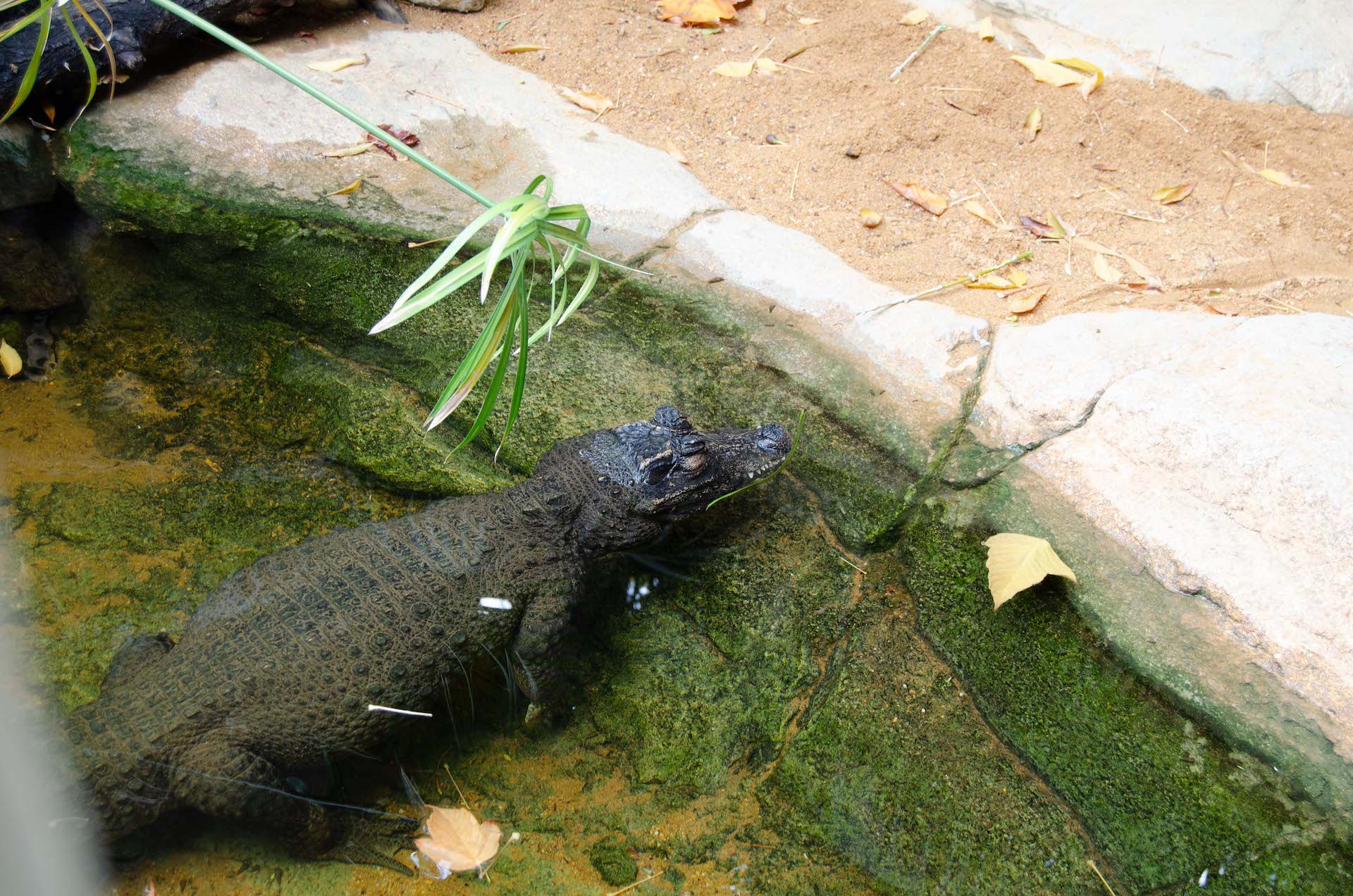
In the depths of the tropical forests of West Africa, an urgent struggle is taking place to safeguard the dwarf crocodile, an enigmatic species currently critically endangered.
This small reptile, unique for its compact size and adaptability, is a symbol of the rich biodiversity of the Gulf of Guinea. However, massive deforestation and human impact are endangering its existence.
Status and distribution of the dwarf crocodile
A recent study published in the American Journal of Environment Studies shed light on the distribution and status of the dwarf crocodile (Osteolaemus tetraspis) in the surroundings of the Ebo forest in Cameroon.
The research, led by Agbor James Ayamba, urgently calls for intensifying conservation efforts for this critically endangered species. “Dwarf crocodiles help maintain balance in this fragile ecosystem,” the study mentions, highlighting how human pressure, poaching, and agricultural expansion are drastically affecting this species.
Threats and conflicts
Between April and June 2023, 11 water points in the Ebo forest were identified to assess the presence of dwarf crocodiles. Crocodiles were found in 6 of these points (54%), with a higher presence in Lognanga (60%) and lower in Ndokmem Norte (40%).
Identified threats include poaching, agricultural expansion, and poverty. Between 2022 and 2023, a significant number of crocodiles were recorded dead due to poaching in the region. “The monetary value of the dwarf crocodile’s meat and skin makes this species a frequent target for hunters,” the document points out.
Agricultural impact and conservation needs
The study also warns about the impact of intensive agriculture on the habitat of crocodiles. Crops such as cocoa, cassava, and plantain dominate the region, and the improper use of banned pesticides worsens the problem, threatening biodiversity during the rainy season.
Researchers recommended halting destructive practices and intensifying community awareness about the importance of the dwarf crocodile and its habitat.
An ongoing evolutionary phenomenon
Scientifically known as Osteolaemus tetraspis, these reptiles have a peculiar orange skin, attributed to their prolonged exposure to bat guano inside the caves they inhabit.
Genetic analysis identified a unique haplotype in cave-dwelling crocodiles, suggesting they could be in the process of evolving into a new species. This finding reinforces the hypothesis that the crocodiles from the caves of Abanda constitute a genetically isolated group.
Do you already know our YouTube channel? Subscribe!



