



In what specialists have called the “invasive species war,” a particular situation is unfolding in Bolivia. A kind of foreign beetle is attacking the eucalyptus trees, which are invasive trees in the country.
This species is advancing uncontrollably and negatively affecting the native flora. But recently, a scientist discovered that there is a type of beetle that attacks them.
“Invasive species war” in Bolivia: how the beetle was discovered
When the pandemic arrived in 2020, the biologist Fernando Guerra decided to spend the initially decreed 15 days of confinement by the Bolivian government in Potosí. He traveled with his children from La Paz and when he tried to return, he was unable to leave.
The Government had extended the quarantine, and those 15 days turned into months. Already confined, Guerra decided to explore the surrounding vegetation.
Amidst the landscape, characterized by arid soil and deciduous forests, he found damaged eucalyptus logs, full of holes. While looking for the reason, Guerra found a visitor that had formed galleries under the bark, causing them to dry out.
After careful observation, he discovered the culprit: a foreign beetle that he had only seen in photos.
What the beetle is like
After cross-referencing information and images with other colleagues and experts, he identified the tiny insect as the first documented record in Bolivia of Phoracantha Recurva, a beetle native to Australia and New Guinea.
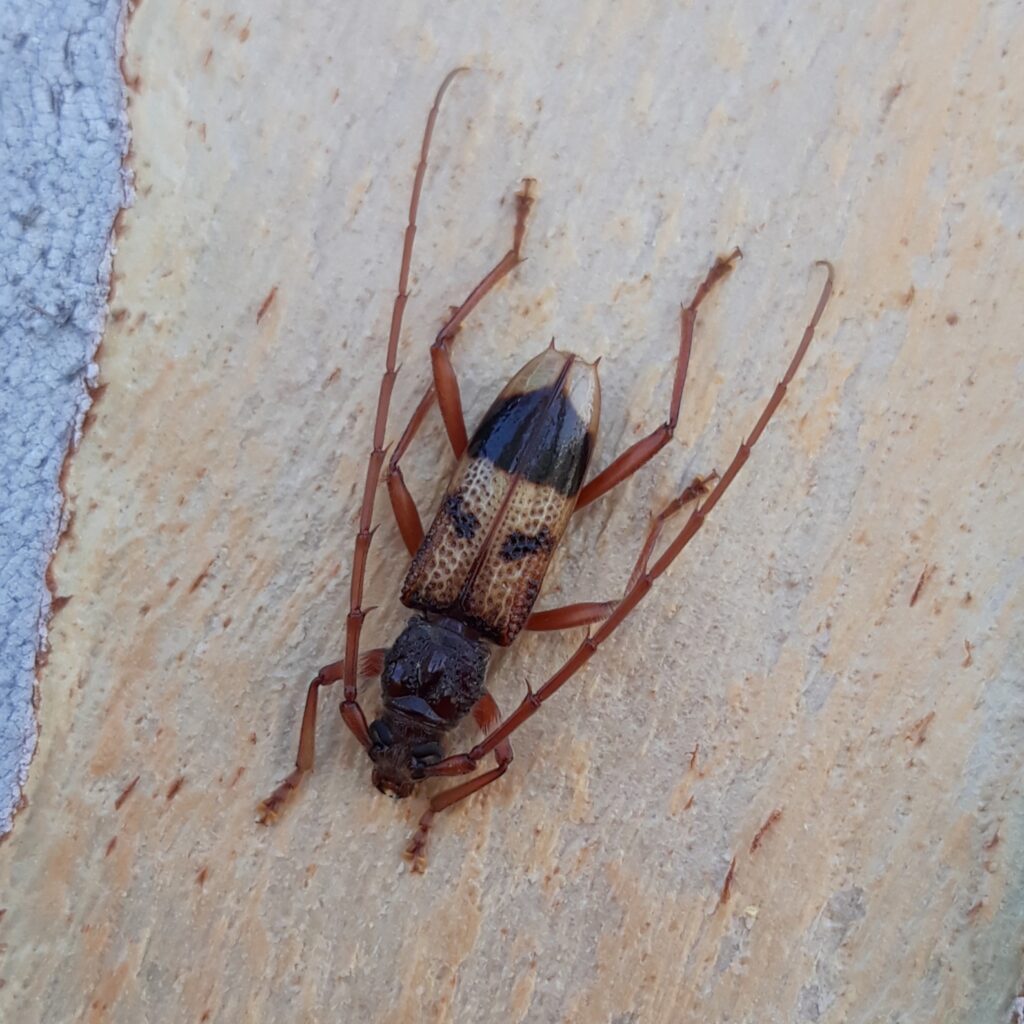
The insect is known for primarily attacking eucalyptus trees, in which it builds its nest and develops. It measures between 13 and 30 mm and has long antennas that reach up to 39 mm. Its wings are of a yellowish tone that stands out from other similar species.
For Guerra, president of the Bolivian Society of Entomology and expert in this field, the 15-day expedition turned into an eight-month journey between Tupiza, Potosí, and Ircalaya, in Tarija, to continue the research.
The study resulting from this unexpected discovery was published in the scientific journal of the Noel Kempff Mercado Natural History Museum. According to the document, this beetle, discovered in 1840, was accidentally introduced to several countries in the region through the massive importation and planting of eucalyptus.
The invasive beetle
“It is a eucalyptus specialist beetle. They are more aggressive towards them,” says Fernando Guerra. It mainly attacks eucalyptus genera Angophora, Corymbia, and Eucalyptus, which are also invasive species in Bolivia.
These beetles colonize cut trunks and branches of trees weakened by water stress and can survive inside the wood while it is processed for various uses.
Guerra explains that the larvae create galleries under the bark, which generates sawdust and, when combined with the expelled excrement, deteriorates the trunk and dries out the leaves.
Although eucalyptus is their home, the invasive beetles could also affect other trees.
“If eucalyptus trees are eliminated, they could advance to other species, such as myrtles. It is a very aggressive species because it reproduces rapidly,” warns the entomologist.
Despite the dangers, there are other opinions that highlight their potential benefits as biological control of pests. Biological control is the positive action of parasites, insects, pathogens, and predators that help mediate the presence of pests and the damage they cause in ecosystems. They are also known as “natural enemies”.
Have you visited our YouTube channel yet? Subscribe now!



