



A police operation dismantled a network of illegal wildlife trafficking in La Matanza and rescued 220 birds.
Among these, species in danger of extinction were found being sold through social networks.
The case led to the arrest of a man and revealed the operation of a clandestine circuit that had been active for months.
The investigation by the DDI La Matanza identified posts on Facebook Marketplace where protected birds were being illegally offered.
After digital tracking, investigators linked the activity to Gabriel Hernán Cano, aged 48, who also used WhatsApp statuses to contact clients.
An undercover operation and raids against illegal wildlife trafficking
Initially, the Federal Justice authorized the use of a revealing agent to advance the case.
An undercover detective contacted Cano, who offered him various protected species and led him to a fishing gear store on Simón Pérez street, where the birds were hidden.
As a result, the Federal Criminal and Correctional Court No. 3 of Morón, under Judge Jorge Rodríguez, ordered two raids.
In one of the residences, located on Perseverancia 4100 in González Catán, officers found dozens of birds crammed in small cages.
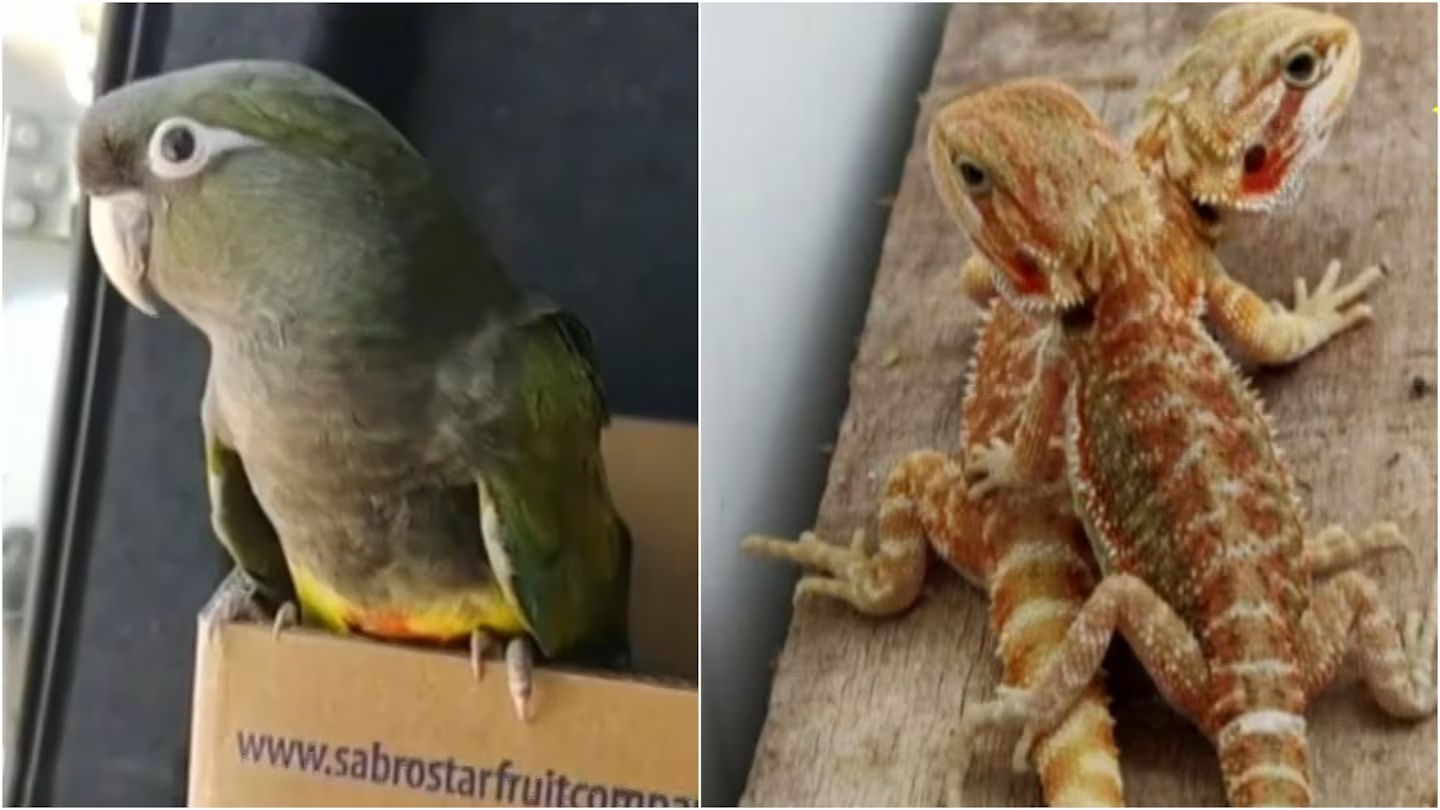
There, the animals showed evident signs of mistreatment:
- damaged plumage;
- visible bruises;
- cases of pododermatitis, and;
- state of depression.
The captivity conditions violated Law 22.421, which protects wildlife in Argentina.
The rescued species, some in critical condition
Among the 220 seized birds, multiple native and exotic species were found. These were placed under the care of the Fundación Temaikén for recovery.
The rescue included the following protected species:
- Collared seedeaters
- Forest kinglets
- Large tanagers
- Golden finches
- Fire tanagers
- Seed-eaters
- Red-crested cardinals
- Black-headed grosbeaks
- Coffee-throated capuchins
- Over 120 exotic birds
The most concerning find was the rescue of four yellow cardinals, as it is one of the most threatened species in the region.
According to reports from the Ministry of Environment of Buenos Aires, currently, there are only about 2000 specimens of this species left between Argentina, Brazil, and Paraguay.
The next legal steps and the recovery of the animals
Cano was arrested on the spot and electronic devices were seized, which will be key to deepening the investigation into the illegal wildlife trafficking network.
The accused acted as an intermediary and maintained a fixed clientele through digital platforms.
After his arrest, the judge endorsed the actions taken and ordered the necessary procedures.
Once the National Recidivism Registry is verified, his procedural situation will be assessed for violating the wildlife protection legislation.
The rescued birds were left under the care of the Fundación Temaikén, where they will remain in quarantine and receive veterinary treatment.
Subsequently, those that manage to recover will be released in protected areas, provided their health condition allows it.
The investigation began in January of this year and showed how social networks have become tools for the clandestine trade of wild species, facilitating contact between illegal sellers and buyers as a result.



