



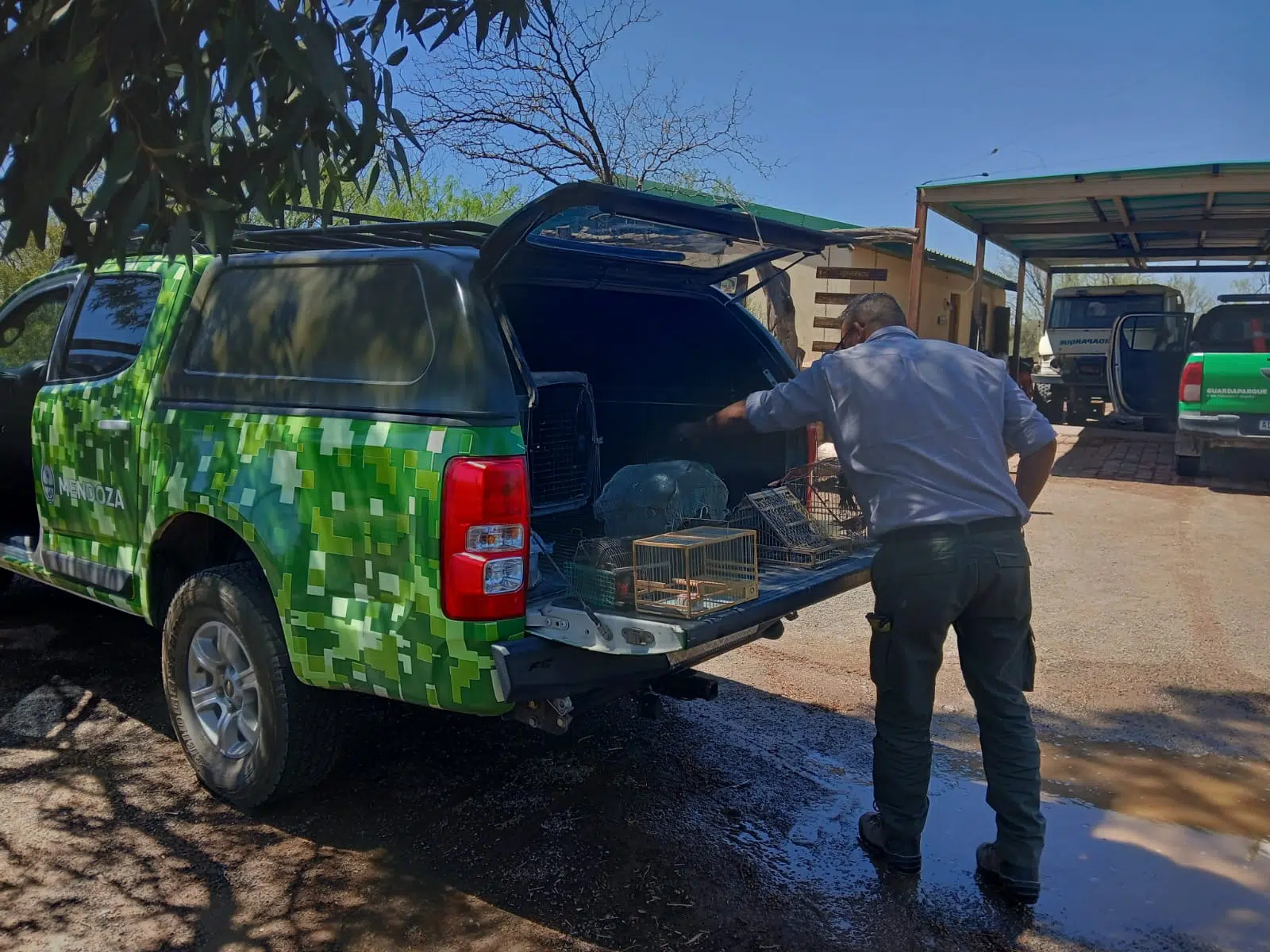
In an operation carried out at midnight at the El Puerto sanitary barrier on National Route 142, authorities from Mendoza intercepted a truck transporting 18 wild birds from Catamarca without legal authorization.
The action was coordinated by the Directorate of Biodiversity and Ecopark along with the Institute of Agricultural Health and Quality of Mendoza (Iscamen), representing a new advance in the fight against illegal trafficking of native wildlife.
Affected Species and Seized Items
Among the rescued specimens were:
- Five blue-black grosbeak (Cyanoloxia glaucocaerulea)
- Two golden-breasted grosbeak (Pheucticus aureoventris)
- Eleven golden-billed saltator (Saltator aurantiirostris)
These species are highly valued in the illegal market for songbirds. Cages and traps, items prohibited by current environmental regulations, were also seized.
“This coordinated work allowed us to stop a commercialization circuit that undermines animal welfare and promotes biodiversity loss,” highlighted Ignacio Haudet, director of Biodiversity and Ecopark.
Health Risks: Zoonosis and Public Health
Veterinarian Juan Pablo Coniglione from the Wildlife Department warned that wild bird trafficking involves serious health risks, such as:
- Psittacosis
- Avian flu
- Salmonellosis and parasitosis
The conditions of capture, overcrowding, and transport increase the likelihood of contagion, affecting both those who handle the animals and their family environments.
Care, Rehabilitation, and Reintegration
After the rescue, the birds received primary health stabilization from Iscamen and were transferred to the Wildlife Department of the Ministry of Energy and Environment, where their condition will be evaluated, their rehabilitation will begin, and their eventual reintegration into the natural habitat will be determined.
Wildlife Trafficking: A Persistent Threat
Bird trafficking in Mendoza represents an environmental and health issue. In previous operations, species in danger of extinction, such as the yellow cardinal, have been rescued, and it is suspected that many birds come from other Argentine provinces.
Key aspects:
- Ecological impact: many birds do not survive the capture and transport process
- Investigation: banding allows tracking the origin and dismantling illegal networks
- Citizen reporting: cases can be reported at www.mendoza.gov.ar/ambiente
Actions to Curb Environmental Crime
- Interinstitutional cooperation between provincial and national organizations
- Rescue and rehabilitation of wild fauna
- Investigation and traceability to identify trafficking networks
- Awareness and citizen participation
The capture, transport, and commercialization of wildlife without authorization is prohibited by law and can lead to administrative and criminal sanctions. Protecting native birds is preserving biodiversity, caring for public health, and defending common goods.
Channels enabled for complaints or inquiries in Mendoza
- Phone: 261 7503417, Monday to Friday from 8 to 13.
- Email: [email protected]
- Complaint portal: ticketsform.mendoza.gov.ar
- Emergencies: 911, requesting the intervention of the Rural Security Police.



