



As part of an annual conservation campaign, specialists from the Azara Foundation and the Conservation and Management Studies Group of the National University of the South (UNS) conducted a new survey of migratory cauquenes in the districts of Coronel Dorrego, Tres Arroyos, and San Cayetano.
The objective is to collect population data to design effective strategies to prevent the disappearance of these emblematic birds.
Three at-risk species: red-legged, ash-colored and gray-headed cauquenes
Migrating from southern Argentina and Chile to Buenos Aires, Río Negro, and La Pampa
The monitoring included specimens of the three species that migrate every winter from the south of Argentina and Chile to agricultural areas in the center of the country:
- Red-legged cauquen (Chloephaga rubidiceps) – endangered species
- Ash-colored cauquen (Chloephaga picta) – threatened species
- Gray-headed cauquen (Chloephaga poliocephala) – threatened species
The surveys were conducted through vehicle transects along rural roads, recording both the number of individuals and associated environmental variables.
Collaborative conservation: producers, institutions, and applied science
The monitoring is part of the Program for the Conservation of Migratory Cauquenes.
The campaign had the support of local producers, who facilitated access to their fields, and the backing of Compañía Molinera del Sur and Agris Agropecuary Advisory, historical allies in the protection of these migratory species.
“Hunting of cauquenes is prohibited in all provinces where they inhabit, as well as nationally, due to their delicate conservation status,” explained Hernán Ibáñez, a specialist from the Azara Foundation, in an interview with the portal La Nueva.
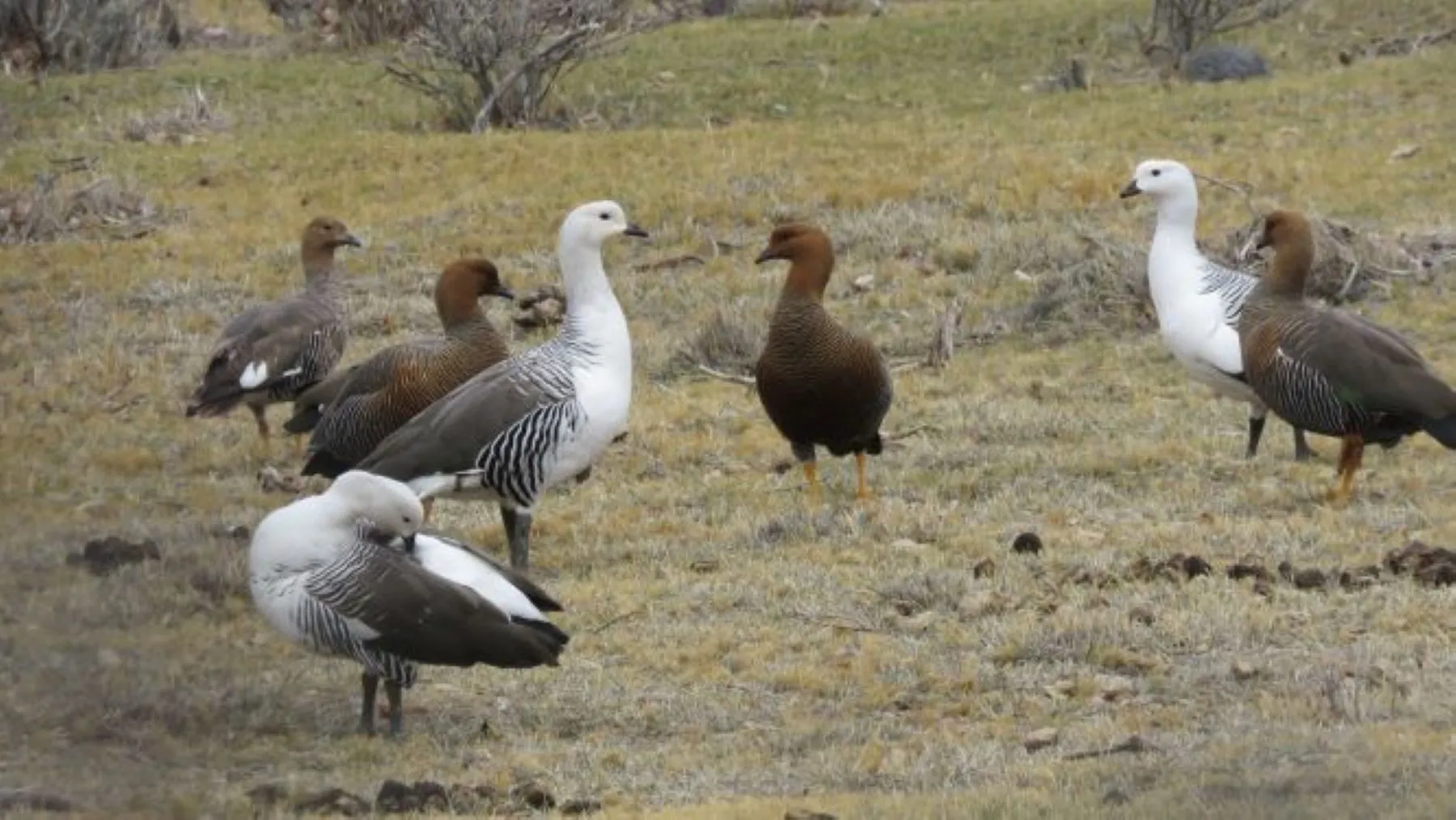 The importance of cauquenes[/caption>
Natural Sanctuary of the Red-legged Cauquen: conservation in productive territory
Specimens observed at the El Tamarisco establishment, part of the Azara Private Reserves.
During the campaign, the Natural Sanctuary of the Red-legged Cauquen was visited, located at the El Tamarisco establishment, owned by the Pardo family. This space is part of the Private Reserves Program of the Azara Foundation and represents a concrete example of compatibility between agricultural production and wildlife conservation.
“The presence of the red-legged cauquen in this field demonstrates that conservation is possible when there is willingness and commitment from all stakeholders involved,” reflected Ibáñez.
Results and next steps: population analysis by the end of the year
It is hoped to determine if the cauquen populations show signs of recovery.
The data obtained will be analyzed and published by the end of the year, allowing for a comparative study of population trends.
This analysis will be key to estimate whether the populations of migratory cauquenes have increased, remain stable, or continue to decline.


