



From pest control to ecotourism, Spain’s native birds provide essential services to the environment, but also to the economy.
Now, Spanish researchers have developed the first database that accurately measures these ecosystem benefits.
The study was published in the journal ‘Ardeola: International Journal of Ornithology’ and represents a significant advance in understanding the real value of birds.
The work was led by Esther Sebastián-González, from the Department of Ecology at the University of Alicante (UA).
The specialist worked alongside researchers from the Miguel Hernández University of Elche (UMH) and the Forest Science and Technology Centre of Catalonia (CTFC) to create ServiBirds.
It is a tool that evaluates the ecological, cultural, and economic role of 378 bird species belonging to 73 families.

Spanish birds provide 12 “services” to society
The study analyzed 12 types of services that birds offer to Spanish society.
These include agricultural pest control, seed dispersal, and organic matter recycling.
Cultural aspects such as the aesthetic and artistic value of birds, their importance for ecotourism, and their role as game or symbolic species were also considered.
The analysis revealed that “all bird species provide some type of ecosystem service“.
Moreover, more than 60% contribute to four or more different services, according to the experts.
Now, with ServiBirds, it is possible to identify which species are key for the maintenance of Spanish ecosystems.
Native birds with outstanding contributions to the environment and the economy
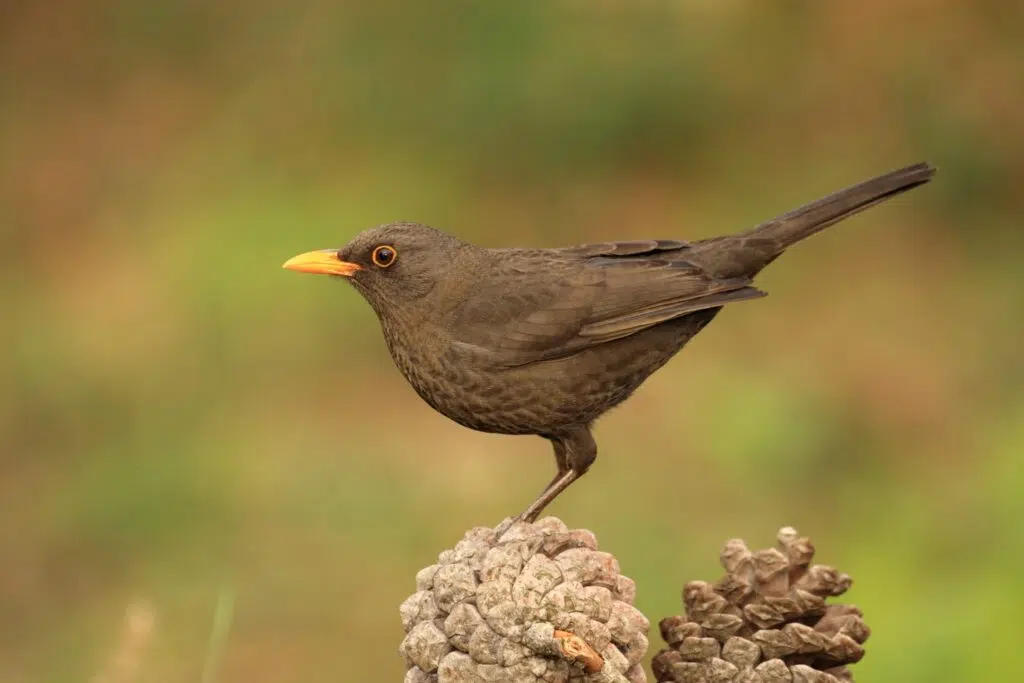
Among the most relevant species are the Eurasian magpie (Pica pica) and the common blackbird (Turdus merula).
Both provide multiple ecosystem regulation services.
The griffon vulture (Gyps fulvus), on the other hand, stands out for its fundamental role in carrion removal, an essential service for ecosystems.
In the cultural sphere, species such as the red-legged partridge (Alectoris rufa), the golden eagle (Aquila chrysaetos), and the European goldfinch (Carduelis carduelis) stand out for their aesthetic, artistic, and ecotourism relevance.
The researchers explained that birds “are essential for human well-being: they regulate key ecological processes and also inspire our culture, art, and tourism”.
Thus, the research provides concrete data for decision-making in environmental conservation policies.
Economic and social repercussions of native birds in Spain
The authors highlighted that “the value of native birds goes beyond biodiversity“.
This is because they have economic and social repercussions, especially in birdwatching tourism.
The conservation of these species directly impacts the quality of human life and economic sectors linked to ecotourism and environmental management.
To understand this in depth, ServiBirds offers a reference framework that can be applied in other regions and taxonomic groups.
Thus, the tool serves to manage and conserve biodiversity more effectively.
Additionally, it allows understanding how the loss of species would affect essential services.



