



A scientific team identified a new species of wolf snake on Great Nicobar Island, in India, adding a significant discovery to the archipelago’s fauna.
The species was named Lycodon irwini in honor of Stephen Robert Irwin, the renowned Australian conservationist known as the “Crocodile Hunter”.
It inhabits exclusively the remote island of the Indian Ocean, which explains its late discovery.
The discovery was made by researchers from Pondicherry University, India, and the Max Planck Institute of Biology.
The research was published in the open access journal Evolutionary Systematics, specializing in taxonomy and evolutionary biology.
The document details the characteristics that distinguish this new snake from other species of the genus Lycodon.

The characteristics of the newly discovered wolf snake
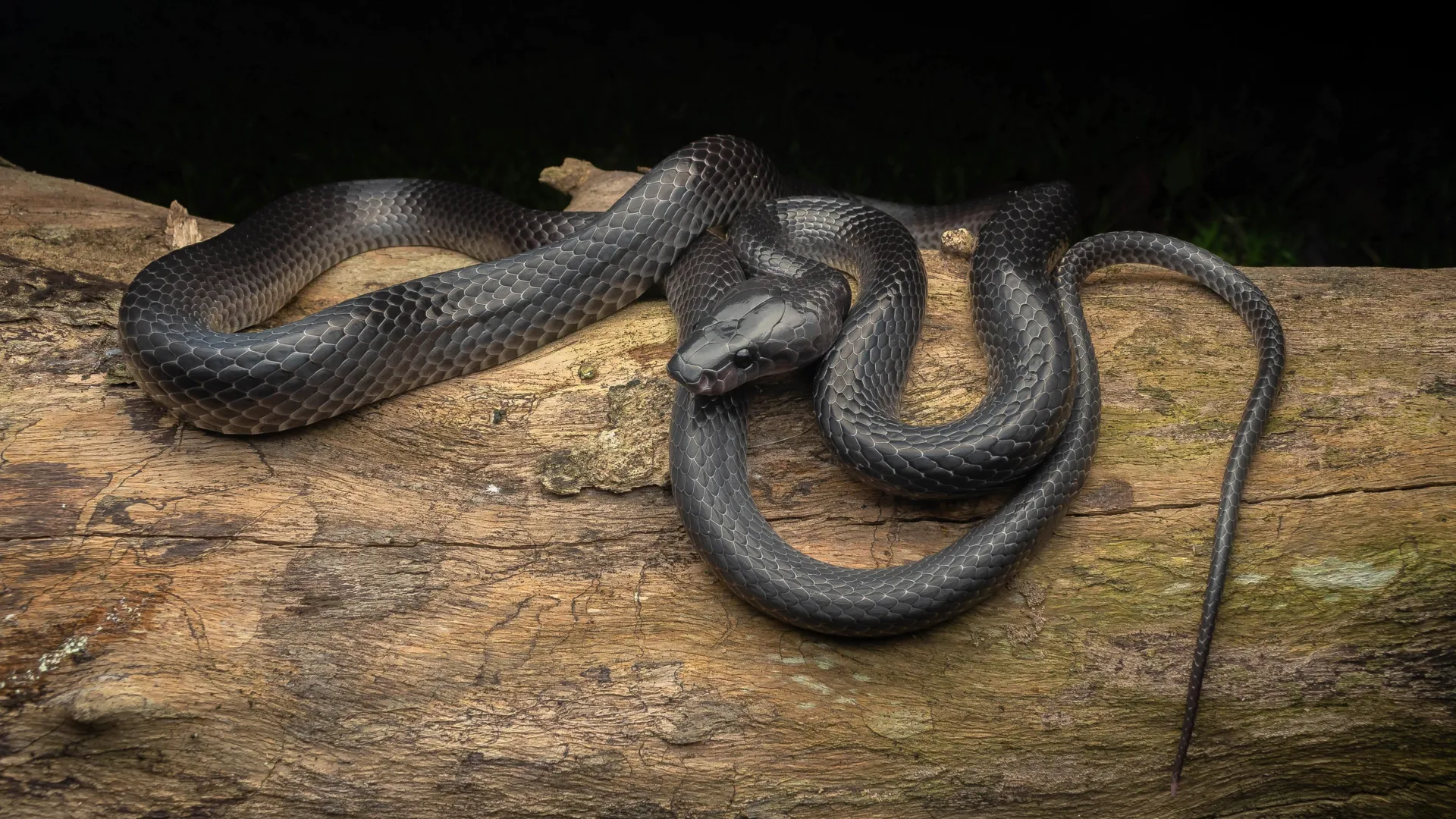
Adult specimens of Lycodon irwini exhibit a shiny black coloration and reach approximately one meter in length.
Like other members of its group, this snake is non-venomous.
Its diet likely consists of small vertebrates such as reptiles, amphibians, and rodents.
These wolf snakes play an important role in the population control of these species in their ecosystem.
The main characteristics that define this new species include:
- Extremely limited geographic distribution to Great Nicobar
- Distinctive shiny black coloration in adult specimens
- Moderate size of approximately one meter
- Non-venomous behavior, typical of wolf snakes
The researchers revealed that the scientific name of the new snake in honor of Irwin was chosen because his passion and dedication to education and conservation inspired naturalists worldwide.
The vulnerability and need for conservation of the new snake
The species is apparently confined solely to Great Nicobar Island, suggesting a very limited natural range. This characteristic makes it particularly vulnerable.
Species with narrow distribution areas face elevated risks due to habitat loss, human activity, or environmental changes.
Therefore, the authors have already recommended classifying this new snake as endangered.
These early assessments are important to guide future conservation efforts in fragile island ecosystems. Timely identification allows for the implementation of protection measures before populations decline.
The unexplored biodiversity in Andaman and Nicobar
Despite decades of study, many parts of the forests of these islands remain inaccessible.
Therefore, as happened with this new snake, some groups of animals are still poorly documented.
The researchers explained in their publication: “New species continue to be discovered, exemplified by Lycodon irwini, highlighting the ongoing progress in taxonomy and the incomplete understanding of the diversity and distribution of herpetofauna in the region.”
This discovery underscores the rich biodiversity that remains uncatalogued in remote areas.
To this day, the Andaman and Nicobar Islands continue to reveal previously unknown species to science.
The discovery of this new species of snake reinforces the importance of maintaining systematic research in biodiverse regions.
Taxonomy remains essential for understanding and protecting global fauna.



