



The relationship between **New York and its rats** is as old as the city itself.
Since its days as **New Amsterdam in the 17th century**, the metropolis has accumulated iconic symbols —Broadway, pizza, Central Park— and has also coexisted with a **persistent and unglamorous companion**: the **Rattus norvegicus**, protagonist of an **urban plague** that multiplies unchecked (urban plague).
Super rats and exponential growth: a red line in 2025
The population grows by 300% and exceeds three million specimens.
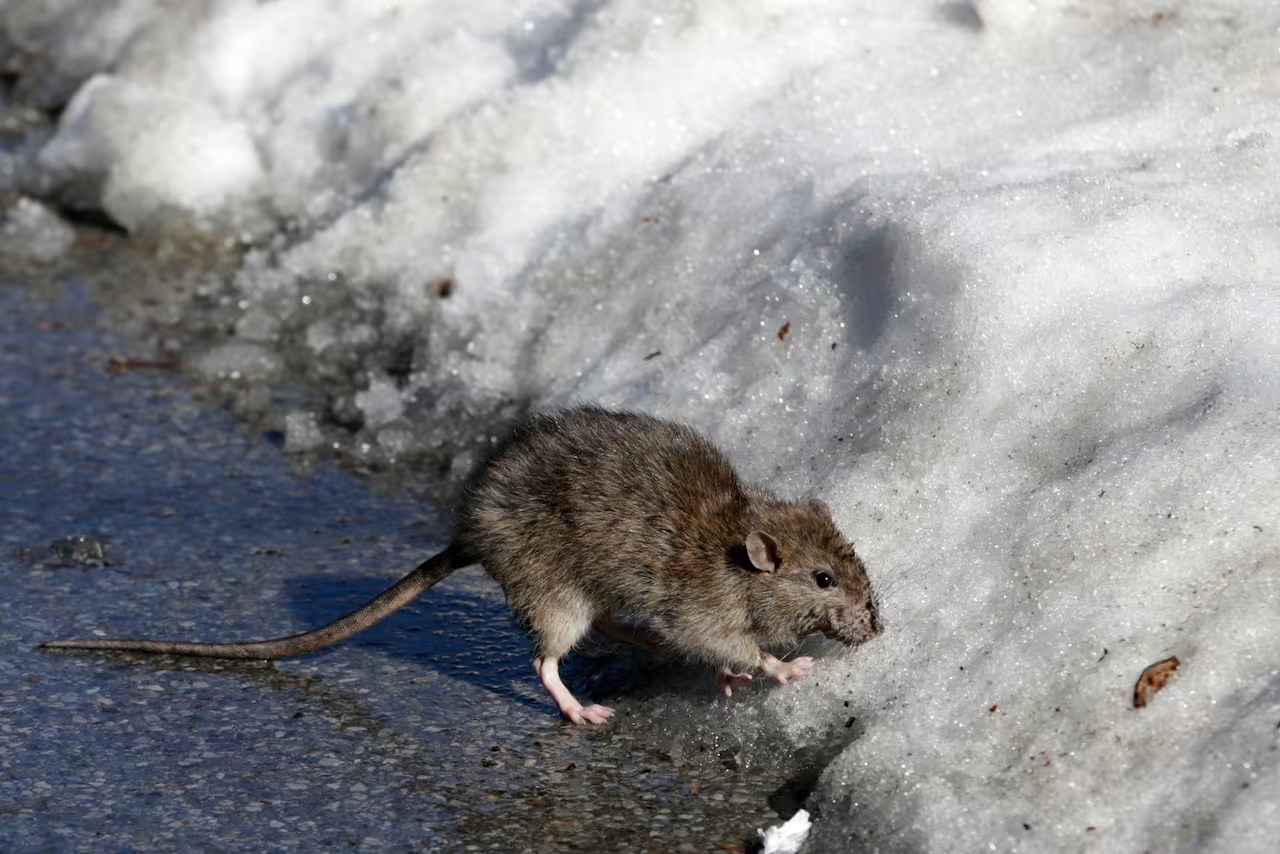
In 2025, the city reached a critical point: rats were growing at a rate of **300%**, with an estimated population of **three million**, equivalent to one-third of the human inhabitants.
This phenomenon not only represents a **health challenge**, but also a **scientific opportunity** to study how **animal life adapts to extreme urban environments**.
Artificial intelligence and spectrograms: technology to understand their language
Rats modulate their vocalizations according to the **ambient noise of the city**.
A team of researchers from **New York and Germany** used **AI, thermal cameras, and ultrasonic recordings** to analyze the acoustic behavior of New York rats.
They found that they **adjust their squeaks** according to the environment: in parks and sidewalks, they vocalize with less intensity; in the **subway**, they increase their power to **be heard over trains and crowds**.
“The vocalizations were shorter and outside the typical ranges of the species,” explain the authors of the study published in *bioRxiv*.
Ultrasonic communication: an emerging urban language
**Rats learn to raise their voice** above metropolitan noise.
Researcher **Emily Mackevicius** recounted a revealing case: during the passage of an ambulance, the ultrasonic squeaks of the rodents **appeared above the siren** in the spectrograms.
Although **inaudible to the human ear**, these sounds are **effective in their universe**, demonstrating a unique **acoustic adaptation capacity**.
Flexible social structure and collective learning
**Youngsters move in groups, while adults prefer solitude**.
Video observations revealed differences in the **social life of rodents**. Young specimens, still in the learning process, **move in groups**, while adults adopt **more solitary behaviors**.
This flexibility suggests a **social structure adapted to experience and the urban environment**.
Urban ecology: understanding the city as a shared ecosystem
**Species that thrive in the city** are key players in the metropolitan future.
The study poses a major challenge: **understanding the biology of urban environments** as an essential research field.
With almost **70% of the world’s population living in cities by 2050**, the interaction with adapted species —rats, pigeons, foxes, raccoons— will become increasingly intense.
New York rats not only survive: they **modify their language, behavior, and social structure** in response to the environment. The city, ultimately, **shapes the voices of those who inhabit it**, humans and animals alike.



