



Species evolution never stops, and a clear example of this is orcas. According to a group of scientists, these animals began to change their hunting strategies with the aim of capturing larger prey such as whale sharks.
To achieve this, researchers traveled to the Gulf of California, in Mexico, where they were able to record several attacks between two of the most impressive marine species in the world. There, they found a group of orcas that started hunting these sharks, considered the largest fish in the world, as they can reach up to 18 meters in length.
However, these events are not new, as a group of scientists from Mexico and the United States documented, at least, four cases between 2018 and 2024, according to the study published in the specialized journal Frontiers in Marine Science.
Generally, orcas feed on marine mammals, as well as fish and turtles. But these orcas may have developed new techniques to hunt whale sharks. These sharks come to the shores of the Gulf of California when they are young to feed, which makes them more vulnerable to predation, something that orcas took advantage of for their survival. According to marine biologist and lead author of the study, Erick Higuera, this hunting technique focuses on attacking the pelvic area to cause bleeding and access the lipid-rich liver.
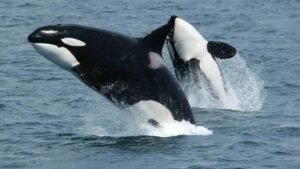 Orcas attacking whale sharks, considered the largest fish in the ocean.
The behavior of orcas will continue to be investigated
To study the change in hunting behavior, researchers identified the orcas through the analysis of photographs of their dorsal fins looking for particular characteristics, such as scars. This is how the study’s author explained that one of the orcas, named Moctezuma, participated in three of the four recorded shark hunting events.
Additionally, it was observed that a female, seen with this specimen, also took part in these events, so they could be related or part of the same pod.
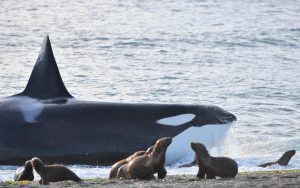 This animal attacks younger whale sharks.
Implications of this study for the future
The findings of this research highlight the need to manage tourism activities in the Gulf of California in a sustainable and respectful manner. Furthermore, it suggests that if the orca pod acquired behavioral and ecological information to hunt in a coordinated manner, it could place whale sharks in a vulnerable position regarding the possible disappearance of this prey due to climate change.
“It’s impressive how orcas work together strategically and intelligently to access specific areas of their prey, showcasing their ability as great predators of marine nature,” commented Higuera.
Have you visited our YouTube channel yet? Subscribe now!



