



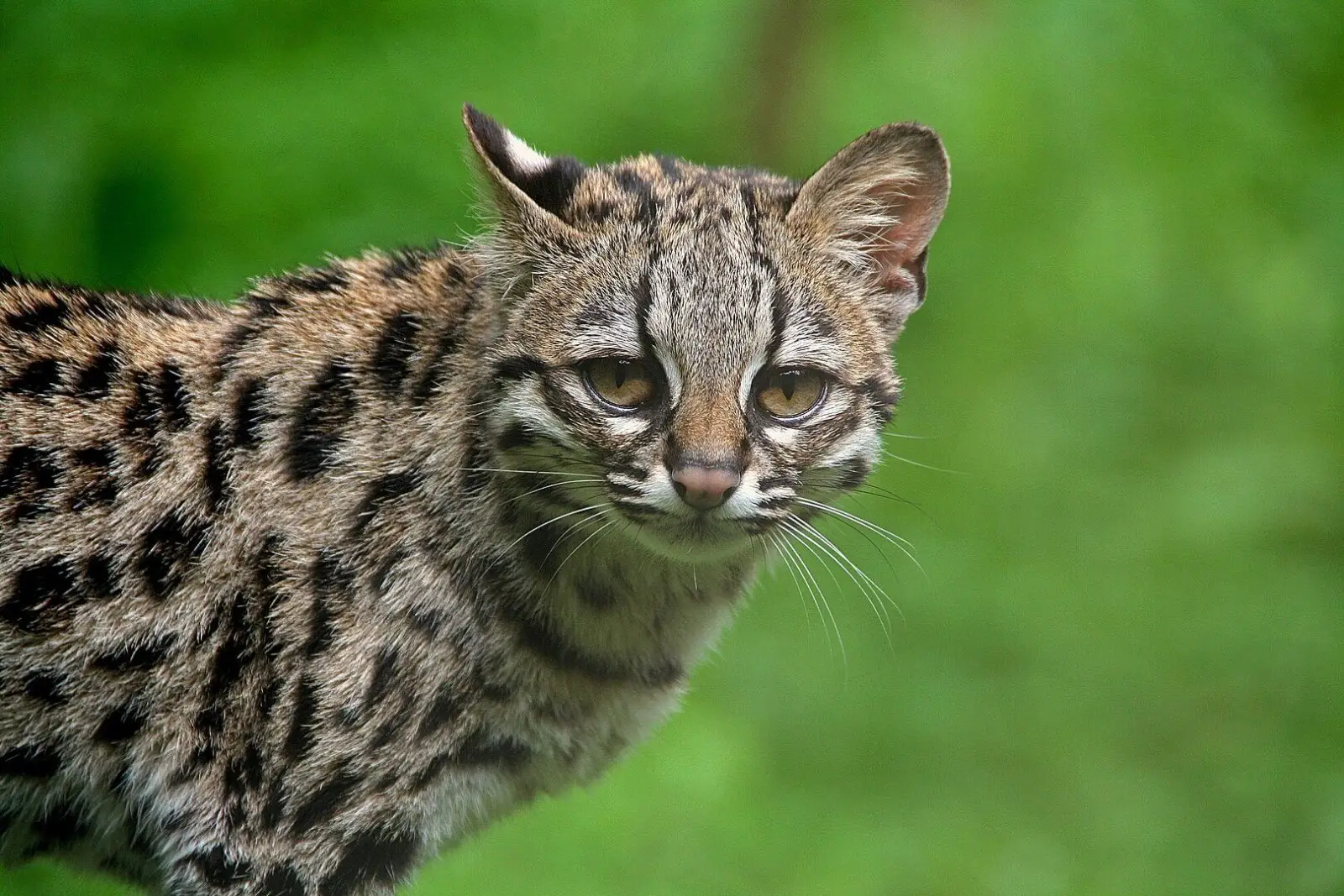
Park rangers relocated a specimen of Leopardus wiedii, better known as margay, in the Paraje San Alberto, in the municipality of Comandante Andresito. The operation was carried out following reports of poultry predation on a farm.
The area is located 320 kilometers from Posadas and 120 kilometers east of the Iguazu Falls. It is a strategic area within the Paranaense jungle.
The procedure was coordinated by the Ministry of Ecology and Renewable Natural Resources. Additionally, the Directorate of Protected Natural Areas intervened with a specialized team.
The rural community chose to activate the official protocol instead of taking reprisals. In this way, a sustainable solution and respectful of wildlife was prioritized.

A key feline in the ecosystem
The margay is a native feline with nocturnal habits and great climbing ability. Its stealthy behavior makes both its sighting and capture difficult.
It plays a relevant ecological role as a regulator of small vertebrate populations. Therefore, its presence indicates good health of the forest.
The capture was carried out in a safe manner, ensuring the well-being of the animal. Subsequently, it was relocated to a site far from human settlements.
The relocation avoided greater damage and preserved the life of the specimen. Thus, a model of intervention based on coexistence was consolidated.
Rescue of coatis and intercultural approach
In parallel, provincial authorities intervened following reports about coatis in a Guarani community in northern Misiones. The procedure was executed by the General Directorate of Ecology and the Department of Fauna.
The teams verified the situation and applied specific protocols. This type of scenario requires a respectful approach with indigenous communities.
The Nasua nasua is an emblematic species of the Misiones jungle. It acts as a seed disperser and insect controller.
Provincial legislation prohibits hunting, possession, or mistreatment of wildlife. The fate of the specimens will depend on veterinary evaluation and possible reintegration.
Misiones, capital of biodiversity
Misiones is considered the National Capital of Biodiversity. It hosts 52% of the species of flora, fauna, and fungi in the country in just 1.1% of the territory.
The Paranaense jungle concentrates more than 3,150 vascular plants and 1,150 vertebrates. Additionally, it is a refuge for threatened species such as the Panthera onca.
These operations highlight the tension between production and conservation. However, they also demonstrate that institutional mediation can generate balanced solutions.
Active conflict management strengthens the protection of strategic ecosystems. Consequently, Misiones reaffirms its commitment to the preservation of its natural heritage.

