



The barranquero parrots, perched on wires or forming giant nests in branches, have become part of the daily postcard of Patagonia. However, what many interpret as an invasive overpopulation is, in reality, a very different phenomenon.
A study by Conicet, led by biologist Alejandro Gatto, reveals that the barranquero parrot population has fallen by 40% compared to historical levels. “There is no invasion, the population is decreasing,” stated the specialist, contradicting popular perception.
Why do they seem more present in cities?
The explanation is clear: the parrots gather where people are. They were previously scattered in their natural habitat, the native forest, but the loss of that environment forces them to take refuge in towns and cities.
Unable to find their natural sprouts and fruits, they resort to ornamental plants and crops, a diet that scientists consider harmful to their health. Gatto summarizes it with a metaphor: “In cities, they survive, but it’s like eating fast or junk food. In the long run, it harms them.”
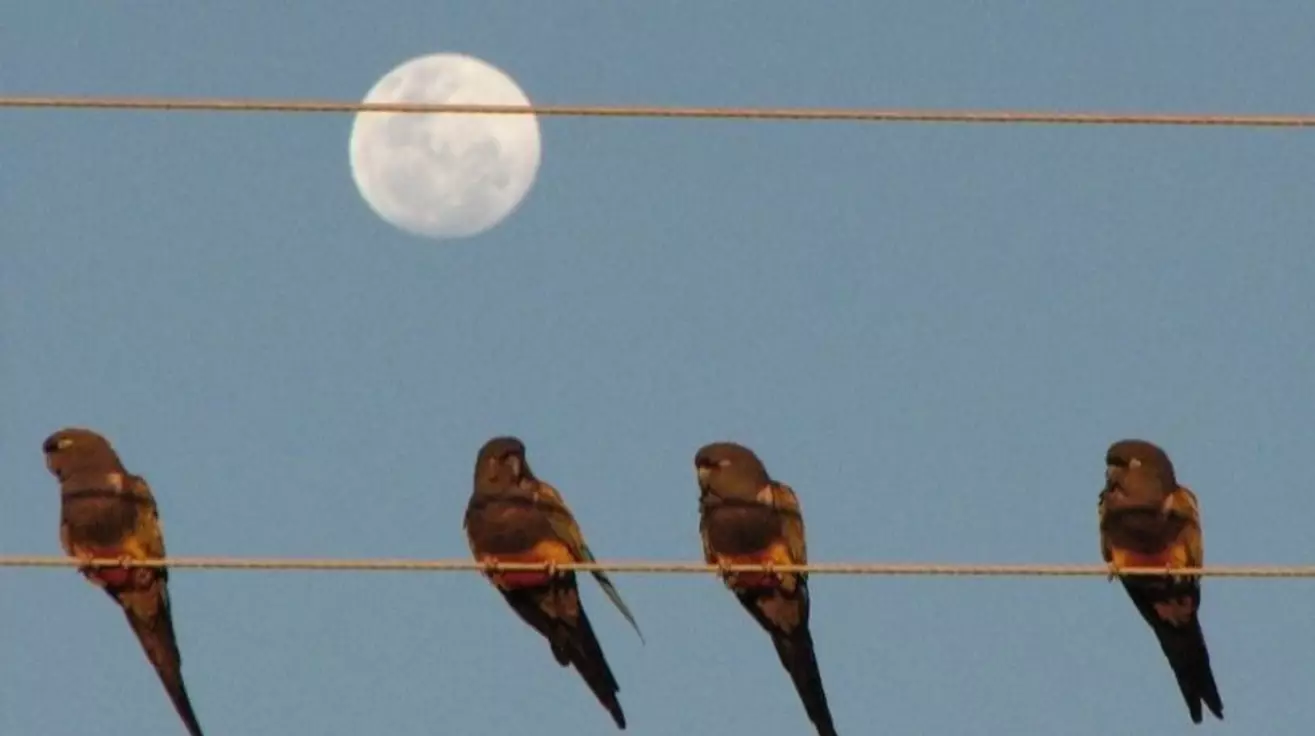
Habitat loss and pressure factors
The change in land use, both in the south of Buenos Aires and on the coast of Río Negro, has been decisive. The native forest was replaced by plantations and crops, leaving the colonies without nighttime shelters or sustenance.
In Puerto Madryn, the problem worsened due to rural fires that, for more than a decade, drastically reduced the number of shrublands. Without those large shrub bushes, the parrots lose their “home” and are forced to seek food and shelter in urban environments.
Impact on the species and hope
The urban and ornamental diet not only alters their behavior but also compromises their health and reproductive capacity. The lack of native forest means fewer places to sleep and fewer fruits and leaves to feed on, weakening the colonies.
Despite the critical outlook, there is a glimmer of hope: natural regeneration. In areas affected by fires, half-meter bushes are already beginning to grow, although it will take much longer for the parrots to fully inhabit the native forest again.
Inevitable coexistence
In the meantime, coexistence will be mandatory. “We will have to get used to the parrots,” Gatto states. In other regions, such as the southern part of Buenos Aires or the coast of Río Negro, their urban presence has been common for years.
The supposed “invasion” of barranquero parrots in Patagonia is, in reality, a reflection of an environmental crisis: the loss of the native forest and rural fires force them to take refuge in cities. Far from being a plague, their population is declining, and their survival depends on the recovery of natural ecosystems.



