



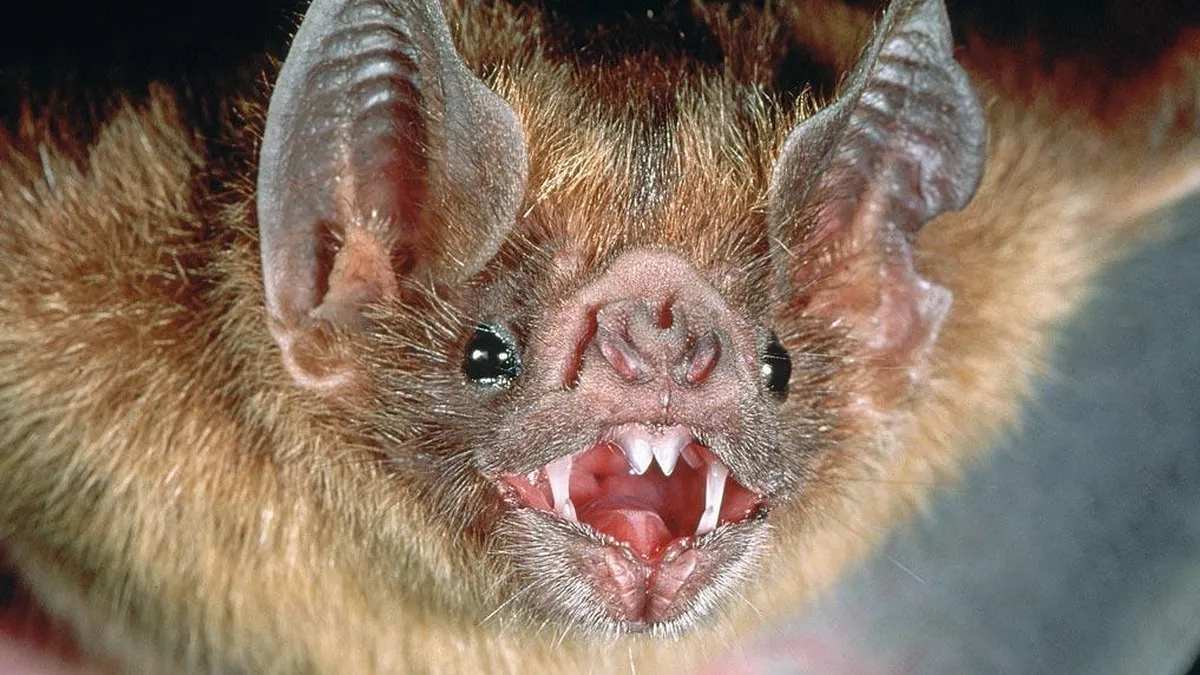
In Europe, the red light is becoming an unexpected ally to protect bats from light pollution.
Denmark, the Netherlands, and the United Kingdom have already installed red-toned LED lights on strategic road sections to guide these animals, and the measure is beginning to gain international attention.
For example, in Gladsaxe, the metropolitan area of Copenhagen, 30 one-meter-high streetlights emit a red glow along a main road and a super cycling highway for the benefit of bats.
The project, driven by the AFRY Architects studio, seeks to minimize the impact of public lighting on a nearby bat colony.
The red color is not arbitrary: studies indicate that chiropterans – to which bats belong – are especially sensitive to white light rich in blue components. This alters their feeding and movement patterns.
Red light to protect bats: the background in Europe
The Danish case is not the first. In 2018, Zuidhoek-Nieuwkoop, in the Netherlands, became the first city in the world to use wildlife-friendly red lighting and bats.
A year later, the United Kingdom inaugurated its first bat passage with 60 meters of red light along the A4440, next to the Warndon Woodlands nature reserve.
The red light, due to its longer wavelength, interferes less with nocturnal biological cycles. Additionally, it affects human melatonin production less, the hormone that regulates sleep.
In both cases, the goal was to maintain functional ecological corridors without compromising road safety.
Technical advantages and limitations
The expansion of LED in Europe followed energy efficiency criteria, and the neutral white tone — around 4,000 kelvin — became the standard for driving.
However, its blue component disperses easily in the atmosphere and alters the biological rhythms of many species, intensifying the debate on light pollution.
The implementation of red streetlights on roads open to traffic raises specific technical questions:
- The human eye needs more time to adapt under red light.
- The ability to distinguish essential details and colors, such as signs or road markings, is reduced.
- The perception of distances may be altered.
European regulations also do not facilitate the transition. The EN 13201 standard sets luminance and visibility parameters oriented to white light, without considering the use of red light for general lighting.
Additionally, the UNECE Regulation No. 48 reserves red for vehicle signaling. This translates to urban design an association of the color red with warning or danger.
Proponents of this measure argue that less white light does not necessarily mean less safety, but rather a different approach to nighttime urban design. It is a premise that could transform the way cities light their streets without sacrificing biodiversity.



