



On Friday, February 6, 2026, the Floro Faunistic Reserve of La Florida was the scene of a new release of native birds.
The event, organized by the Ministry of Energy and Environment of Mendoza along with the Secretariat of Environment and Sustainable Development of San Luis, marked the first release of the year and brought together visitors who participated in a unique experience: watching how the birds regained their freedom after a long rehabilitation process.
Transfer and reception of specimens
From Mendoza, passeriformes rescued in operations against illegal trafficking were transferred. The delivery included:
- 22 red-crested cardinals
- 4 king of the forest
- 20 blue-black grassquit
- 2 firewood gatherers
The reception was handled by Giuliana Torti, deputy director of Protected Natural Areas, and Julián Rivas Rocca, head of Fauna. Subsequently, a count and monitoring were carried out prior to quarantine, under the supervision of veterinarian Julieta Poggi.
The first release of 2026
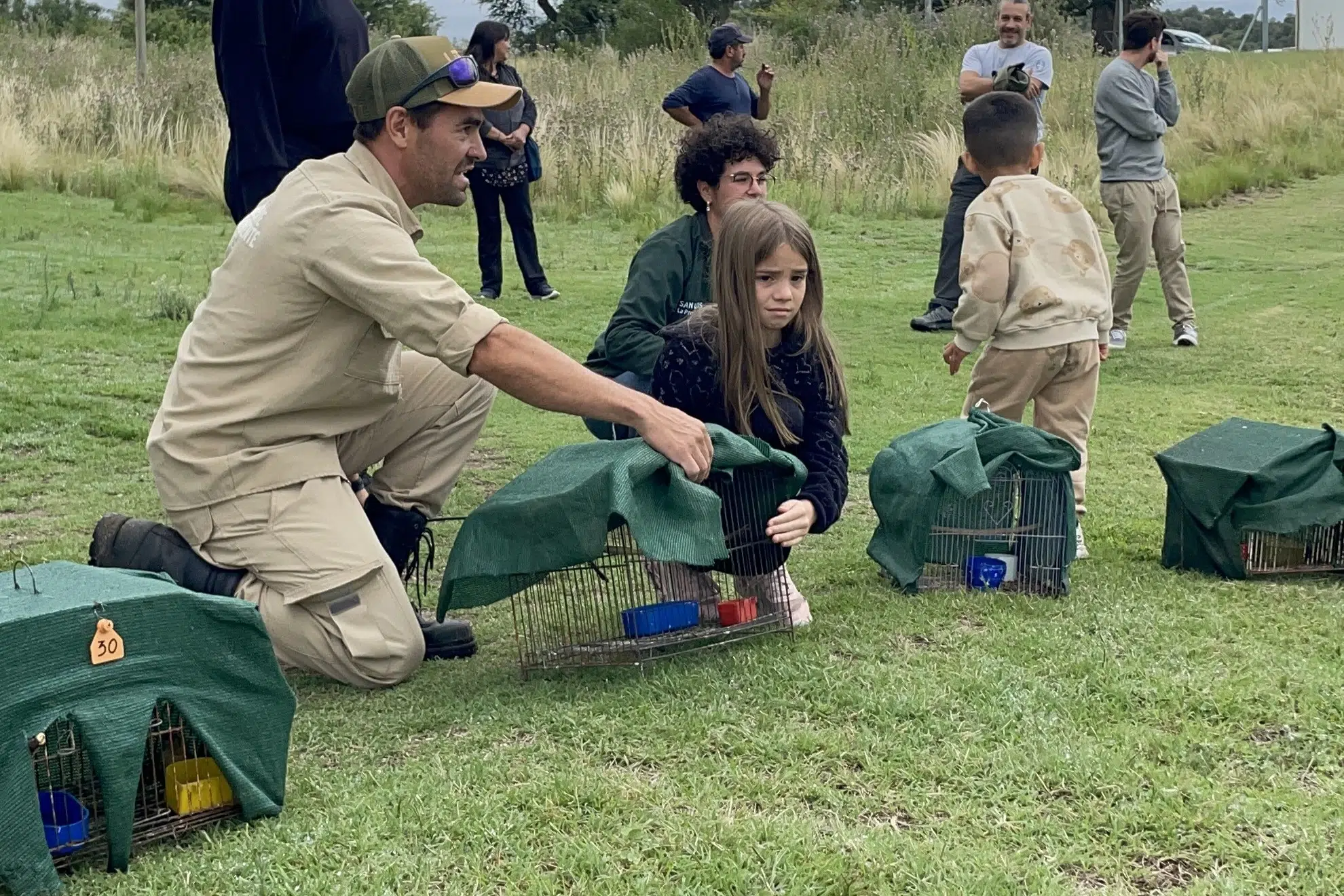
During the guided tour of the Fauna trail, attendees witnessed the release of:
- 2 black-capped warblers
- 4 blue-black grassquits
- 1 cowbird
The moment was described as a celebration of life and freedom. “When the animals have already recovered their health and have gone through a long process, it is time to return them to their home”, Torti noted, recalling that these birds were victims of illegal trafficking and pet keeping.
Voices of conservation
- Juan Ignacio Haudet, director of Biodiversity and Ecopark, highlighted: “Wildlife does not understand our political boundaries. We have brought birds from Mendoza to San Luis and are giving them a second chance”.
- Adrián Gorrindo, head of Wildlife, emphasized the importance of networking: “If we don’t, we condemn species that do not have distribution in our province to captivity, threatening regional biodiversity”.
Ecological importance of releases
The release of wild birds fulfills essential functions:
- Ecological restoration: seed dispersal, pollination, and pest control.
- Combating illegal trafficking: dismantling networks of black market trading of songbirds.
- Conservation of threatened species: strengthening of wild populations such as the Hooded Grebe.
- Environmental education: citizen participation that fosters awareness about the importance of not keeping birds as pets.
- Technical procedure: quarantine and rehabilitation in specialized centers to ensure the survival of the specimens.
The release in La Florida reaffirms the commitment of Mendoza and San Luis in the fight against illegal wildlife trafficking and pet keeping. These actions not only return freedom to the birds but also restore ecological balance and strengthen native biodiversity.



