



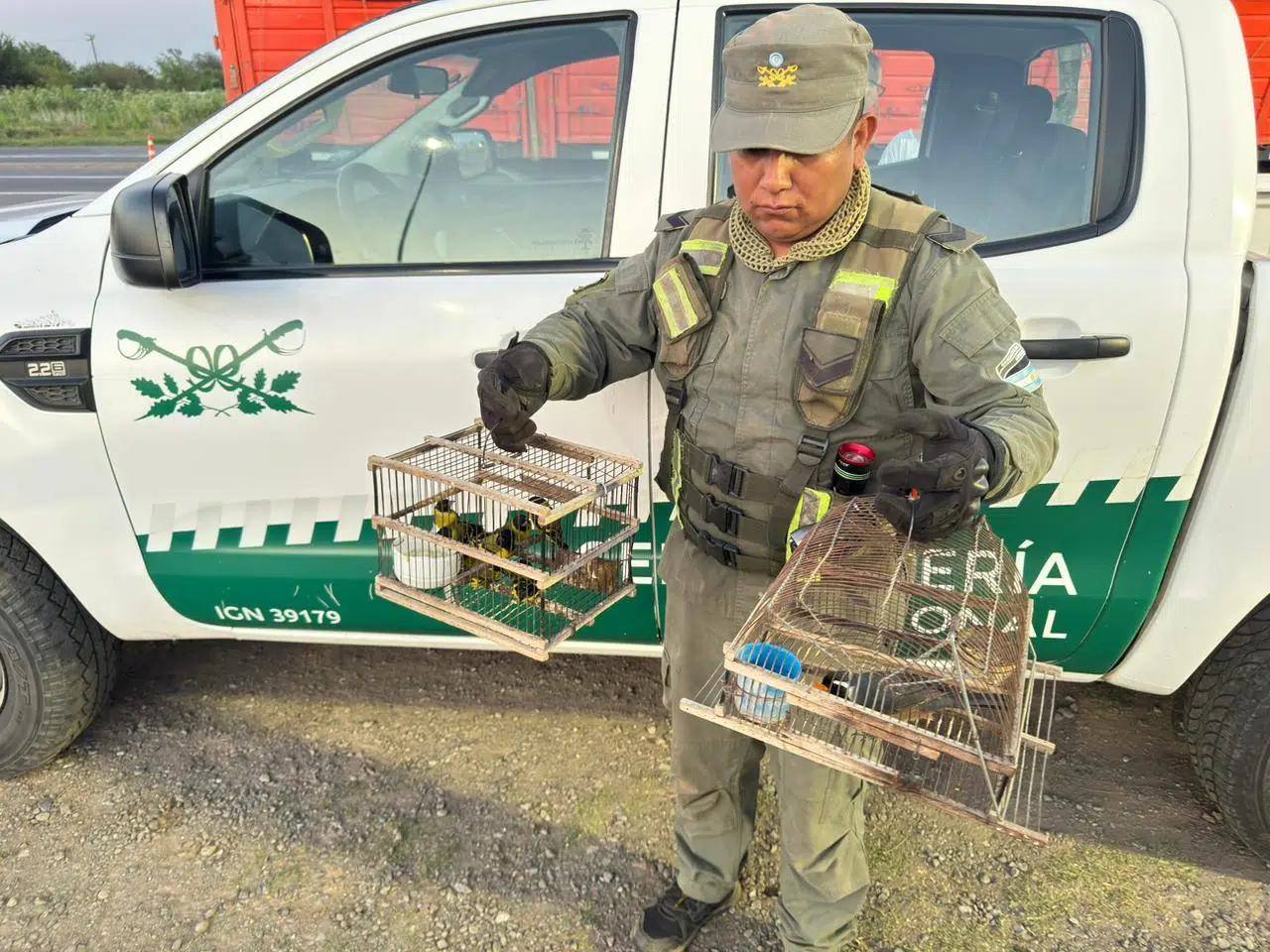
During a routine check on National Route No. 34, personnel from the “Totoras” Road Safety Section of Squadron 46 “Rosario” detected a case of illegal wildlife trafficking.
Upon inspecting a truck transporting onions, the officers found 166 land turtles and 10 birds —nine specimens of cabecita negra and one collared picotero— hidden in burlap-type bags.
The operation took place on October 16, at kilometer 58, and resulted in the arrest of the driver, who was charged with violating the National Law 22.421 on Wildlife Conservation.
By order of the Public Prosecutor’s Office, the animals were handed over to the Environmental Police of Rosario, and the vehicle was seized.
Illegal wildlife trafficking: a persistent threat to biodiversity
The illegal trade of wild animals in Argentina represents a serious ecological and health threat. Birds are the most trafficked due to their song and plumage, but mammals, reptiles, and amphibians are also captured, many of them endangered.
It is estimated that 90% of captured animals die during transport due to conditions of overcrowding, dehydration, and extreme stress.
Among the most affected species is the yellow cardinal, whose population has drastically decreased due to illegal capture.
Ecological and health consequences
- Ecosystem imbalance: the extraction of wildlife alters key functions such as pollination and seed dispersal
- Zoonosis risk: contact with trafficked animals can facilitate the transmission of diseases from animals to humans
- Unsanitary conditions: animals are transported in precarious environments, which exacerbates the health risk
Causes of wildlife trafficking
- Pet trade and collecting: the demand for wild animals as pets or collection pieces
- Illegal export: Argentina is a key source country in international trafficking, with frequent destinations in Europe and the Middle East
Legal aspects and institutional challenges
- Environmental crime: hunting, capturing, transporting, and marketing wildlife is classified as a crime under Argentine law
- Lack of awareness and weak penalties: in many cases, trafficking is not treated with the severity it deserves, being considered a bailable offense
- Need for coordination: a coordinated response between the state, justice, and civil society is required to strengthen controls and prosecution
Response actions and citizen participation
Organizations like Aves Argentinas and WCS Argentina actively work on:
- Case surveys
- Awareness campaigns
- Training for security forces
- Submission of technical reports to authorities
Additionally, citizens are urged to report sales points, fairs, or individuals that trade wild species, thereby contributing to curbing this illegal activity.



