



The Santa Fe Legislature began debating a project aimed at protecting bees and other pollinators, in a context marked by the loss of natural habitats and the advancement of intensive production models. The initiative aims to develop environmental policies that favor both biodiversity and the provincial beekeeping production.
The Provincial Program for the Comprehensive Protection of Bees and Other Pollinators proposes to conserve honey and native species through agroecological practices, restoration of degraded environments, and sanitary monitoring of apiaries. Additionally, it seeks to reduce the risk factors affecting these insects that are fundamental for the functioning of ecosystems.
The proposal was presented in the Santa Fe Legislature by the deputy Carlos del Frade, from the Broad Front for Sovereignty. According to the project, the main focus is on promoting production systems compatible with environmental care and strengthening small regional producers.

A key province for honey production
Santa Fe occupies a strategic position within the Argentine beekeeping activity. During 2024, the province produced about 15% of the honey exported by the country, establishing itself as one of the main hubs of the sector.
A large part of that production is directed towards international markets such as the United States, Germany, Spain, Japan, Belgium, Switzerland, the Netherlands, and the United Kingdom. In parallel, the activity generates employment and economic movement in various rural localities.
However, specialists warn that agricultural expansion and monocultures are reducing the floral diversity necessary for the development of bees. This situation affects both the species introduced from Europe and the native varieties that inhabit the Santa Fe territory.
For this reason, the project promotes the creation of connected biological corridors and the increase of floral resources throughout the year. It also foresees toxicological and sanitary controls especially in areas of intensive agriculture.
Differences between honey bees and native species
The Santa Fe territory presents very different environmental realities between the north and the south of the province. While the south is dominated by extensive agriculture, the north preserves areas linked to the humid Chaco and ecosystems with greater biodiversity.
In these environments, various species of native bees survive, including some stingless varieties like meliponas. These insects evolved alongside the local flora and have specific adaptations to interact with regional ecosystems.
Additionally, researchers emphasize that many bee species are still poorly studied in Argentina. Although there are scientific advances, there is still a lack of detailed information about their biology, behavior, and ecological role.
In this scenario, the loss of natural habitats emerges as one of the main threats to wild pollinators. The reduction of forests, grasslands, and areas with diverse vegetation limits their food and reproduction sources.
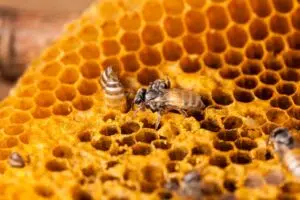
The ecological role of bees and their importance for ecosystems
Bees play an essential role within ecosystems because they actively participate in the pollination of wild plants and agricultural crops. Thanks to this task, they enable the reproduction of thousands of plant species and sustain a large part of the natural food chains.
Additionally, the presence of pollinators favors the production of fruits, vegetables, and seeds that are part of human and animal nutrition. Without these insects, many ecosystems would lose biodiversity and ecological stability.
Specialists also highlight that bees function as environmental indicators. When their populations decrease, it often reflects a deterioration in habitat quality, excessive use of agrochemicals, or the loss of native flora.
Therefore, promoting gardens with flowers, conserving biological corridors, and reducing contaminating practices has become a key strategy to protect these insects. Plants like lavender, sage, lantana, or alyssum provide nectar during different times of the year and help to sustain populations of bees, butterflies, and hummingbirds in urban and rural environments.



