



A recent study published in the journal Current Biology reveals a surprising discovery in the sea involving a group of orcas.
It refers to the animals residing in the southern part of the Salish Sea (between Columbia Británica and Washington), who make tools with seaweed to groom each other.
Through the use of drones, researchers recorded how these orcas cut kelp stalks and use them to scratch and massage each other. This behavior was named allokelping.
The surprising discovery in the sea with these orcas: what is allokelping about
Scientists documented this behavior through aerial observations with drones by a team led by researchers from the Marine Mammal Research Unit.
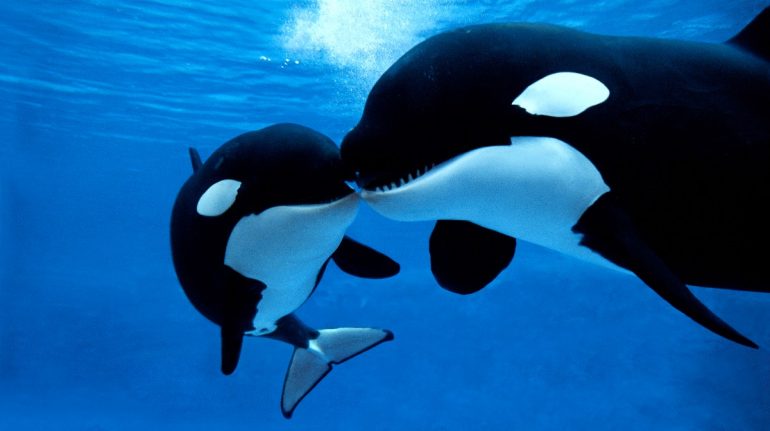 The striking behavior of the orcas.
In eight out of the 12 tracking days, they recorded how the orcas carefully picked and manipulated kelp seaweed. They cut the ends to then use them in a behavior they named “allokelping”.
This practice consists of gently sliding the seaweed over another individual’s skin, interpreted as a form of social grooming.
The orcas adopted “S” shaped postures or lay on their sides while being massaged, in an interaction that seems to go beyond simple hygiene.
Although this type of behavior has been observed in animals like chimpanzees, otters, and some dolphins, it is the first time it has been documented in cetaceans that use tools to care for others.
They observed allokelping in both adults and juveniles, males and females. They detailed that it occurred more frequently among related individuals or those sharing close social groups.
This suggests it is a behavior with a strong emotional component, reinforcing bonds among group members and being part of a shared culture.
Beyond the discovery itself, the research takes on special relevance due to the context in which these orcas live.
The southern resident population of the Salish Sea is in critical conservation status, with only 73 registered individuals by mid-2024.
The threats they face include habitat loss, increasing underwater noise, chemical pollution, and the drastic decrease in Chinook salmon, their main food source.
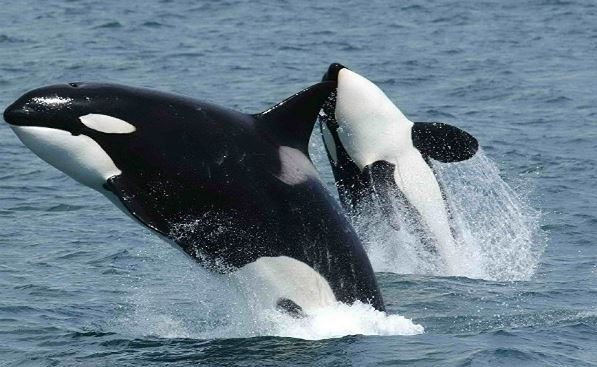 What the study says about this behavior.
For scientists, the discovery of tool use for grooming reinforces the urgency of protecting not only the species but also their culture.
In this sense, as the study authors point out, if these orcas disappear, not only will individuals be lost, but also a unique form of social interaction. They also highlighted that it probably does not exist anywhere else on the planet.


