



Have you ever seen an **owl** and been amazed at how easily it can turn its head? This silent **bird** belonging to the order of **strigiformes** or nocturnal birds of prey stands out not only for flying stealthily but also for being known as [a territorial animal](https://noticiasambientales.com/animales/en-san-luis-liberaron-aves-nativas-un-aguila-mora-y-un-jote/), agile, and with peculiar plumage.
According to biologists, owls are very light, daring, and have a sharp sense of hearing. Although there are around **18 species** distributed almost worldwide, they are characterized by weighing between 224 and 710 grams. Their **lifespan in captivity** can reach 25 years, while in their **natural habitat** they only live around 11 years.
### Physical characteristics of owls
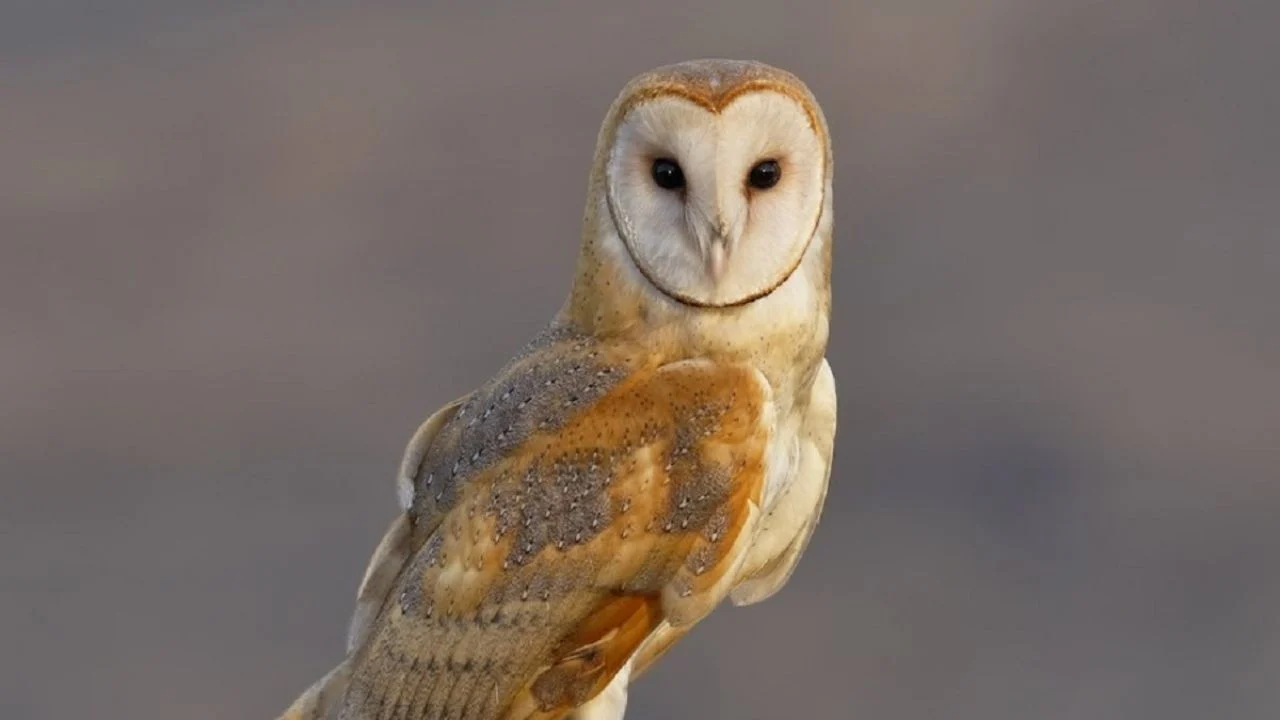
Compared to **owls**, owls do not have raised feathers resembling ears and have a distinctive face that resembles a heart shape.
Additionally, their black eyes are very striking, and **the male differs from the female** by the color of its chest, as this part of its body is much paler and lacks brown spots.
### Head and vision
The head of this unique bird can rotate 270° because, unlike humans, it has twice the number of vertebrae in its neck: 14 in total.
Regarding its **visual capacity**, this bird has very similar binocular vision to that of humans, being able to see with both eyes at the same time, but in its case, it’s in 3D.
### Feeding and reproduction
Finally, among the most outstanding curiosities of these silent birds, we have their **feeding and reproduction**. These nocturnal birds of prey feed on mice, bats, and lizards, although they also eat [small insects such as spiders](https://noticiasambientales.com/animales/que-hacer-ante-una-picaduras-de-yararas-natas-viudas-negras-y-aranas-violin-medidas-preventivas/), worms, and cockroaches.
Biology specialists explain that **they are commonly monogamous**, laying 5 to 7 eggs at a time, with an incubation period of approximately 26 days. During this time, the male is responsible for finding food while the female takes care of the chicks.
Have you visited our YouTube channel yet? Subscribe now!



