



The loss of habitat, deforestation, and illegal trade are advancing simultaneously. Added to this is climate change, which intensifies pressures on fragile ecosystems that could disappear. Therefore, conservation is no longer an option but an urgency.
In this context, environmental organizations warn that time is running out. Meanwhile, rare species and little-known ones face an uncertain future. Thus, protecting them also means defending the planet’s natural balance.
Looking towards 2026, the focus is on extraordinary creatures that can still be saved. However, doing so requires coordinated and sustained action. Otherwise, many could disappear silently.

European eel: a key link at risk
Once abundant in rivers and coasts, today the European eel is experiencing a population collapse. In a few decades, their numbers have dropped drastically in much of Europe. This is due to overfishing, pollution, and river fragmentation.
Additionally, illegal trade has worsened their decline. However, they play an essential role as food for other species. Therefore, their disappearance would disrupt entire food chains.
Although recent records offer minimal signs of hope, the risk persists. Therefore, scientific monitoring will be key in the coming years. Thus, their recovery is still possible.
Cao Vit gibbon: the primate that sings on the edge of silence
This gibbon, known for its song, is one of the rarest primates in the world. Believed extinct for decades, it was rediscovered at the beginning of the 21st century. Today, only a few dozen individuals survive.
The low genetic diversity and inbreeding threaten its future. Added to this are extreme weather events and habitat loss. Therefore, any disturbance can be critical.
Current efforts aim to restore forests and strengthen the population. Additionally, censuses allow for the evaluation of real progress. Thus, every individual counts to prevent extinction.

Psychedelic ground tiger: beauty that condemns
The Indian rainbow tarantula stands out for its unique metallic coloration. However, that beauty has made it a target for the illegal pet trade. At the same time, the forests where it lives are rapidly shrinking.
Its limited distribution makes it especially vulnerable. Therefore, the loss of a single habitat fragment has a high impact. Additionally, its illegal extraction remains a constant threat.
Current initiatives combine science and community education. Thus, they aim to curb demand and protect its environment. In this way, conservation targets both the species and the people.
Blackchin guitarfish: a unique form in danger
This fish, half shark and half ray, inhabits the Mediterranean and the eastern Atlantic. Its slow reproduction makes it especially sensitive to overfishing. Additionally, the degradation of the seabed accelerates its decline.
Today it is in critical danger. Therefore, its protection requires limiting accidental catches. Likewise, expanding protected marine areas is essential.
Current actions aim to reduce fishing mortality. In this way, they attempt to stabilize its populations. Thus, the ocean preserves one of its most unique forms.

Temminck’s pangolin: the most trafficked mammal
This African pangolin inhabits arid areas of the continent. Its slow gait and behavior make it vulnerable to poaching. The demand for meat and scales drives its illegal trade.
Although it is an extraordinary example of adaptation, it cannot defend itself alone. Therefore, rescues and rehabilitation are essential. Additionally, controlled reintroduction offers new opportunities.
Emergency clinics play a key role. Thus, every animal saved adds to the species’ survival. The fight against trafficking remains central.
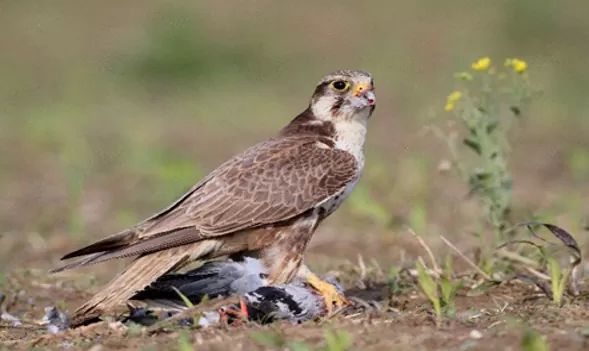
Saker falcon: tradition that threatens
This falcon was revered for centuries in falconry. However, its excessive capture drastically reduced its wild populations. Today, fewer remain than the ecosystem needs.
The international trade continues to pressure the species. Therefore, tracking trade routes is a priority. Additionally, cooperation between countries is indispensable.
With precise data, better strategies can be designed. Thus, tradition and conservation could find balance. Otherwise, the risk of disappearance increases.
Clouded leopard: hunted spots
This Asian feline is a victim of wildlife trafficking. Live specimens, skins, and body parts are traded. Additionally, deforestation reduces its territory.
Illegal hunting fragments already scarce populations. Therefore, community patrols play a vital role. Likewise, the protection of national parks is decisive.
When communities participate, conservation is strengthened. Thus, the clouded leopard can continue inhabiting the forests. Its survival depends on territorial control.
Utila spiny-tailed iguana: hope among mangroves
This iguana lives exclusively in mangroves on a Honduran island. For years, its population was in strong decline. However, recent censuses show an encouraging recovery.
The protection of mangroves was key to this progress. Additionally, working with local actors made a difference. Thus, conservation has proven that it can yield results.
Even so, it remains in critical danger. Therefore, maintaining efforts is essential. The habitat remains its main defense.

Saint Lucia fer-de-lance: fear and conservation
This venomous snake is endemic to a small Caribbean island. Although feared, it is not aggressive if not disturbed. However, it is often eliminated out of fear.
Human persecution has reduced its populations. Therefore, changing social perception is fundamental. Environmental education has become a key tool.
Revaluing it as natural heritage is the goal. Thus, fear can transform into protection. Its survival depends on cultural change.
Wild tulips: declining plant beauty
The wild species of tulip inhabit Central Asia. More than half of the world’s varieties grow there. However, they face multiple simultaneous threats.
Overgrazing, urbanization, and climate change affect them. Additionally, excessive collection reduces their natural regeneration. Therefore, their future is uncertain.
Conservation combines tradition and science. Working with local communities is essential. Thus, protecting flowers also preserves culture and landscape.

How to prevent the extinction of these species
Protecting habitats is the first step for their survival. Without healthy ecosystems, no species can endure. Therefore, halting deforestation is urgent.
Additionally, combating illegal trade requires international cooperation. Stricter laws and effective control can make a difference. Likewise, community participation strengthens surveillance.
Finally, climate action is transversal to all solutions. Reducing emissions and adapting to change protects biodiversity. Saving these species is, ultimately, saving the planet’s balance.

