

The cold doesn’t stop them: Why do mosquitoes survive in Buenos Aires and Greater Buenos Aires despite the low temperatures?

With winter approaching, mosquitoes survive the low temperatures and the cold weather encourages people to wrap up warm, many Porteños and residents of Greater Buenos Aires wonder why the presence of mosquitoes remains a constant nuisance.

Despite the popular belief that the cold drives them away, experts explain that several species of these insects have a surprising adaptation capacity, and recent climatic conditions have favored their persistence.

Traditionally, the arrival of low temperatures is associated with a drastic decrease in the mosquito population, especially of the Aedes aegypti, the main dengue vector.

Aedes albifaciatus is a mosquito with a very wide distribution in Argentina, from Tierra del Fuego to the north of the country. Credits: Raul E. Campos

While it is true that the activity of this species decreases considerably and its adults die in the cold, their eggs are incredibly resistant and can survive the winter, waiting for warmer conditions to hatch.

However, the current situation is complicated by the presence of other species that show much more tolerance to low temperatures.

The Aedes albifasciatus, popularly known as the “flood mosquito” or “puddle mosquito“, is the main protagonist of the recent invasions. This species is characterized by:

  • Cold resistance: Unlike the Aedes aegypti, the Aedes albifasciatus can survive and reproduce in lower temperatures, and can even be found in cold regions like Tierra del Fuego.
  • Life cycle linked to rains: Its eggs are laid in mud and hatch with the rains, which means that episodes of precipitation, even in cold periods, can generate new massive hatchings.
  • Aggressive bite: Although it is not a vector of diseases like dengue, Zika, or chikungunya, its bite is more annoying and intense than that of the Aedes aegypti.

In addition to the Aedes albifasciatus, another species that can be found is the Culex quinquefasciatus, a mosquito from temperate areas that also has greater cold tolerance than the Aedes aegypti and can survive as an adult for several months.

Transmitting mosquitoes Transmitting mosquitoes

Factors explaining why mosquitoes survive in the cold

Specialists point out that the continuity of rainfall, even with temperature drops, is a key factor.

The rains, although sporadic or less intense than in summer, create puddles and accumulations of water where the eggs of Aedes albifasciatus find the ideal environment to hatch.

While the females may be less active in the cold, the abundance of individuals is such that the nuisance persists.

It is important to highlight that mosquitoes survive, although the activity of Aedes aegypti decreases with the cold, the prevention of their reproduction remains fundamental.

Their eggs can remain dormant in any container with accumulated water inside or outside houses, waiting for the return of suitable temperatures to hatch in spring.

Mosquito invasion in San Vicente Mosquito invasion in San Vicente

Recommendations for residents:

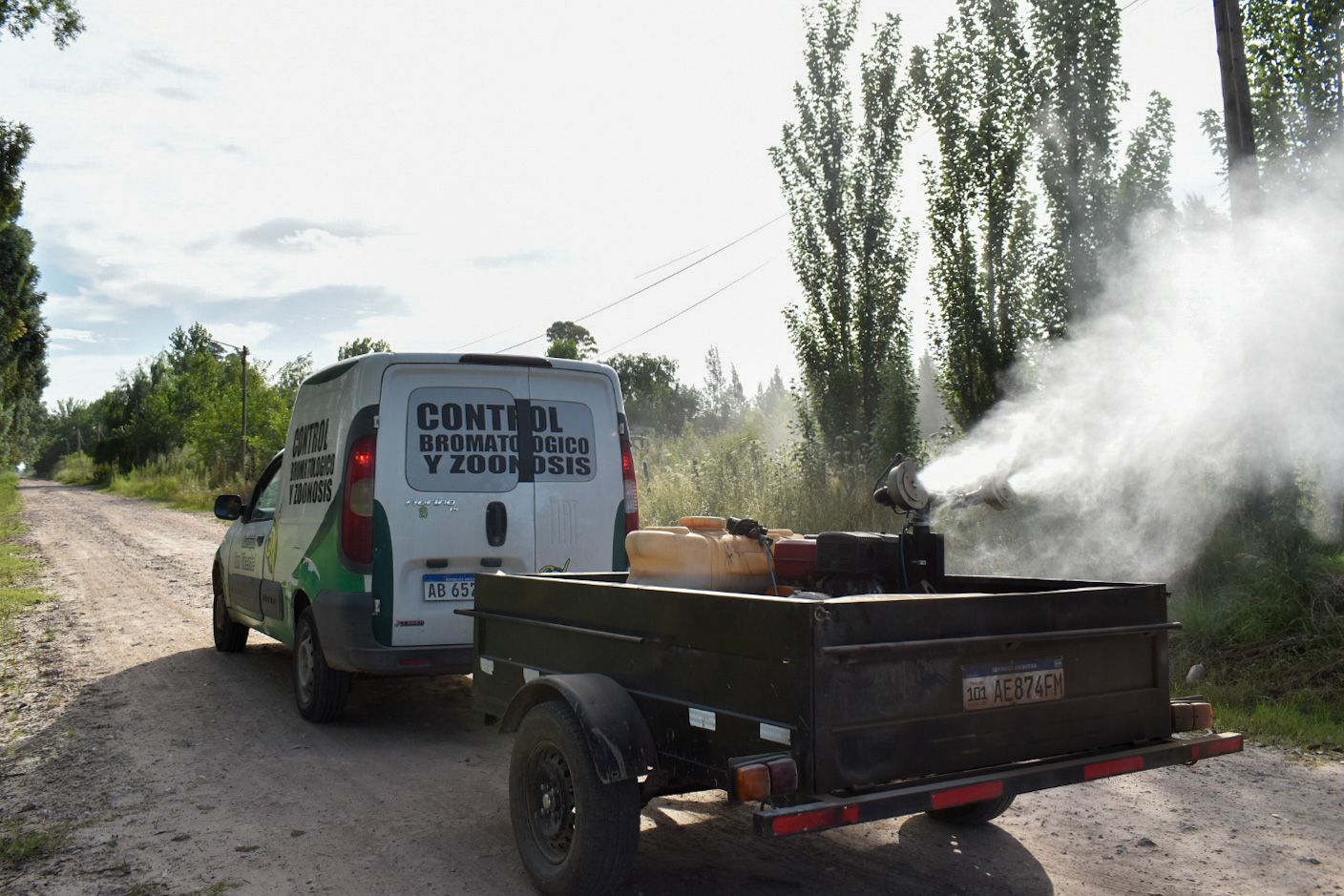
Although fumigation is a tool used by authorities for vector control, it is not the only nor the most effective measure. The key remains in the elimination of breeding sites:

  • Remove stagnant water sources: Eliminate any containers that can accumulate water (pots, tires, buckets, etc.).
  • Clean drains: Keep gutters and drains clean and free of leaves.
  • <li data-sourcepos

Compartí esta nota

Latest news

Te pueden interesar
Te pueden interesar

Successful return to the sea of a rehabilitated elephant seal in San Clemente del Tuyú

A juvenile specimen of Southern Elephant Seal (Mirounga leonina)...

Over 350 turtles were rescued in Mexico during an operation: they were hidden among goods

The illegal wildlife trafficking has once again raised environmental...

Corrientes celebrates the birth of the 50th jaguar in the wild, a historic return in Iberá National Park

The Rewilding Argentina Foundation announced the birth of a...

Environmental organizations in Mendoza launch a campaign to demand the closure of the province’s serpentarium

A new campaign driven by environmental organizations has reignited...
