



The polar bear, emblem of the Arctic, is experiencing a worrying decline: there are between 22,000 and 26,000 specimens left worldwide, and in regions like the Beaufort Sea and western Hudson Bay, their populations have fallen by up to 50%. However, their decline not only threatens their survival but also the balance of the polar ecosystem.
Polar bears depend on sea ice to hunt seals, their main food source. However, the Arctic is warming three to four times faster than the global average, causing the loss of ice that sustains their way of life. Without this habitat, their ability to hunt, move, and reproduce is severely affected.
A recent study published in the journal Oikos reveals that polar bears fulfill a vital ecological function as scavengers. By hunting and leaving prey remains, they transfer large amounts of nutrients from the ocean to the ice surface, creating a food web that supports multiple species.
According to the research, these predators leave around 7.6 million kilos of meat per year. This food source benefits at least eleven species, such as Arctic foxes, ravens, and gulls. Their decline not only reduces their numbers but also alters the balance of the entire food chain of the Arctic.
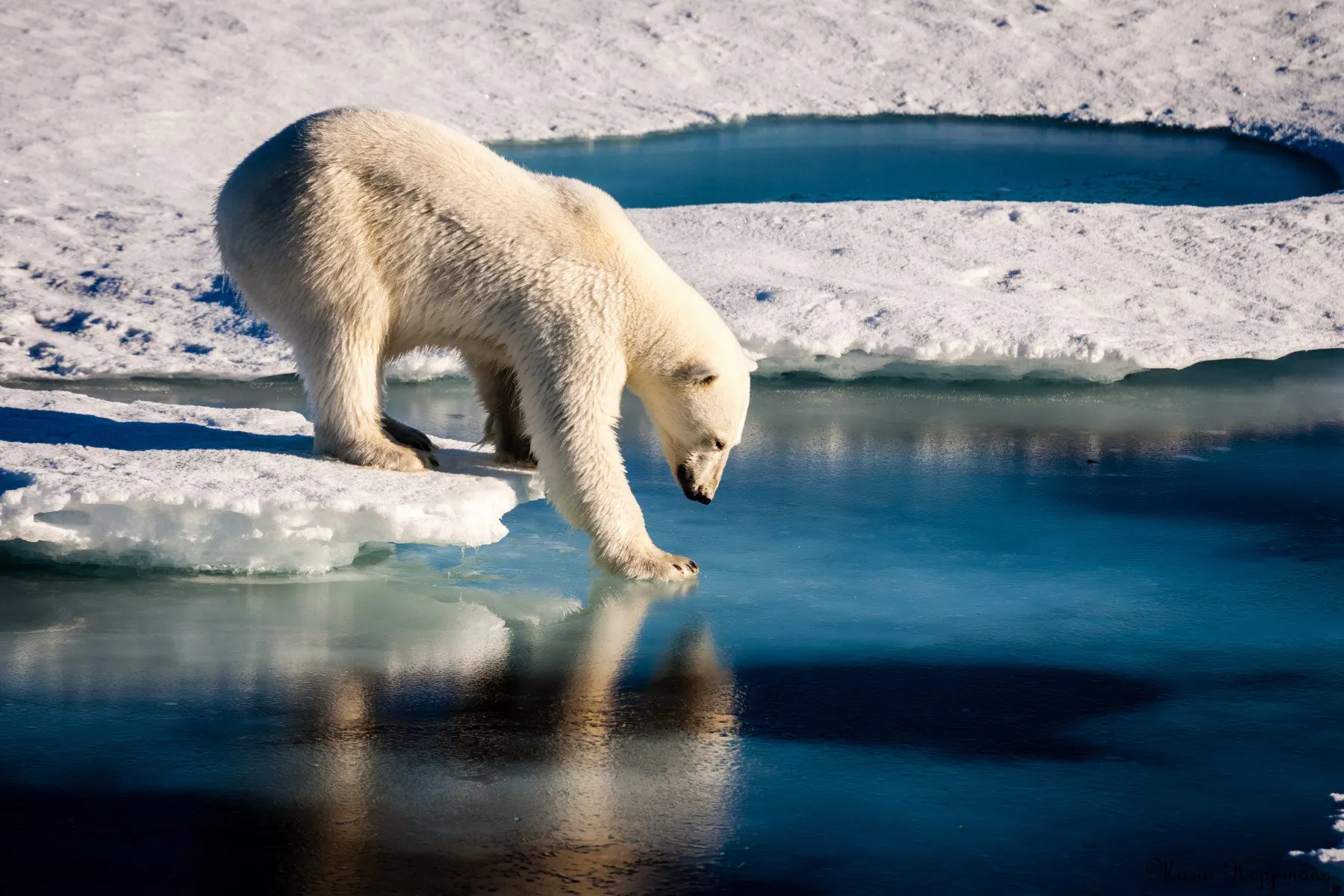
The impact of climate change on their survival
Global warming is the main threat to polar bears. The loss of sea ice, where they hunt and rest, forces them to travel increasingly greater distances in search of food. In some cases, they are forced to move to land, where food sources are scarce and less nutritious.
Studies by the U.S. Geological Survey and Nature Climate Change warn that if greenhouse gas emissions continue at the current rate, more than 80% of populations could collapse before the year 2100. In the most critical scenarios, the polar bear would disappear from much of the Arctic by the end of the century.
Moreover, the loss of ice affects reproduction and the development of cubs. Mothers must expend more energy to feed themselves, reducing the chances of survival for the cubs. With less food and habitat, the future of the species becomes uncertain.
An essential role in the Arctic food web
The polar bear occupies the top of the Arctic food chain. Its role as a super predator maintains the balance between seal populations and other marine species. Additionally, the remains it leaves after hunting serve as food for terrestrial animals and scavenging birds, which heavily depend on this source in an environment where food is scarce.
Without polar bears, many species would lose an essential part of their diet. Arctic foxes, for example, rely on abandoned seal remains to survive during the harshest winter months. The same goes for birds like ravens, which feed on carrion on the ice to nourish themselves and breed.
Therefore, their disappearance would have a domino effect: with their food source gone, many species would find their survival compromised. The polar bear is not only a symbol of the Arctic but an ecological pillar that connects marine and terrestrial ecosystems.

Global conservation status
Currently, the polar bear is listed as “vulnerable” by the International Union for Conservation of Nature (IUCN). Although it is not yet considered critically endangered, projections indicate that its population will continue to decline rapidly if global warming is not halted.
Some regions in northern Canada and Greenland still host stable populations, but in others, like Alaska and Siberia, the numbers show significant declines. Conservation programs aim to protect hunting areas and limit industrial pollution in the Arctic, but the greater challenge remains global: curbing emissions and preserving sea ice.
The loss of polar bears would not only mean the disappearance of an iconic species but a profound alteration of an entire ecosystem that depends on their presence to remain balanced.
In summary, the polar bear represents much more than an icon of Arctic wildlife: it is the ecological heart of an interdependent web of life. Protecting it means not only saving a species but preserving an entire ecosystem, threatened by the accelerated warming of the planet. Without ice, there is no hunting. Without hunting, there is no food. And without food, the entire Arctic loses its natural balance.


