



Among the most unique records of biodiversity, the golden jewel beetle stands out for its exceptional longevity. This species can live up to 50 years, an unusual figure in the insect world. However, its secret is not in adulthood, but in a prolonged larval stage.
Unlike other invertebrates, it spends decades hidden under the bark of trees. During that time, it remains invisible to predators and external changes. Thus, its life cycle adapts to the slow rhythms of the forest.
This behavior makes the golden jewel beetle a silent indicator of forest health. At the same time, it arouses scientific interest for its resilience and adaptation.
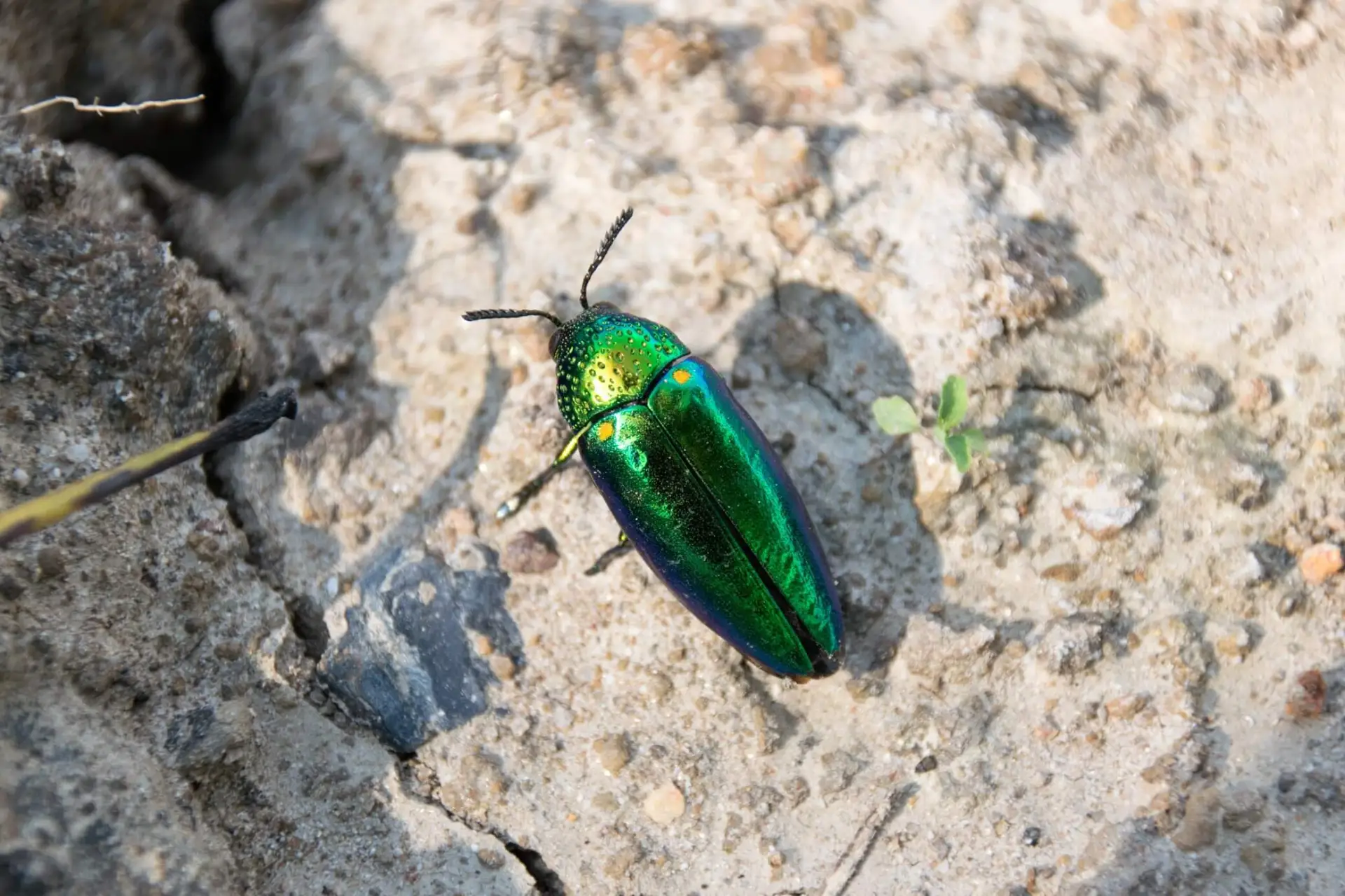
Origin and natural habitat of the golden jewel beetle
The golden jewel beetle is native to North America. Its distribution is concentrated in the coniferous forests of the west, from California to British Columbia. These environments offer the necessary conditions for its prolonged development.
Its natural habitat is linked to pines and firs, especially in areas where there is dead wood or weakened trees. There it lays its eggs, ensuring shelter and food for the larvae. In this way, the insect’s cycle is integrated into the natural process of the forest.
The presence of fallen or freshly cut logs is key to its survival. Therefore, the forest dynamics directly influence its distribution and abundance.
Appearance and adaptation to the environment
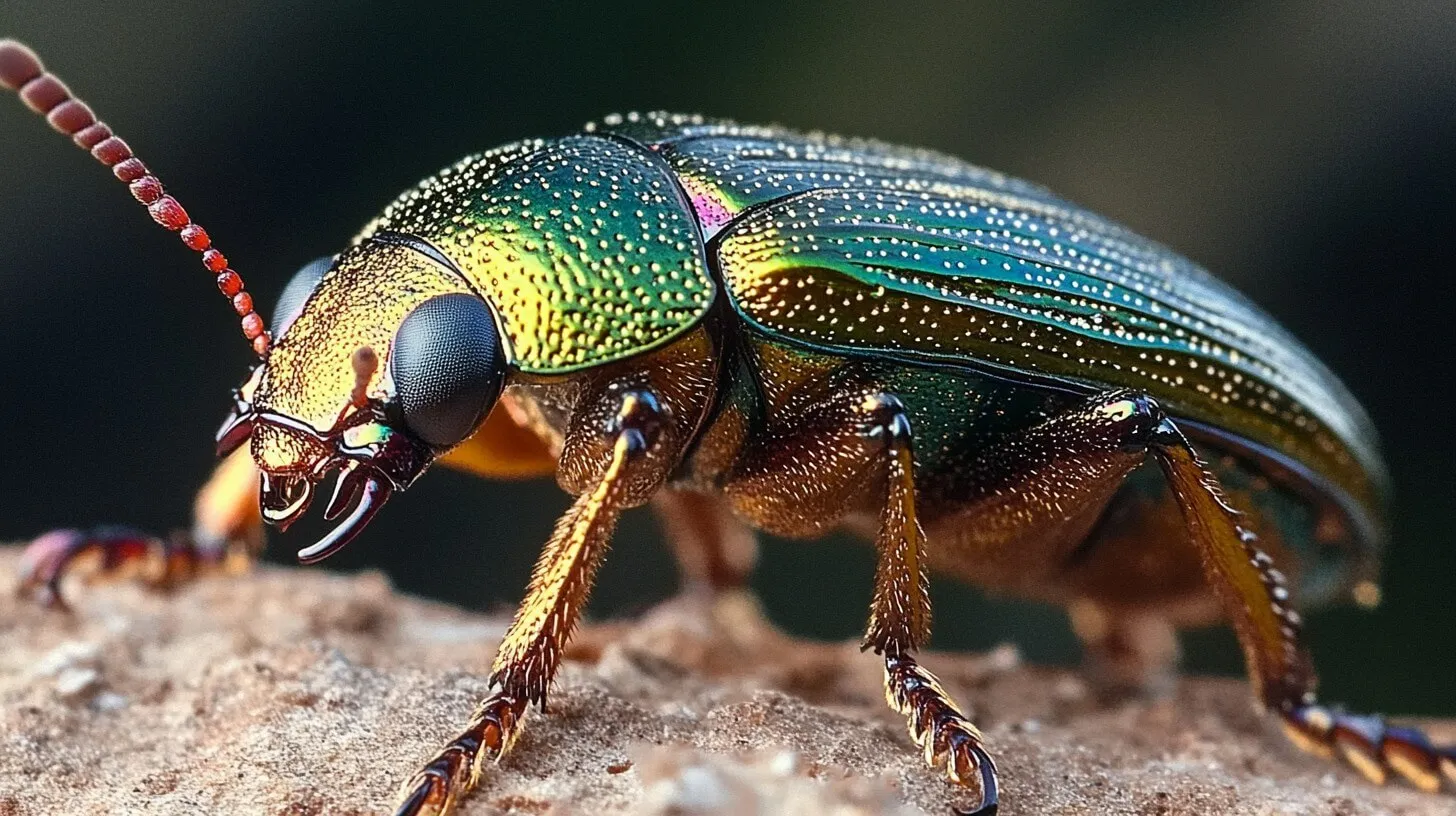
The golden jewel beetle is recognized for its metallic exoskeleton, with golden, green, and coppery reflections. This appearance does not depend on pigments but on a microscopic structure. Light reflects in a complex way, generating its characteristic shine.
This iridescence serves several functions. On one hand, it facilitates camouflage among leaves and bark. On the other, it helps regulate body temperature. Additionally, it plays a role in attraction during reproduction.
Thanks to these adaptations, the insect manages to survive in environments where resources vary over time.
A life cycle marked by patience
The larval phase is the most extensive and determining. Under the bark, the larva slowly feeds on the wood, taking advantage of scarce but constant nutrients. Depending on the environmental conditions, this stage can last decades.
When it finally emerges, the adult lives a short time. In weeks or months, it flies, reproduces, and completes its cycle. Thus, all vital effort is concentrated on ensuring the next generation. This contrast between an extensive youth and a brief adulthood is key to its total longevity.
Ecological role and tensions with human activity
In the ecosystem, the golden jewel beetle plays an essential role. By degrading dead wood, it contributes to the recycling of nutrients and to forest regeneration. However, this same ability generates conflicts.
In human wooden structures, it can cause damage that is difficult to detect. Therefore, in some regions, it is considered a pest. Even so, its existence reminds us that the conservation of forests involves understanding and respecting natural processes in the long term.



