



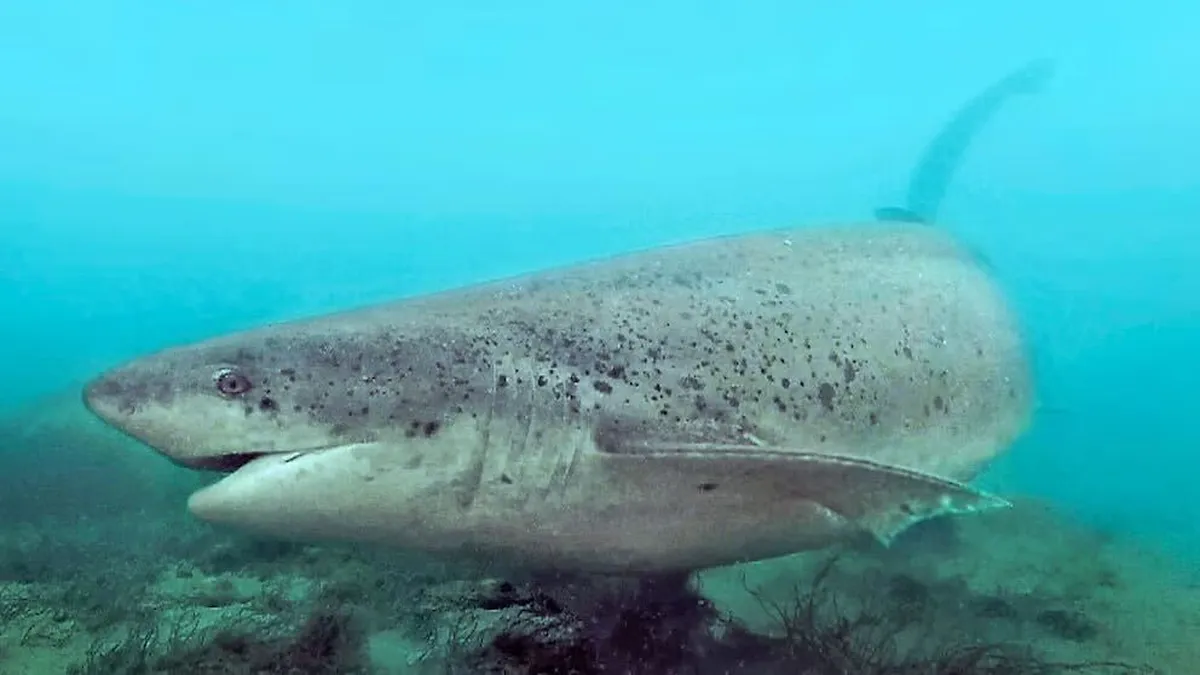
A binational team of researchers is conducting a scientific campaign on the Buenos Aires coast to study the behavior and migratory routes of the broadnose sevengill shark (Notorynchus cepedianus), an emblematic species of the South Atlantic.
The project, led by Andrés Jaureguizar, a researcher at the Scientific Research Commission and a member of the group Southwestern Buenos Aires Coastal Ecosystems (UPSO), aims to generate critical information for the protection of sharks and other large marine predators.
San Clemente del Tuyú: a “kindergarten” for sharks
During October, the team tagged 26 specimens and placed four satellite devices to record movements, depth, temperature, and environmental conditions.
Cabo San Antonio, in San Clemente del Tuyú, was identified as the only known breeding site in the world for this species, where abundant newborn specimens are observed in turbid, nutrient-rich waters.
“This environment functions as a natural kindergarten, offering protection and food to the juveniles,” explain the researchers.
Apex predators: regulators of marine balance
The broadnose sevengill shark, one of the only two species with seven gills, can reach three meters in length and inhabits from Punta Rasa to Bahía San Blas.
Its role as an apex predator is vital for maintaining the health of the marine ecosystem, regulating populations and preventing imbalances.
“If they disappear, the entire ecosystem becomes unbalanced,” warns Jaureguizar.
Threats and protection measures
Although it poses no danger to people, the broadnose sevengill shark faces threats from sport and artisanal fishing, which can cause it stress and harm even after being released.
Mandatory release is promoted, and work is being done with local fishermen to improve compliance with regulations.
Beyond the sevengill: other species under study
The team also monitors other vulnerable species such as:
- School shark
- Sand tiger shark: inhabits from Argentina to the Caribbean, even in freshwater
- Tope shark: globally endangered
- Guitar fish: plays an ecological role by removing the seabed, facilitating the feeding of other species
Long-term research and territorial expansion
The campaign is part of a research line on large sharks of the South Atlantic, which includes the analysis of:
- Climate change
- Impact of artisanal and sport fishing
In December, a second stage will be developed in Patagonia, along with the Blue Patagonia Project, to expand monitoring towards the south of the country.
Alliances for marine conservation
The project is supported by:
- Temaikén Foundation
- Blue Marine Foundation
- Uruguayan Blue Sea
- AquaMarina
The study of the broadnose sevengill shark and other marine species on the Buenos Aires coast not only provides scientific knowledge but also strengthens conservation strategies, promotes environmental education, and reinforces the regional commitment to marine biodiversity protection.
The research is key to ensuring that these apex predators continue to fulfill their ecological role and that coastal ecosystems remain healthy and resilient.



