



In a true milestone for the conservation of native fauna, the ocelot returns to Corrientes. Hand in hand with Rewilding Argentina Foundation, the reintroduction of a specimen of this feline was accomplished in the Iberá National Park.
This spotted animal, which had disappeared from much of the province due to habitat loss and hunting, returns to restore the balance of the ecosystem.
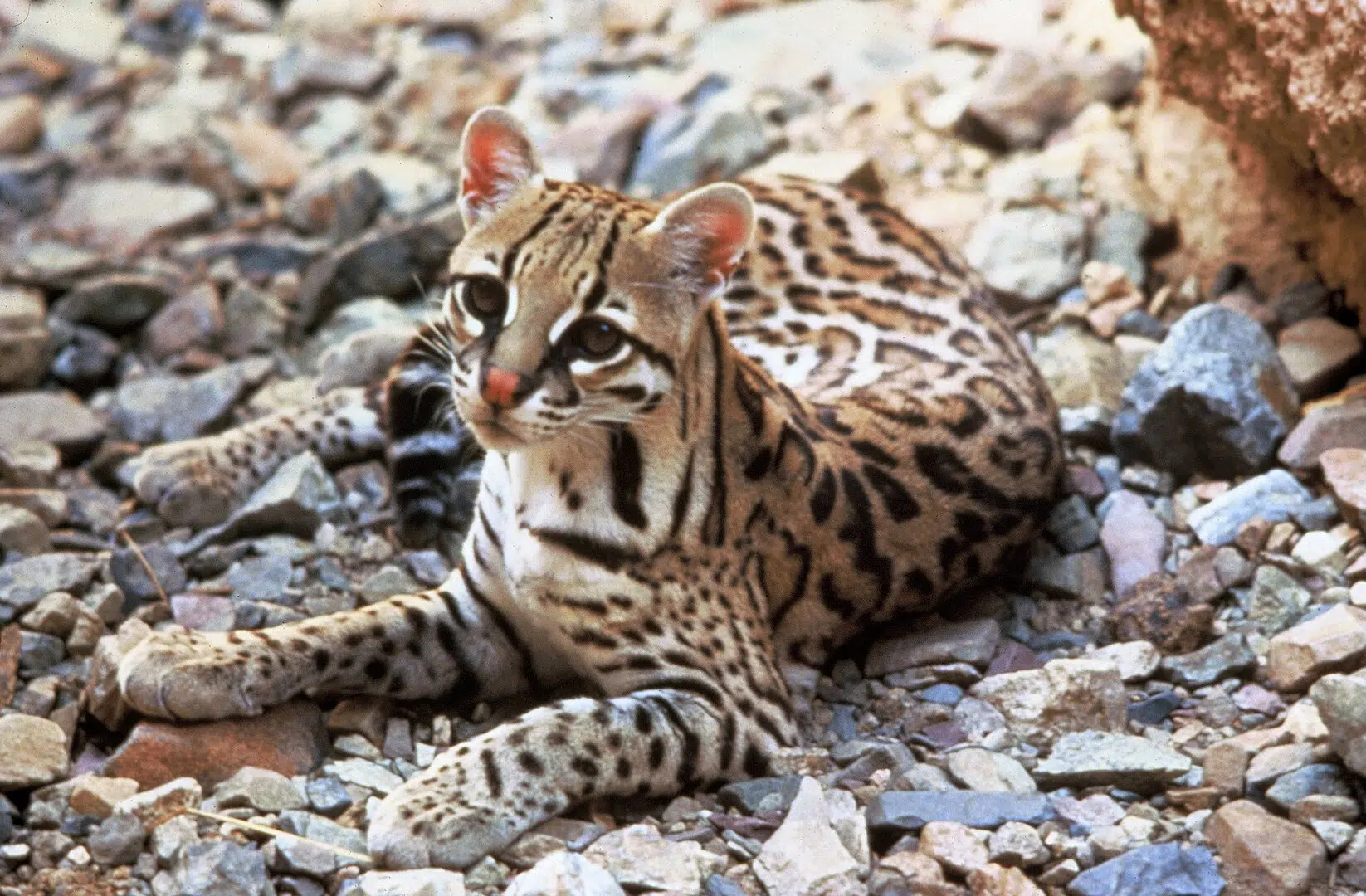
What the ocelot is like and the case of “Pelusa”
The ocelot, an opportunistic hunter that feeds on rodents, rabbits, and birds, among other species, plays a vital role in controlling the populations of its prey. Its reappearance in the Iberá Wetlands is a fundamental step for the health and functionality of the ecosystem.
 What the ocelot is like, which had disappeared from Corrientes. (Photo: Wikipedia).
In this case, the young ocelot, named “Pelusa”, was released after three years of preparation. To monitor her adaptation and movements in the wild, she was fitted with a GPS and VHF collar. This device provides valuable data on her behavior, hunting areas, and territory use.
Additionally, strategically placed trap cameras installed by the Foundation provide visual information on her interactions and activities, contributing to the success of this recovery program.
The reintroduction of this key predator not only symbolizes the fight for the conservation of endangered species but also represents a significant advance for the revitalization project of Argentina’s natural ecosystems.
Where the ocelot lives and why its population decreased
Present from southern United States, western and eastern Mexico to South America. It is found in all mainland Central American countries, the northern and northeastern regions of Argentina and Paraguay.
It is a terrestrial species, but also arboreal, and has a nocturnal and crepuscular behavior. They are cryptic, sympatric, territorial, opportunistic, and solitary animals.
 Where the ocelot lives. (Photo: Wikipedia).
Currently, it has disappeared from much of the province of Corrientes, including the Iberá Wetlands, mainly for two reasons:
-
Indiscriminate hunting: historically, the ocelot was a highly hunted species due to the value of its fur. Its fur, with elongated spots and attractive coloring, was highly sought after in the illegal market for the making of coats and other luxury items.
-
Destruction and fragmentation of its habitat: the transformation of natural ecosystems for agriculture, livestock, and urban development caused a massive loss of the dense vegetation on which ocelots depend. By destroying their natural habitat, their sources of food disappear, as well as the places where they shelter, reproduce, and raise their cubs.



