



The El Potrero Reserve, in **Entre Ríos**, is celebrating a milestone in the [conservation of native fauna](https://noticiasambientales.com/animales/un-cambio-impositivo-resulta-clave-para-la-conservacion-del-venado-de-las-pampas-de-que-se-trata/) these days. After years of work, the **release of the** **brown brocket deer** (*Mazama guazubira*), a native cervid that was declared a **Provincial Natural Monument in 2018**, has been achieved.
This initiative aims to **reverse the disappearance of the species**, which had not been seen in the area for over a decade.
## Conservation of native fauna and a long road to freedom
The program for **repopulating the brown brocket deer** was a comprehensive effort focused on the **rehabilitation of fauna** that suffered from the consequences of [mascotism, illegal possession](https://noticiasambientales.com/animales/santa-fe-enfrenta-al-trafico-de-fauna-como-frenar-el-mascotismo-y-el-comercio-ilegal-de-la-vida-silvestre/) and accidents.
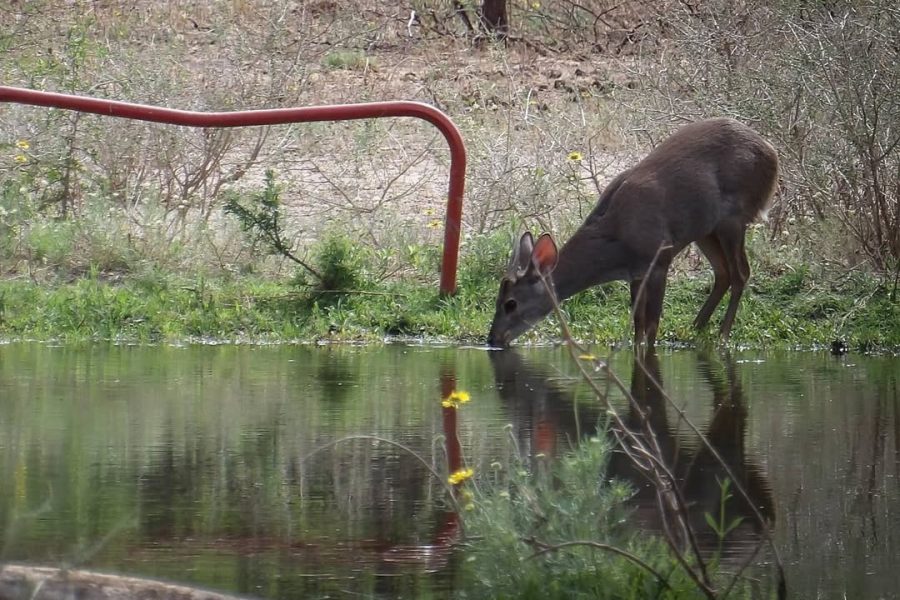
The rescued animals go through a process of **quarantine and veterinary care** before their adaptation stage in a 13-hectare area of native forest, where they recover the essential skills to **survive in their natural environment**.
The conservation project gained strength in **2017** with the arrival of the first breeding specimens: **Memé and Chiví**.
The subsequent births were crucial for the population recovery. Over time, more brocket deer from **rescues, voluntary deliveries, and collaborations** with institutions such as [Buenos Aires Ecopark](https://buenosaires.gob.ar/vicejefatura/ambiente/ecoparque) were added, strengthening the genetic diversity of the species.
## “Soft” release and institutional commitment
The release of the animals was carried out using the “**soft release**” method, where the corral door was opened for the **brocket deer to exit by themselves, without stress**.
The event was attended by provincial authorities, highlighting the commitment of the **Entre Ríos Ministry of Environment** and other entities to the **preservation of [biodiversity](https://noticiasambientales.com/medio-ambiente/alerta-por-las-temperaturas-record-en-los-oceanos-el-impacto-en-la-biodiversidad-y-comunidades-costeras/)**.
This achievement in the **conservation of native species** not only symbolizes the return of the brown brocket deer to its historical habitat but also reinforces the natural identity of the province.
Furthermore, the project has a strong component of **environmental education**, organizing workshops and activities to raise awareness among the community and schools about the importance of protecting wildlife and their ecosystems.
## Characteristics of the brown brocket deer
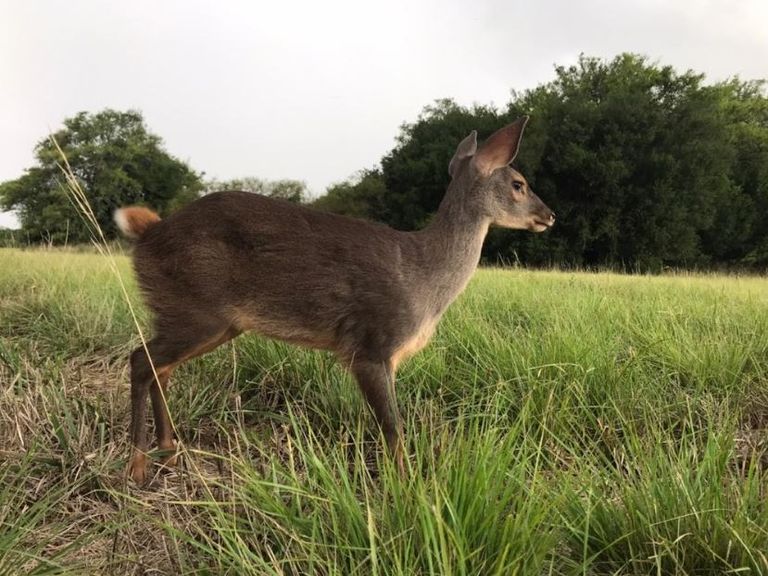
*The brown brocket deer (*Mazama gouazoubira* or *Subulo gouazoubira*)* is a medium-sized cervid native to America. It inhabits **Paraguay, Uruguay**, northeastern **Argentina**, and the southern and northern coasts of **Brazil**. It can also be found in eastern **Bolivia**.
Today, its habitat is somewhat reduced due to hunting pressure and the destruction of its natural environment, but it is **not yet considered endangered**.
Both males and females reach between 55 and 65 cm in height at the withers, and up to 110 cm in length. They can weigh up to 30 kg. The coloration varies by region, but it is usually grayish-brown to reddish-brown, with a grayish hue that distinguishes it from other species, being the largest species in its genus.
It **feeds on tender shoots, leaves, mushrooms, and fruits**; in addition, it peels the bark off trees to mark its territory. It usually lives alone or in pairs. It is **markedly territorial**, determining the perimeter of its area with feces, urine, and a strong secretion from the anteorbital, interdigital, and frontal glands.



