



The most recent data on jaguars in Mexico are a sign of hope for biodiversity conservation.
According to the latest census, the population of the largest feline on the continent grew by 10% in six years, going from 4100 individuals in 2018 to over 5300 in 2024.
This was confirmed by Adán Peña, general coordinator of state strategies at the National Alliance for the Conservation of the Jaguar, an organization that has been monitoring the species since 2010.
An unexpected rebound of America’s largest feline
The increase in jaguars in Mexico is considered encouraging news for the country’s fauna. “We did not expect to find so many, nor to find them in territories like Aguascalientes and Guerrero,” explained Peña, who is also the head of the Commission of Natural Resources and Rural Development of Mexico City (CORENADR).
Despite these advances, the jaguar remains endangered, mainly due to habitat loss caused by human activity.
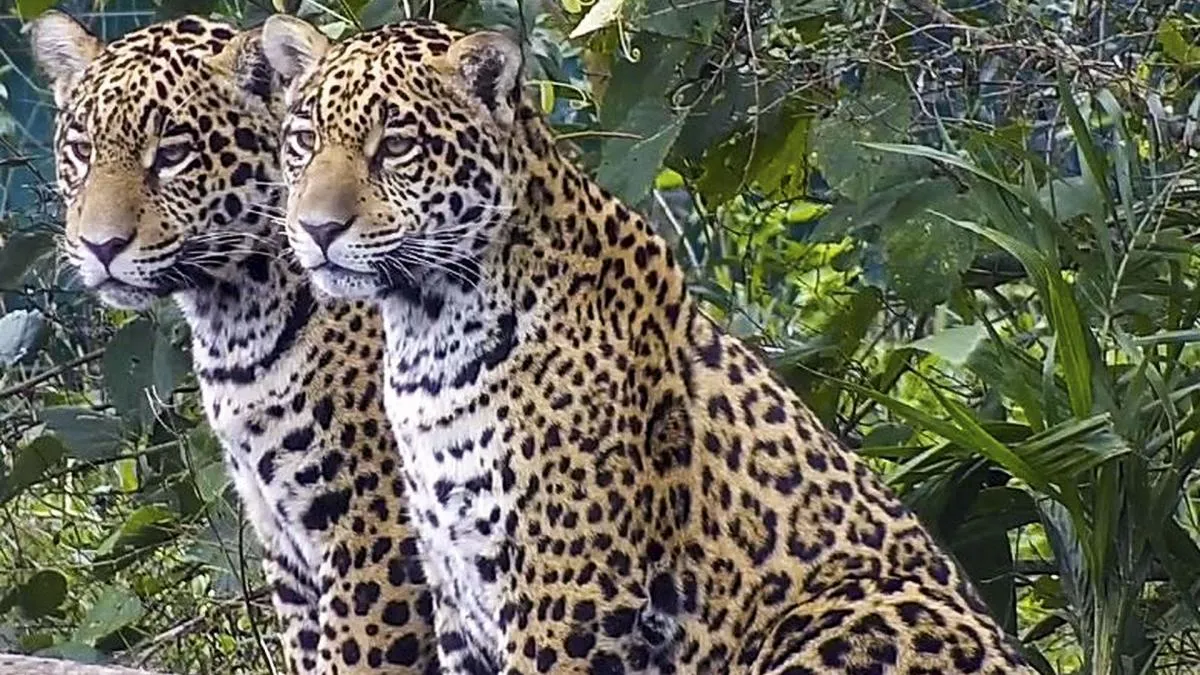 The situation of the jaguar in Mexico.
According to specialists, with the current growth rate, it would take more than 30 years to reach a population of 8000 individuals and for the species to exit that category. However, with greater conservation efforts, this goal could be achieved in just 15 or 20 years.
Protected Areas and Scientific Monitoring
One of the key points highlighted by Peña is to strengthen protected natural areas with economic, material, and human resources. The monitoring of the species is now one of the most ambitious worldwide: 414,000 areas in 15 states of Mexico were sampled with the installation of 920 camera traps.
This is thanks to the work of 50 researchers and the participation of communities, academic institutions, authorities, and civil organizations.
This effort is considered the second-largest biodiversity study in America, second only to the one conducted in the Amazon.
The importance of biological corridors
The jaguar (Panthera onca) needs between 2000 and 2500 hectares to roam, making the connectivity of ecosystems fundamental. For this, the construction of wildlife crossings on roads and railways has proven to be an effective measure to reduce collisions.
In this regard, Peña emphasized that the Mayan Train, despite its environmental impacts, is one of the projects with the highest number of wildlife crossings in the country’s history.
The region of Calakmul, in Yucatán, crossed by the train, is also the territory with the highest recorded jaguar population in Mexico.
Persistent Threats: Illegal Trafficking and Conflicts with Ranchers
Another major threat is illegal trafficking of specimens and their parts, such as skins, claws, skulls, and fangs. The National Alliance for the Conservation of the Jaguar proposes the need for an agreement between the Government and digital platforms to curb these practices.
Likewise, conflicts with livestock farming remain a challenge. The livestock insurance allows producers to recover losses caused by predators, although improvements are needed to respond more efficiently.
Initiatives like Living with Felines, in Sonora, offer economic incentives to ranchers for each live jaguar, transforming the relationship between ranchers and wildlife.
In addition to its cultural value (civilizations like the Maya considered it a divine being and a symbol of power), the jaguar is a keystone species. This means that its conservation indirectly protects many other species and ecosystems.
After the Amazon, Mexico is the second country in Latin America with the highest number of jaguars. “We must play a key role in their conservation,” Peña emphasized, recalling that protecting this feline not only ensures the survival of an emblematic animal but also the health of the country’s ecosystems.



