



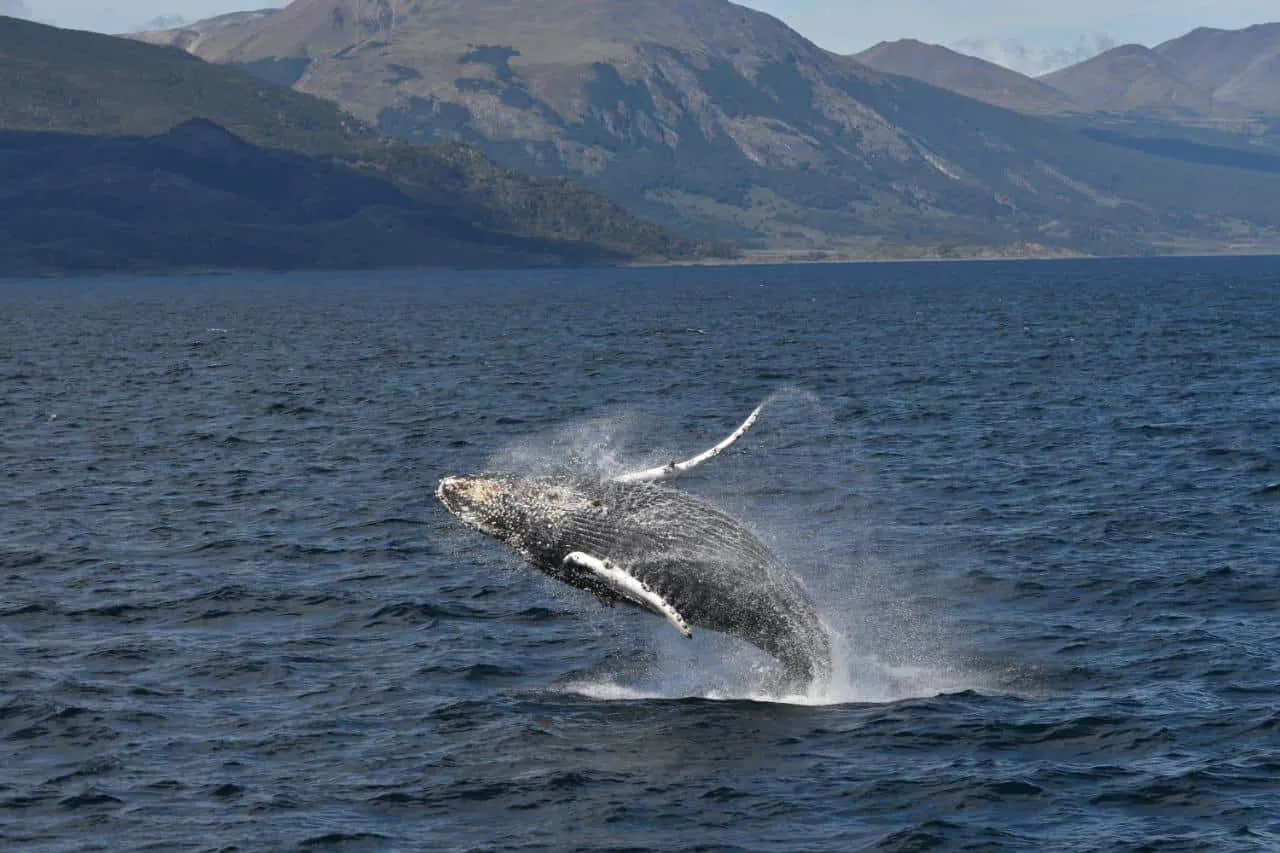
The Beagle Channel, in the southernmost part of Argentina, is experiencing an increasingly visible phenomenon. The presence of whales, once occasional, has become frequent.
Additionally, residents and tourists in Ushuaia observe these specimens daily. Consequently, the area is consolidating as a key point for marine fauna.
Therefore, this growth is not coincidental. It also responds to global changes in marine species conservation.

Recovery of species and return to historical routes
During the 20th century, whale populations were heavily reduced. However, in recent decades, they have begun to recover.
Moreover, this process has allowed many species to resume ancient migratory routes. Consequently, they are returning to historical feeding areas.
Likewise, the Beagle Channel is positioning itself as a significant biological corridor. Therefore, it offers favorable conditions for their permanence.
On the other hand, species like the humpback whale and the sei whale are the most observed. Thus, they become protagonists of the local ecosystem.
A key ecosystem for feeding
The Beagle Channel presents a high availability of food. This favors the sustained presence of cetaceans.
Additionally, species like the Fuegian sardine and the krill abound in the area. Consequently, they constitute fundamental trophic resources.
Furthermore, these concentrations allow whales to recover energy. Therefore, the area functions as a strategic site.
On another note, the summer and autumn months see the highest sightings. Thus, peaks are recorded between March and April.
Prohibition of whale hunting and its impact on the region
The ban on commercial whale hunting marked a global turning point. Firstly, it reduced the direct pressure on species.
Moreover, this measure allowed for a progressive recovery of populations. Consequently, many species are no longer on the brink of extinction.
Likewise, the return to the Beagle Channel is evidence of this process. Therefore, it demonstrates the effectiveness of conservation policies.
On the other hand, international regulation continues to be key. Thus, efforts are made to avoid setbacks in the protection of these animals.
Finally, the case of southern Argentina confirms that sustained protection yields results. Consequently, it reinforces the importance of maintaining these measures.
The challenge of coexisting with a recovering ecosystem
The increase in whales also generates new challenges. In particular, interactions with vessels are increasing.
Additionally, the increase in tourism and maritime traffic raises the risk of collisions. Consequently, it becomes necessary to reinforce controls.
Furthermore, it is recommended to maintain adequate distances and reduce speeds. Therefore, efforts are made to protect the animals.
On another note, some fishing activities also pose risks. Thus, they can cause entanglements or alterations in their behavior.
Finally, the return of whales demands new coexistence guidelines. Consequently, the balance between conservation and human activity is crucial.



