



The return of the Spix’s macaw to its natural habitat was celebrated as an environmental milestone. However, behind the reintroduction operation in Brazil, a network of opaque interests casts doubt on the transparency of conservation efforts.
The German organization ACTP, still without formal ties to the Brazilian government, continues to operate the only active reintroduction program through its local partner Blue Sky. This NGO was founded by a former security guard and came to control over 90% of the global population of this species.
Recent investigations revealed that, despite the termination of its contract with the State in 2024, ACTP continues to manage Spix’s macaws with little oversight. Various international transactions carried out outside the conservation sphere fuel suspicions of covert trafficking.
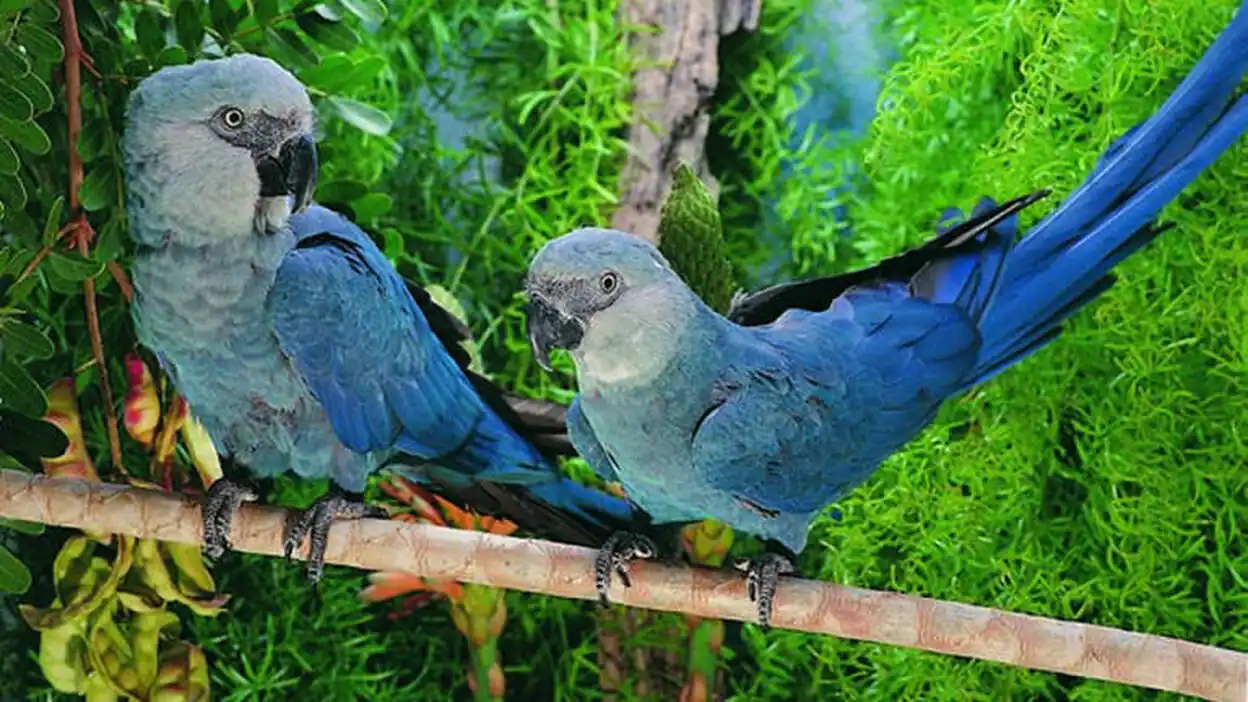 The Spix’s macaw is critically endangered.[/caption>
A Questioned Conservation Model
Between 2021 and 2023, sales of specimens to private European breeders were authorized, some at exorbitant prices. One of the most striking operations involved the transfer of birds to Belgium for €75,000 each, without the knowledge of the Brazilian government.
Despite the allegations, ACTP continues to release birds in the Curaçá region, where Blue Sky—led by a former public official—manages the breeding center. This relationship, now under investigation, exposes a potential conflict of interest in licensing.
The Chico Mendes Institute documented repeated delays in technical reports and increasing difficulties in coordinating with the NGO’s representatives. Inspection visits are minimal or non-existent, leaving the future of a species symbolic of Brazilian biodiversity in the hands of private entities.
Critical State and Threats to the Spix’s Macaw
The Spix’s macaw (Cyanopsitta spixii) is considered critically endangered by the IUCN. After being declared extinct in the wild, it survives only through captive breeding and reintroduction programs.
The main causes of its disappearance are poaching for the illegal trade of exotic pets and habitat destruction in the caatinga, caused by deforestation, agricultural expansion, and extractive activities.
Its rarity makes it a coveted target for private collectors, and its high value on the black market worsens the risk that conservation efforts will be used as a cover for commercial exploitation.
A Future in Private Hands
ACTP’s continued presence in Brazil, without robust control mechanisms, poses an urgent dilemma for conservation. Without institutional capacity to assume full project management, Brazil is caught between the need to preserve the species and dependence on an internationally questioned organization.
The conservation of the Spix’s macaw demands not only ecological commitment but also ethics, transparency, and political will to truly protect one of the most emblematic birds on the planet.



