



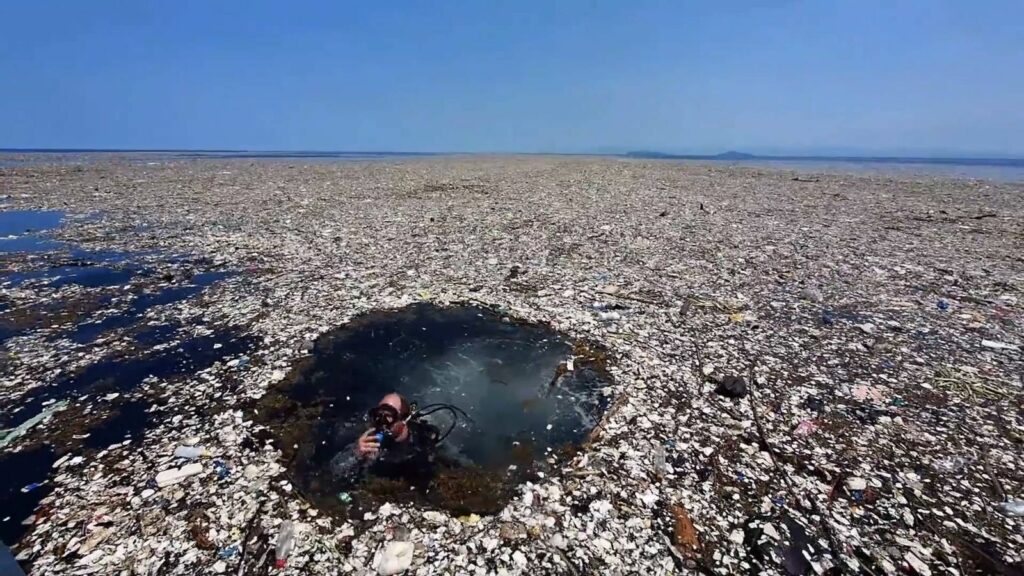
Scientists were surprised during their latest inspection of the Great Pacific Plastic Island in the North Pacific.
It seems that it has transformed into an unexpected habitat, where numerous coastal species have managed to successfully establish and reproduce on fragments floating thousands of kilometers from solid land.
This is highlighted in a comprehensive analysis published in Nature Ecology & Evolution.
According to the study, this massive accumulation of waste serves as a durable support for mixed communities of marine organisms.
The study, developed in collaboration with the organization The Ocean Cleanup, redefines known ecological boundaries.
Unlike natural debris that degrades quickly, plastic maintains its buoyancy for years.
Therefore, this fact favors the simultaneous presence of pelagic organisms and species characteristic of coastal areas.
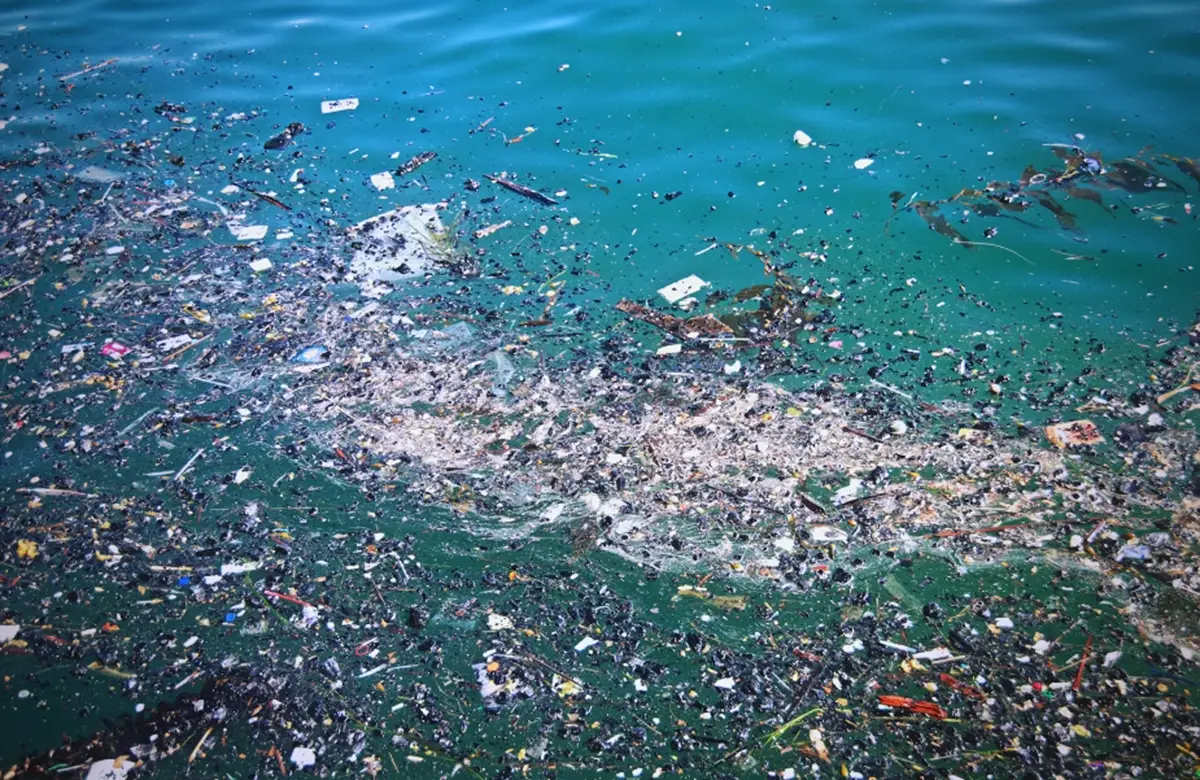
The discovery of species on the Pacific Plastic Island
During collection campaigns conducted between 2018 and 2019, researchers recovered 105 pieces over 15 centimeters, mainly buoys, nets, and ropes.
The detailed examination revealed the existence of animals from six major groups: from anemones to bryozoans, as well as small crustaceans and sponges.
More than 70% of the fragments contained species native to the coast, challenging the traditional idea that these organisms cannot survive in the open sea.
The final count recorded 484 individuals belonging to 46 different species.
It was particularly significant that coastal organisms slightly outnumbered the usual inhabitants of the open ocean.
This indicated that it was not just passive transport through currents, but a prolonged settlement favored by the stability of the plastic support.
Additionally, scientists detected unequivocal signs of reproduction, such as females carrying eggs, as well as juveniles and adult specimens coexisting on the same piece of plastic.
This phenomenon demonstrated that complete life cycles are being completed in an environment previously considered hostile to species far from the coast.
A large portion of these organisms reproduce asexually and remain fixed to the substrate, a trait that favors their resilience in turbulent waters.
The observed diversity was lower than that associated with material washed away after the Tōhoku tsunami in 2011.
However, experts consider that the analyzed sample is only a fraction of the immense collection of waste occupying this area of the Pacific.
The ecological implications of this discovery
The authors warned that the expansion of this plastisphere may profoundly alter the ecological dynamics of the open ocean.
The island offers new surfaces for colonization and modifies the distribution of species in pelagic ecosystems.
This finding raises questions about how plastic pollution is redefining the traditional ecological boundaries in the oceans.
The ability of coastal species to establish themselves permanently in open waters represents an unprecedented change in marine biogeography.
The researchers emphasized the need to continue monitoring these emerging ecosystems and understand their long-term consequences for global ocean biodiversity.


