



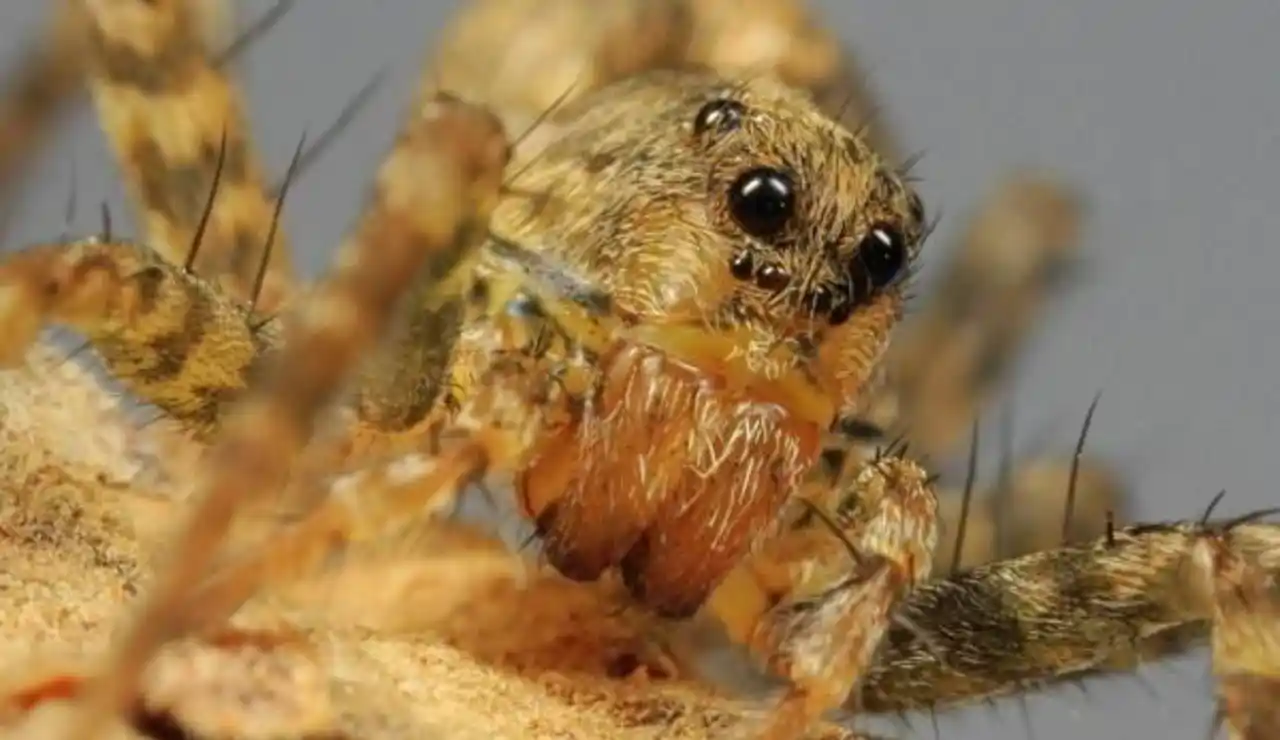
The wolf spider (Lycosidae), also known as the “garden runner” or “stone spider,” is one of the most common species in the Uco Valley, Mendoza. It can reach over 50 millimeters, with a robust, hairy body in dark brown-gray tones and longitudinal bands on the thorax.
Its bite is not fatal, although it can cause local pain, swelling, and blisters that last between 4 and 7 days. It is an agile arachnid, active both day and night, often entering homes during hot weather seeking refuge from the sun.
Its natural habitat includes gardens, crevices, piles of bricks, and burrows that it digs and lines with silk.
Ecological Importance
Although its appearance may be intimidating, the wolf spider is not aggressive and plays a fundamental role in environmental balance:
- Pest control: it feeds on cockroaches, crickets, and grasshoppers, reducing the need for pesticides.
- Base of the food chain: it serves as food for birds, lizards, and small mammals.
- Indicator of environmental health: its presence reflects a healthy and balanced ecosystem.
Distinctive Features
- Active hunting: it does not rely on webs, chasing its prey on the ground with great speed.
- Large and distinctive eyes: four small ones below, two large in the center, and two above, giving it excellent vision.
- Reproduction: females carry the egg sac and then the young on their back, showing unique maternal care.
- Venom: low toxicity for humans; its bite is similar to a bee sting and is rarely dangerous.
What to Do in Case of a Bite
Most wolf spider bites are not serious, but it is advisable to follow basic care steps:
Immediate Steps
- Stay calm: they are usually bothersome but not dangerous.
- Wash the area with soap and water to prevent infections.
- Apply cold with compresses or ice wrapped in a cloth for 15 minutes every hour.
- Elevate the affected limb to reduce swelling.
- Avoid scratching.
- Use antihistamines for itching and over-the-counter pain relievers for pain.
- Cover the wound with a clean bandage.
When to Seek Medical Attention
- If signs of infection appear: increasing redness, warmth, pus, or red streaks.
- In case of a severe allergic reaction: difficulty breathing, dizziness, or hives.
- If the pain is intense and does not improve, or the swelling becomes widespread.
- If there are doubts about the species or worsening symptoms.
The wolf spider, common in the Uco Valley, is more of an ecological ally than a threat. Its role as a natural pest controller and its contribution to ecosystem balance make it a valuable species deserving of respect and conservation.



