



On the west coast of the **Hudson Bay**, in the province of **Manitoba (Canada)**, you can find **Churchill**, a small Arctic town internationally recognized as the **Polar Bear Capital of the World**.
Every year, hundreds of **Ursus maritimus** specimens pass through this area [during their migrations](https://noticiasambientales.com/animales/mar-del-plata-marcan-elefantes-marinos-para-analizar-sus-migraciones/), turning the place into a **living laboratory for wildlife observation and management**.
## Seasonal Migration and Coexistence Challenges
The [melting ice transforms the landscape](https://noticiasambientales.com/medio-ambiente/el-deshielo-en-groenlandia-impulsa-la-vida-marina-cientificos-detectan-un-aumento-de-hasta-el-40-en-fitoplancton/) and forces a reconsideration of the relationship between humans and predators.
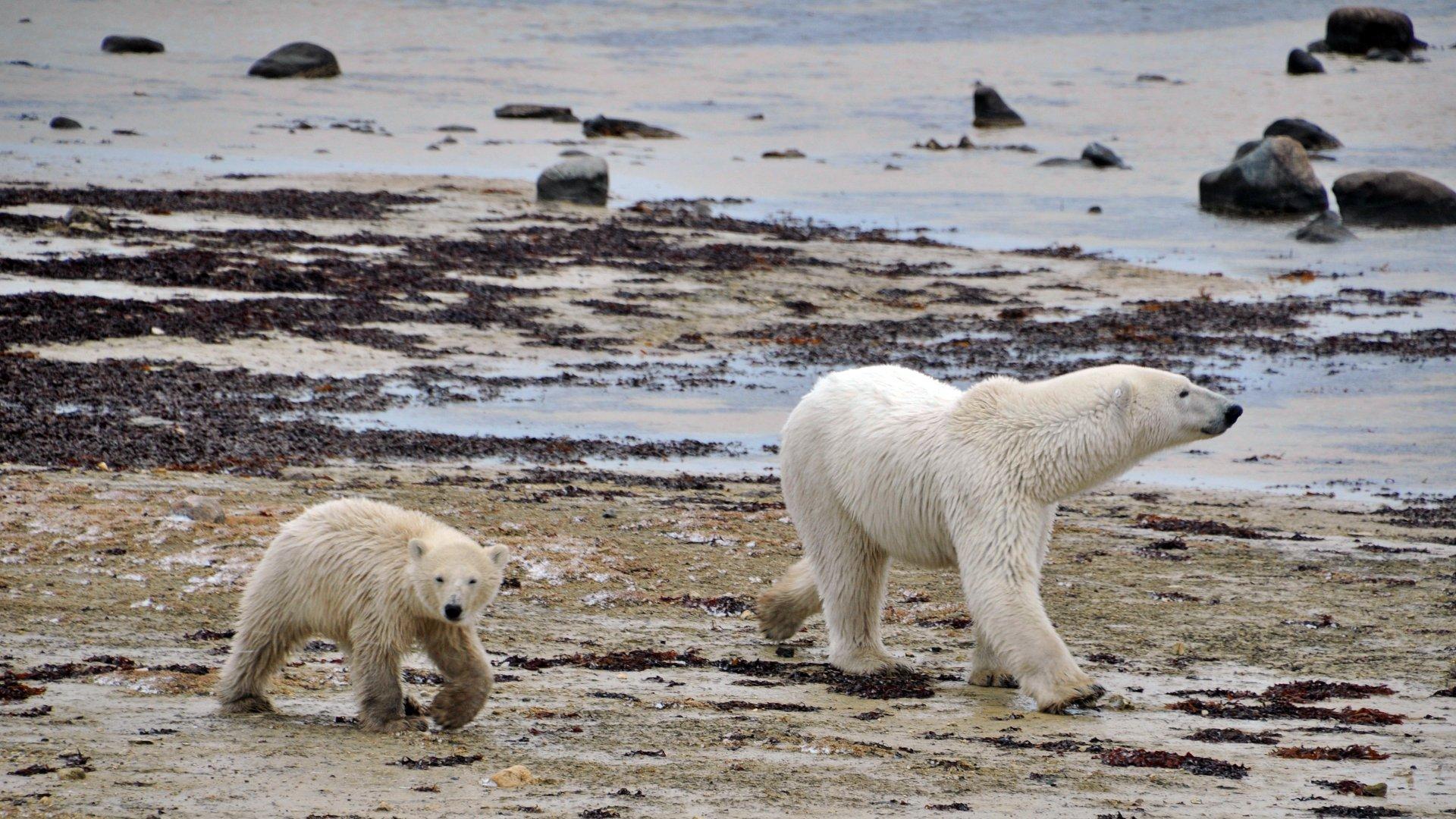
During the summer, the **melting sea ice** forces polar bears to stay on land until the waters freeze again, usually in November.
By October, many of them are already wandering close to the urban core, posing a **challenge for community safety** and for the **protection of the animals themselves**.
## Churchill: A Model of a Safe Community for Wildlife
Churchill has been a pioneer in developing **strategies for safe coexistence**, eliminating food sources that attract bears, promoting **responsible behaviors** among residents, and maintaining a **prudent distance between humans and animals**.
Among its most outstanding initiatives is the **Polar Bear Alert Program**, a 24-hour hotline available to report sightings that may pose a risk.
## The “Polar Bear Jail”: A Conservation Facility
One of the pillars of wildlife management in Churchill is the [Polar Bear Facility](https://polarbearsinternational.org/polar-bears-changing-arctic/discover-polar-bears/polar-bears-international-house/), popularly known as the “Polar Bear Jail.”
This center is not a conventional prison but an **infrastructure designed to temporarily contain** bears that come too close to the town. The goal is to **avoid conflicts** and **re-educate the animals** so they do not associate human presence with food.
– Bears are captured using **baited traps** or **tranquilized with darts** if they are already within the urban area.
– Before resorting to these measures, **rangers** try to scare them away with **flares, motorcycles, and warning shots**.
– Once at the center, they remain **up to 30 days without food**, with access to water, to **break the bond between humans and feeding**.
## Infrastructure and Release: Conservation Logistics in Action
The facility, built as a **concrete hangar**, has **28 individual cells** equipped with steel doors and structures that prevent visual contact between the animals. The duration of confinement depends on the **level of risk** each bear has posed.
When it’s time for release, the animals are **sedated, secured in special nets**, and **transported by helicopter** to remote areas, far from any human settlement.
This process, which may seem extreme, is actually a **preventive and ethical measure** to ensure the **survival of the species** without generating dependency or conflicts.
## A Transformative Experience: Testimony from the Arctic
Photographer Gerardo del Villar, a collaborator of National Geographic, recounted his experience in Churchill with a phrase that accompanied him since his arrival: “Beware, bears can be anywhere.”
Witnessing the release of a bear, he described the moment as **one of the most moving of his life**: seeing the bear suspended in the air, asleep and vulnerable, was an image that encapsulated the **majesty and fragility of the Arctic**.
## Churchill as a Symbol of Environmental Responsibility
Although the name of the facility may sound striking, the so-called “Polar Bear Jail” represents a **collective effort to protect an iconic species**, preventing bears from seeing humans as a threat or a food source.
Churchill thus consolidates itself as a **global benchmark in conservation, ethical wildlife management, and community resilience**.



