



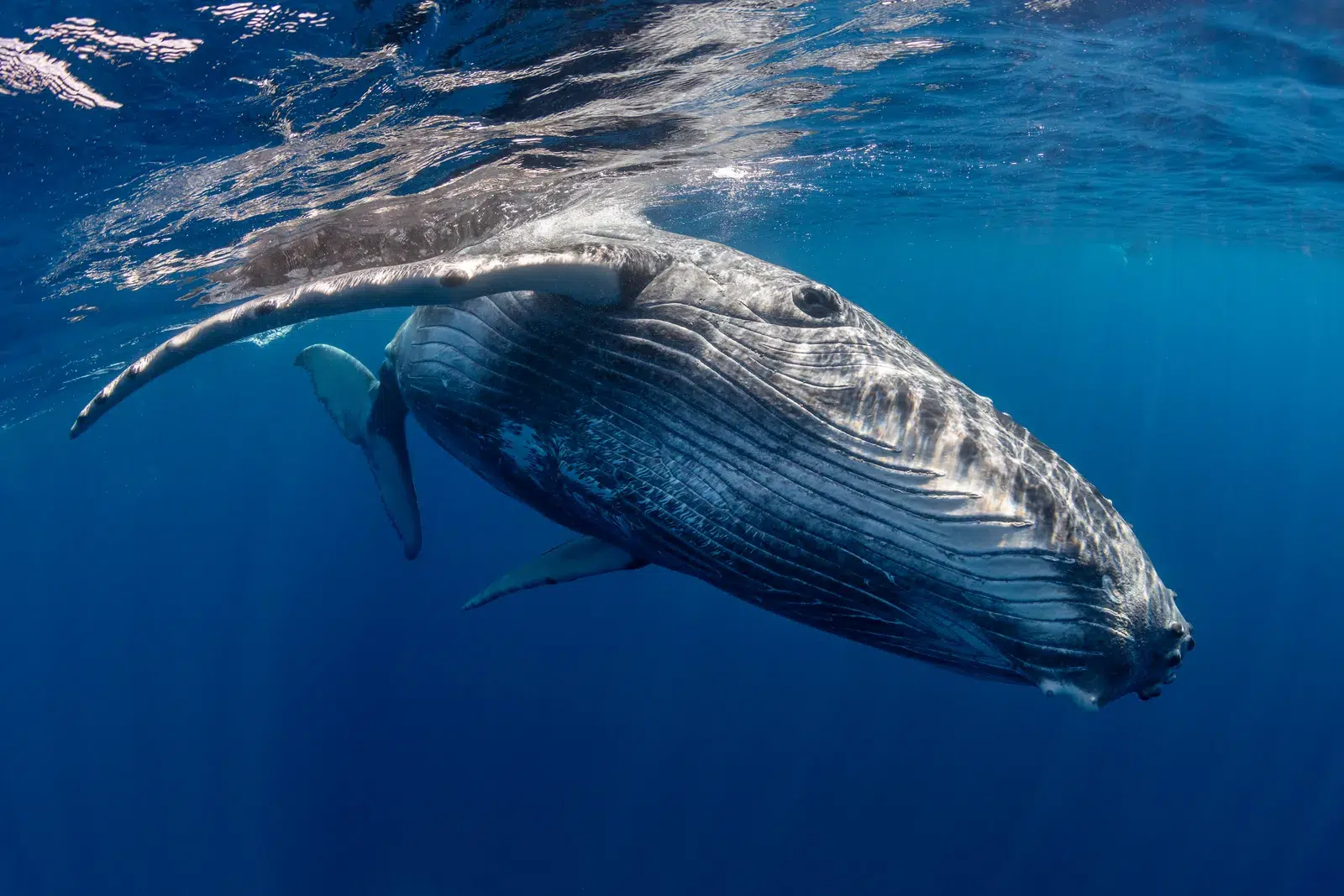
In the waters of the Strait of Hormuz, a less visible aspect of the conflict unfolds: environmental deterioration. A unique population of humpback whales resides there, which does not migrate, making them especially vulnerable.
Unlike other oceanic regions, this environment is characterized by high temperatures, high salinity, and shallow depth. However, it hosts mangroves, seagrass beds, and reefs that support a great biodiversity.
Consequently, fish, sharks, turtles, and dolphins coexist in a delicate balance. However, the intensification of military and maritime activities increasingly disrupts this system.
Underwater noise, a constant threat
The main impact of the war in this region is not always visible but acoustic. Explosions, military sonars, and constant ship traffic generate noise levels that interfere with marine life.
In particular, whales rely on sound to communicate, orient themselves, and feed. Therefore, acoustic interference hinders essential functions for their survival.
Moreover, when artificial sounds exceed their vocalizations, a masking phenomenon occurs. This prevents individuals from effectively communicating within their groups.
Acoustic culture at risk
The humpback whales of this region have developed unique behaviors over time. Each group has its own sound patterns that are passed down through generations.
Thus, communication serves not only a biological function but also a cultural one. However, the increase in noise threatens to disrupt this transmission.
As a result, vital information for social organization is lost. This weakens group cohesion and reduces their adaptation possibilities.
Physical consequences: disorientation and strandings
The intensive use of military sonars has direct effects on cetaceans. These signals can cause disorientation, increasing the incidence of strandings on the coasts.
Likewise, the waves generated by underwater explosions affect the auditory system. This can lead to partial or total hearing loss.
Since hearing is essential for their survival, these damages are often lethal. Therefore, war increases the risk of mortality in these species.

How does war affect wildlife?
Armed conflicts generate multiple environmental impacts beyond noise. Firstly, they destroy habitats through explosions, pollution, and vessel movements.
Additionally, fuel and waste spills alter water quality. This affects both marine species and entire food chains.
On the other hand, constant stress modifies animal behavior. Many species reduce their reproduction or abandon key areas for their survival.
An uncertain future for species that cannot flee
Unlike other populations, these whales do not migrate. Therefore, they rely entirely on the stability of the Gulf of Oman ecosystem.
However, the increase in maritime traffic and military activity intensifies the pressure on their habitat. This includes pollution, constant noise, and risk of collisions.
Finally, if these conditions persist, the survival of this unique population could be seriously compromised. Thus, the impact of war transcends the human and reaches the entire marine ecosystem.



