



Every July 14, the World Chimpanzee Day is celebrated in honor of Dr. Jane Goodall‘s arrival at Gombe National Park, Tanzania, in 1960. There, she began one of the most transformative studies in science, revealing that chimpanzees were not just intelligent animals but a mirror of our own humanity.
What Chimpanzees Show Us
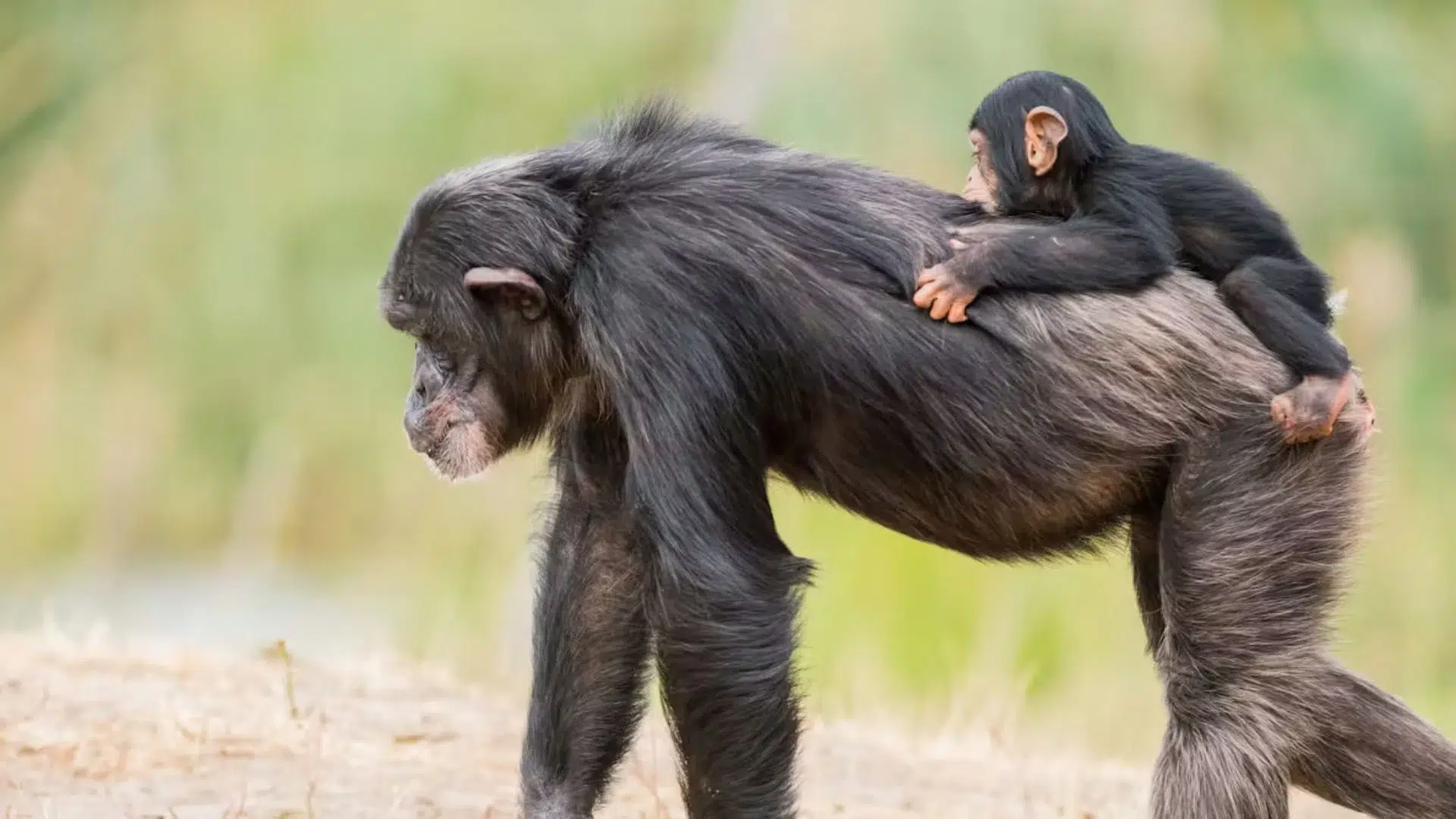
Chimpanzees share more than 98% of their DNA with humans. Among their behaviors are:
- Mourning their dead.
- Tool-making.
- Long-lasting emotional bonds.
- Empathy and cooperation.
However, in the last century, they have lost more than 50% of their population and are now classified as endangered. The causes are human: deforestation, illegal trafficking, poaching, and industrial agricultural expansion.
Science and Contradictions
Goodall’s findings demonstrated that the ability to feel, think, and live in community is not exclusive to humans. Even so, the economic and cultural system continues to treat animals as resources or commodities.
The illegal trafficking of young chimpanzees is a brutal example: each capture involves the death of adults in the group. The young are taken from their communities to supply exotic pet and entertainment markets. Although prohibited, the trade persists.
Latin America is also part of these global wildlife trafficking chains, with a growing demand for primates as pets.
Ethical Reflection
Jesica Bon Denis, founder of Animal Interseccional, noted: “If we know they feel, connect, and suffer, then our daily decisions have concrete ethical consequences. It’s not enough to be moved once a year”.
Impact of Daily Decisions
The protection of chimpanzees does not depend solely on African policies but also on our choices:
- Reject the wildlife market.
- Do not consume products linked to deforestation.
- Avoid shows with primates.
- Demand effective legislation against animal trafficking.
Every daily decision is part of a broader system that can be transformed towards sustainability and respect for life.
About Animal Interseccional
Animal Interseccional is a Latin American organization working at the intersection of animal rights, social justice, and environmental sustainability. Their approach is based on the conviction that the struggles for liberation—human and non-human—are deeply connected.
World Chimpanzee Day is more than a symbolic date: it is a reminder that the line between humans and chimpanzees is thinner than we think.
Protecting them involves recognizing our ethical responsibility and transforming consumption habits, public policies, and cultural practices that currently put them at risk.



