



Europe has taken a significant step in renewable energy production with the launch of the first artificial island.
This innovative infrastructure, located in Belgium, promises to revolutionize hydrogen generation and save billions of euros annually for the German energy system.
Economic impact of offshore hydrogen
A recent study by the Fraunhofer Institute for Energy Economics and Energy System Technology (IEE) has analyzed the economic effects of hydrogen production offshore in Europe.
The research evaluates the impact of generating hydrogen on two energy islands connected with 10 GW of offshore wind energy each. According to the analysis, Germany could save up to 4.3 billion euros per year through this innovative strategy.
Advantages of hydrogen production on energy islands
The energy islands, located 150 kilometers off the German coast in the North Sea, have limited connection to the electricity grid.
Offshore hydrogen production offers several advantages. Some of these include cost reduction in building power grids and increased efficiency in the use of HVDC cables.
Furthermore, generating hydrogen near renewable energy sources minimizes energy losses and reduces the need for extensive electricity transport routes.
Denmark leads with its green hydrogen artificial island
In May 2022, at the North Sea Summit in Esbjerg, Germany, Belgium, the Netherlands, and Denmark signed the “Esbjerg Declaration”. This is an agreement to harness the potential of green energy from the North Sea.
As part of this initiative, Copenhagen Infrastructure Partners (CIP) has started the construction of an artificial island, called “BrintØ” or “Hydrogen Island”. This facility will be located in the Danish area of the North Sea and is expected to start operating in 2030, providing a significant amount of green hydrogen.
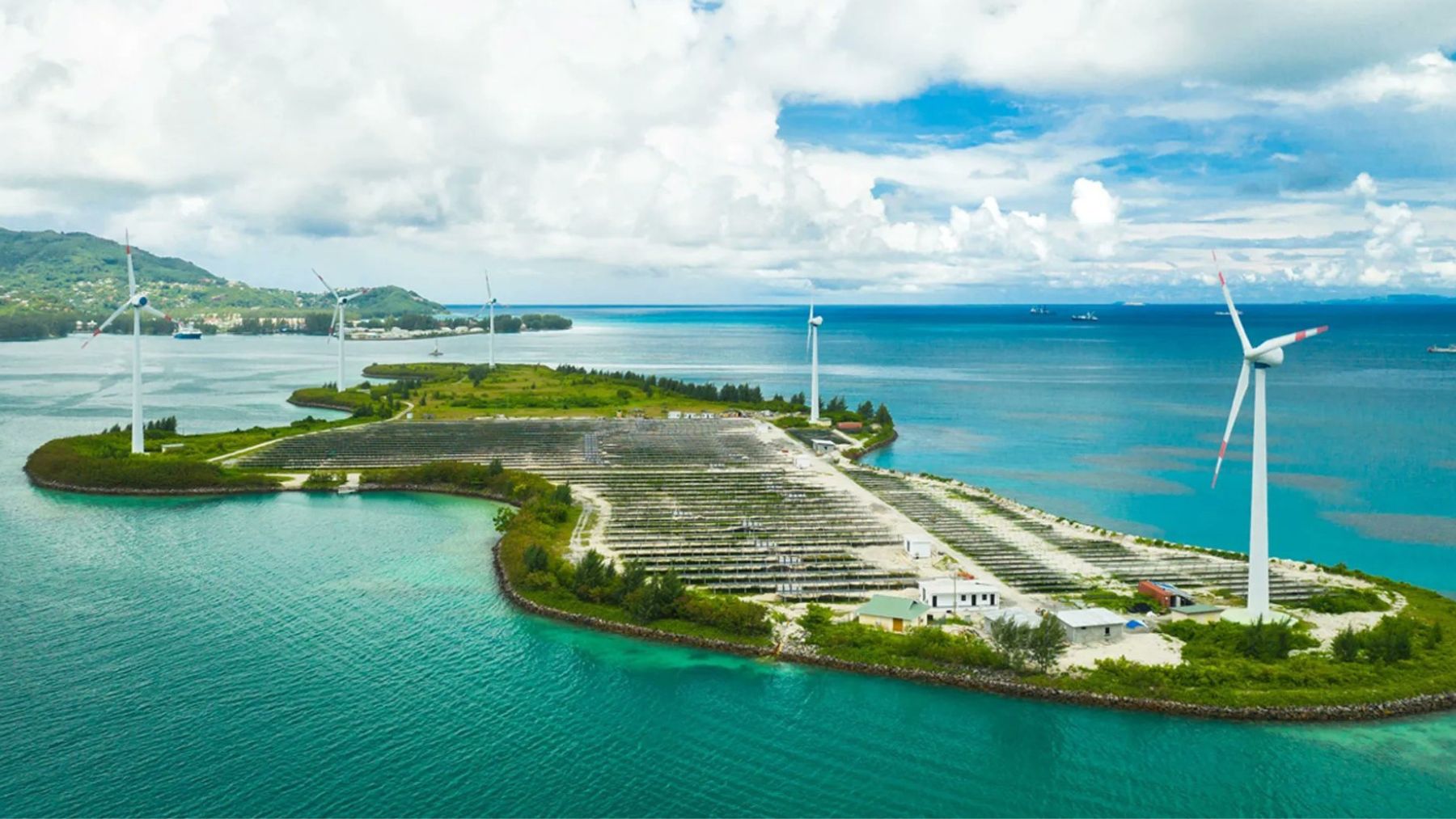
A crucial step for Europe’s energy supply
<p>The BrintØ project represents a clear contribution to the energy goals of the Danish government and could be the first of many energy islands in Europe. <p>These islands will produce large-scale offshore wind energy and export green hydrogen to Germany, the Netherlands, and Belgium through pipelines about 275 kilometers long. The Dogger Bank island, dedicated to green hydrogen production for trucks, ships, and planes, is another example of how Europe is leading the transition to a more sustainable energy</strong>. <p>With these projects, Europe not only seeks to secure its energy future but also to position itself as a global leader in green hydrogen production, a key solution to combat climate change and promote sustainable development</strong>.
Have you checked out our YouTube channel yet? Subscribe now!



