



Colombia could become a global pioneer in clean energy with the installation of two river wind farms on the Magdalena River, aiming to generate 100 megawatts of installed capacity through turbines anchored to the riverbed.
The projects, named Delta and Omega, would be located in the municipality of Sitionuevo, Magdalena Department. Each would have eight turbines contributing 50 MW, representing a significant advancement in the development of non-conventional renewable sources in the country.
The estimated investment exceeds 600,000 million pesos, equivalent to about 150 million dollars. This effort aims not only to diversify the national energy matrix, but also to position Colombia as a regional benchmark in ecological innovation.
The Magdalena River, with over 1,540 kilometers in length, represents the country’s main river artery and a strategic resource to promote technologies that combine renewable energy and sustainable use of aquatic ecosystems.

What are river wind farms?
River wind farms are an unprecedented proposal worldwide. Unlike land-based or offshore projects, these installations place their turbines on a river’s course, fixing them to the riverbed to harness the wind power in strategic areas.
This model combines features of traditional wind farms and offshore ones. By being located in freshwater bodies, they aim to address land space limitations and avoid some environmental impacts associated with deforestation or the use of productive soils.
Although there are no operational projects under this modality yet, its implementation opens the door to a new chapter in the use of clean energies. Colombia could be the first country to validate the technical and environmental feasibility of this technology in a river.
Additionally, river wind farms allow studying the interaction between energy infrastructure and aquatic ecosystems. This involves challenges such as biodiversity protection, river navigability, and turbine adaptation to changes in flow rate or climate patterns.
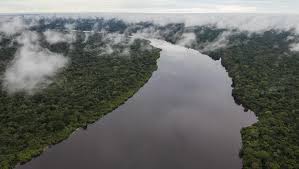 Colombia could become the first country in the world to have river wind farms. Photo: Radio Nacional Colombia.
Ecological Impact and Energy Outlook
If realized, Delta and Omega would provide enough energy to supply thousands of homes, reducing dependence on fossil fuels and contributing to the national decarbonization goal. Their construction would also create jobs and promote knowledge transfer in green innovation.
The experimental nature of these farms turns Colombia into a laboratory for a technology that could be replicated in other powerful rivers in Latin America and the world. The key will be to ensure a balance between energy development and conservation of water ecosystems.
If the country successfully implements this model, it will not only diversify its renewable matrix but also set a global precedent in the sustainable use of natural resources. The Magdalena, historically vital for Colombian trade and culture, now emerges as the stage for an energy transformation with planetary reach.
The commitment to river wind farms reflects the urgency to innovate in the face of the climate crisis and explore solutions integrating technology, ecology, and community. With Delta and Omega, Colombia has the opportunity to pave an unprecedented path towards a cleaner and more responsible energy future.



