



The Club Atlético River Plate is advancing in an ambitious modernization plan that now incorporates a key dimension: sustainability. As part of the projected works at the Estadio Monumental, the proposal to integrate solar panels into the future roofing arises.
Since 2020, the institution has promoted structural improvements in multiple areas. However, this initiative marks a shift in focus by incorporating renewable energies as a strategic axis.
Additionally, the project seeks to position the club as an environmental leader in the sports field. In this way, it aligns with global trends that promote more efficient and responsible infrastructures.

Infrastructure expansion with a sustainable outlook
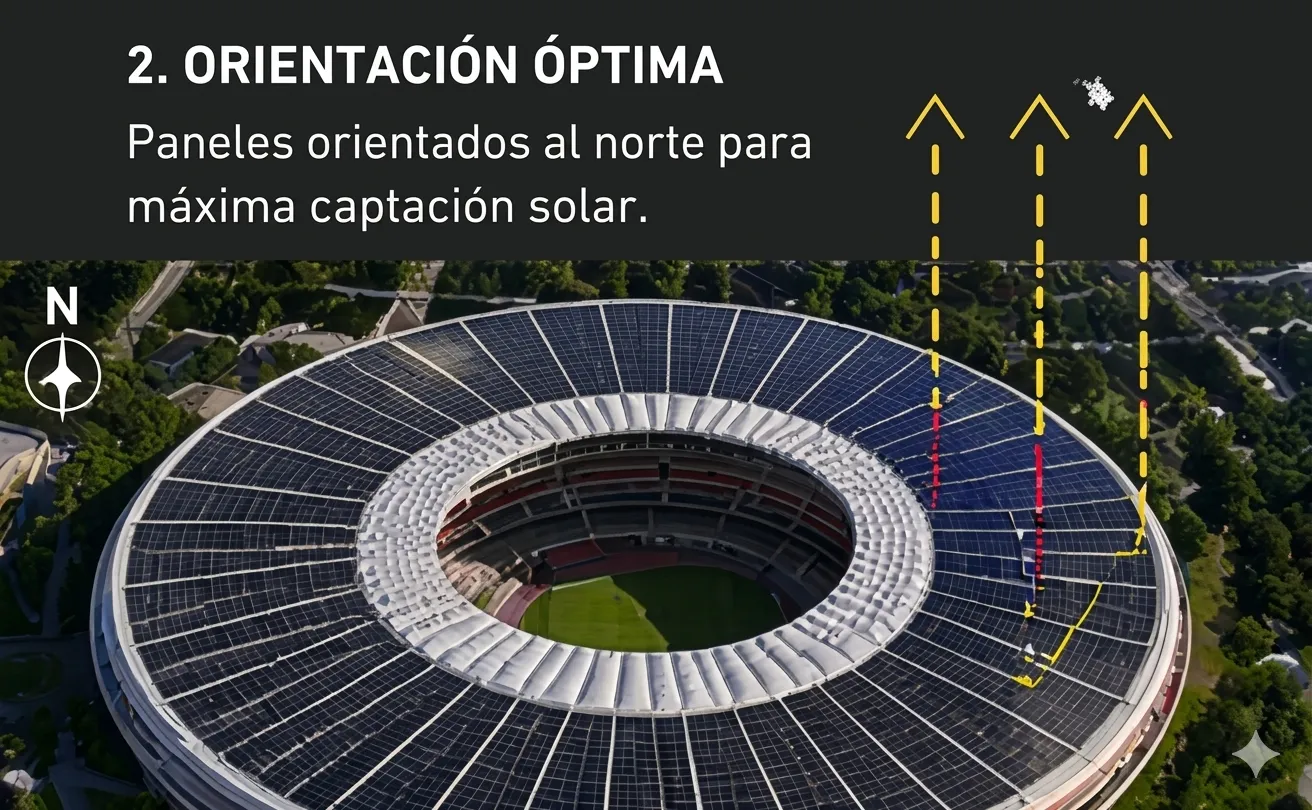
In parallel to the stadium expansion, which will add a fifth tier to accommodate more than 100,000 spectators, a comprehensive roof is planned. This design will allow natural light to enter the playing field.
In this context, the incorporation of solar panels emerges as a key opportunity. The proposal suggests utilizing the roof surface to generate clean energy.
Furthermore, the initiative plans to extend the system to other club facilities. Among them, educational buildings, parking lots, and sports grounds.
Solar energy: efficiency and cost reduction
The project proposes an OnGrid system, connected to the electrical grid, which would cover the club’s entire energy consumption. Currently, the monthly electricity expense is high.
However, with the implementation of solar energy, that cost could be significantly reduced. This not only implies economic savings but also greater energy autonomy.
Additionally, an estimated generation of between 6,500 and 7,000 megawatts is projected. This volume would allow all the club’s activities to be supplied without relying exclusively on traditional sources.
The environmental benefits and institutional projection of this initiative
Among the main benefits of the project is the reduction of the carbon footprint. It is estimated that it would prevent the emission of more than 3,500 tons of carbon dioxide per year.
Moreover, this reduction is equivalent to the planting of more than 150,000 trees. Therefore, the positive environmental impact would be significant in urban terms.
On the other hand, the adoption of renewable energies improves the institutional image. It also facilitates access to financing, tax incentives, and links with international organizations.
A replicable model in sports
Finally, this initiative reflects a growing trend in global sports. The major clubs are beginning to integrate sustainability and energy management into their management plans.
Consequently, the Club Atlético River Plate could become a model case in America. The combination of modern infrastructure and environmental commitment opens up new possibilities.
Thus, the project not only responds to an economic need but also to an urgent environmental challenge, where sports can play a transformative role.


