



The operation of solar systems in cold regions faces a recurring limitation: the accumulation of snow on the modules, which reduces the available radiation and disrupts operation for weeks. Until now, alternatives included manual cleaning procedures or heating mechanisms, both with high operational costs.
This challenge has motivated new lines of research in specialized Swiss centers, working on solutions capable of integrating passive techniques and materials optimized for low temperatures, aiming to minimize typical winter interruptions and transform the energy industry.
The proposal of the Swiss Alpine Renewable Energy Center (SERA)
The Swiss Alpine Renewable Energy Center (SERA) presented a solar system designed to reduce snow accumulation and sustain production without additional intervention.
The research, published in Journal of Cleaner Production, is based on:
- Photothermal surfaces that absorb part of the radiation and slightly raise the panel’s temperature, promoting melting without consuming external energy.
- Structures with dynamic angles that adjust to the terrain and facilitate snow sliding.
- Hydrophobic coatings that prevent ice adhesion and accelerate the drainage of melted water.
Additionally, SERA worked with cold-adapted semiconductors, improving module performance during low radiation periods. In tests conducted in the canton of Valais, prototypes maintained more than 90% operability after intense snow episodes, without the need for manual cleaning.
Structural design and benefits
The snow challenge is not limited to optical obstruction: accumulation increases weight, modifies wind flow, and creates shadow areas that affect component lifespan.
The proposal combines:
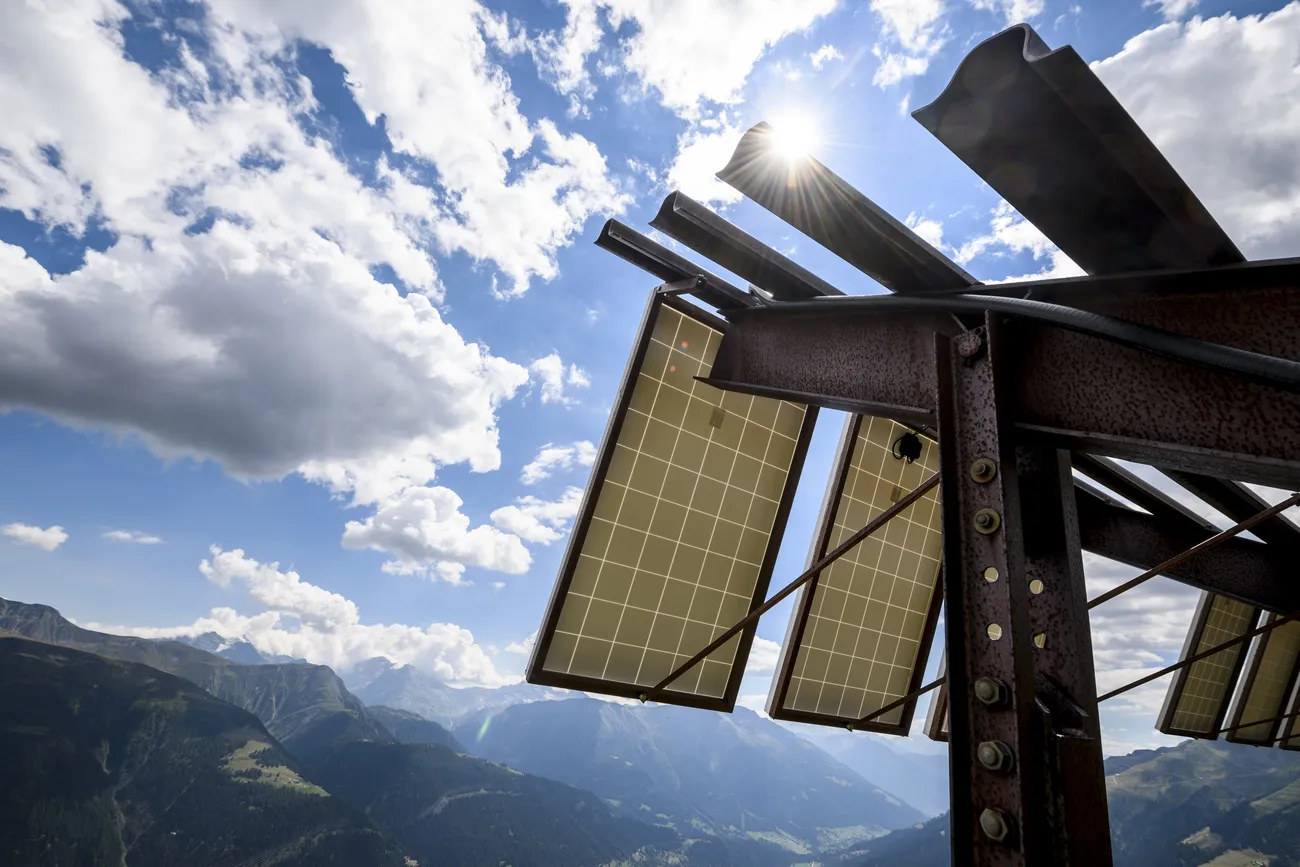
- Variable orientation and greater height compared to conventional installations.
- Utilization of gravity and prevailing winds to move the snow.
- Dynamic inclination that reduces accumulation areas and decreases mechanical stress.
The team’s conclusions show that this strategy reduces maintenance frequency, avoids the use of heaters, and decreases costs and energy consumption. The hydrophobic coatings also offer resistance to thermal changes and corrosion, increasing the modules’ lifespan.
Energy and policy implications
This project has direct implications in countries with prolonged winters, where photovoltaic energy is key in energy planning. A system that maintains its performance under snow allows for reducing the gap between generation and demand during cold months.
Switzerland plans to apply this technology in alpine projects linked to the Net Zero 2050 program, aiming to diversify production and strengthen electrical self-sufficiency. Its incorporation in large-scale solar parks is also being evaluated, where operational continuity is strategic.
In parallel, the Green Party is promoting the citizen initiative Solar Initiative, which proposes including solar installations in new constructions and renovations, except for justified exceptions. The goal is for solar energy, along with hydraulic energy, to become the core of the Swiss energy matrix.
Complementary innovation: the Helioplant system
Another research block comes from the École Polytechnique Fédérale de Lausanne (EPFL), the WSL Institute for Snow and Avalanche Research, and the Austrian company Ehoch2. Their proposal, called Helioplant, consists of a vertical multi-face system with panels oriented in different directions to take advantage of the snow’s reflectivity.
The Snowbedfoam model analyzes snow behavior based on wind, orientation, and distance to the ground. Tests show that:
- Raising the modules at least 60 cm and aligning them with prevailing winds significantly reduces accumulation.
- An adjusted separation between panels favors flake detachment and prevents shadow areas.
This approach seeks to adapt the design to irregular terrains and study its impact on actual electricity generation.
Swiss innovations in solar systems for snowy environments represent a decisive advance in the energy transition. By combining optimized materials, dynamic structures, and specialized coatings, photovoltaic production is maintained under extreme conditions, reducing costs and increasing resilience.
The integration of these technologies in alpine projects and large-scale solar parks reinforces Switzerland’s vision towards a Net Zero 2050 future, where solar and hydraulic energy consolidate as pillars of the national energy matrix.



