



Spain is approaching a historic energy milestone thanks to a renewable source that is still relatively unexplored: geothermal energy. This form of energy, which harnesses the natural heat from the Earth’s subsurface, is beginning to gain prominence in the Canary Islands, a region that has already shown its commitment to clean energy.
For centuries, humanity has relied on the planet’s resources to survive. From firewood and coal to oil, solutions for cooking, heating, and transportation have been sought from the Earth. Today, the global challenge is to continue doing so but in a sustainable way.
Among the many available options, geothermal energy emerges as a solid alternative, consistent and with a low ecological footprint. In this context, Tenerife has launched an ambitious plan to harness this energy source, joining the green revolution that has already begun on the island of El Hierro.
The project involves drilling in the southern part of the island, where there are estimated heat reserves at depths exceeding 2,500 meters. If the projections are confirmed, this energy could supply a city the size of Santa Cruz de Tenerife for a year.
 Geothermal energy, one of the most used clean energies.
An Alliance for the Future
The initiative is led by the company Geothermal Energy of the Canary Islands (EGC), a public-private consortium that includes scientific institutions, government bodies, and energy sector players. Over 80 million euros were invested in preliminary research, which has already identified areas with a high probability of success.
The deep geothermal technology to be used has the advantage of occupying little space and generating minimal visual impact, which is particularly important in tourist and natural areas like the Canary Islands. Furthermore, unlike solar or wind power, it is not dependent on the weather, ensuring a constant energy supply.
Moreover, it is a quiet energy source, with minimal emissions and high efficiency, ideal for complementing other renewables. The use of this source would reduce dependence on imported fossil fuels and move Spain closer to its energy transition goals.
Clean Energy Without Losing Biodiversity
One of the key challenges is to harmonize energy development with biodiversity conservation. The proposed drilling areas are carefully selected to minimize ecological impacts, and experts advocate for a precautionary approach at every stage of the project.
The island of Tenerife has shown that it is possible to look towards the future without sacrificing its natural wealth. With this project, the goal is not only to light up with the heat from the subsurface but also to lead a new energy model for the entire country.
If geothermal energy proves its potential, the Canary Islands could become a global example of how to harness Earth’s power sustainably. The target is set for 2026, but the change has already begun to take shape beneath our feet.
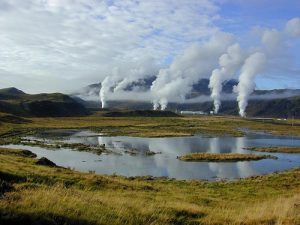 Geothermal energy in Argentina.
What is Geothermal Energy?
Geothermal energy is a renewable source that harnesses the heat from the Earth’s interior to generate electricity or heating. This heat comes from the decomposition of radioactive minerals and residual heat from the Earth’s core. It can be accessed through deep wells that extract steam or hot water.
One of its main advantages is that it offers a constant and predictable supply, unlike solar or wind energy, which depend on the weather. Additionally, it occupies little surface space and produces minimal emissions of polluting gases. This makes it an ideal option for advancing towards energy transition.
Geothermal energy can be applied on a large scale —to power electrical grids— as well as in domestic uses, through heat pumps for air conditioning. Its visual and sound impact is reduced, and its ecological footprint as well. It is a clean, efficient technology with enormous development potential in volcanic regions like the Canary Islands.



