



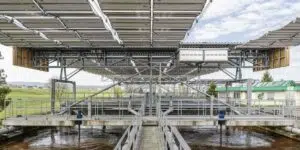
The largest foldable solar roof in the world is now operational over the wastewater treatment plant of Lake Thun, in the Swiss canton of Bern. The installation, developed by DHP Technology, demonstrates that it is possible to generate renewable electricity using already existing industrial spaces.
The system produces about 3 GWh annually without expanding the territorial footprint of the treatment plant or altering the natural environment. This approach avoids competing with agricultural land and protected areas, a critical point in countries where space is limited.
By integrating into an infrastructure that is already part of the landscape, this project becomes an example of low-impact energy transition. Additionally, it allows for the addition of solar capacity without adding visual load or creating new artificial areas.
A foldable design that reduces materials and adapts to the climate
The Horizon system operates through a mechanism inspired by alpine cable car engineering. The panels are deployed over cables and can be retracted in the event of heavy snowfall, maintenance, or adverse conditions.
This flexibility protects the structure and prolongs its lifespan. The lightness of the design reduces material use by about 50% compared to traditional solar roofs. By requiring less steel and minimal foundation, its environmental footprint is significantly reduced.
It also allows for large clear spans between supports without interfering with the operation of the treatment plant. This type of technology is especially suitable for mountainous areas, where snow loads often compromise rigid systems.
Here, a simple temporary retraction is enough to maintain safety and service continuity. The result is a more adaptable, efficient, and safe photovoltaic model.
A pioneering installation over Lake Thun
The roof installed at the ARA Thunersee treatment plant covers more than 23,000 m² and reaches 3.6 MW of peak power. It generates energy equivalent to the annual consumption of about 700 homes. Its integration fully respects the operation of the plant, which continues to operate without interruptions.
The project demonstrates that existing infrastructures can be transformed into clean generation platforms. Parking lots, service stations, logistics areas, or railway zones could adopt similar models.
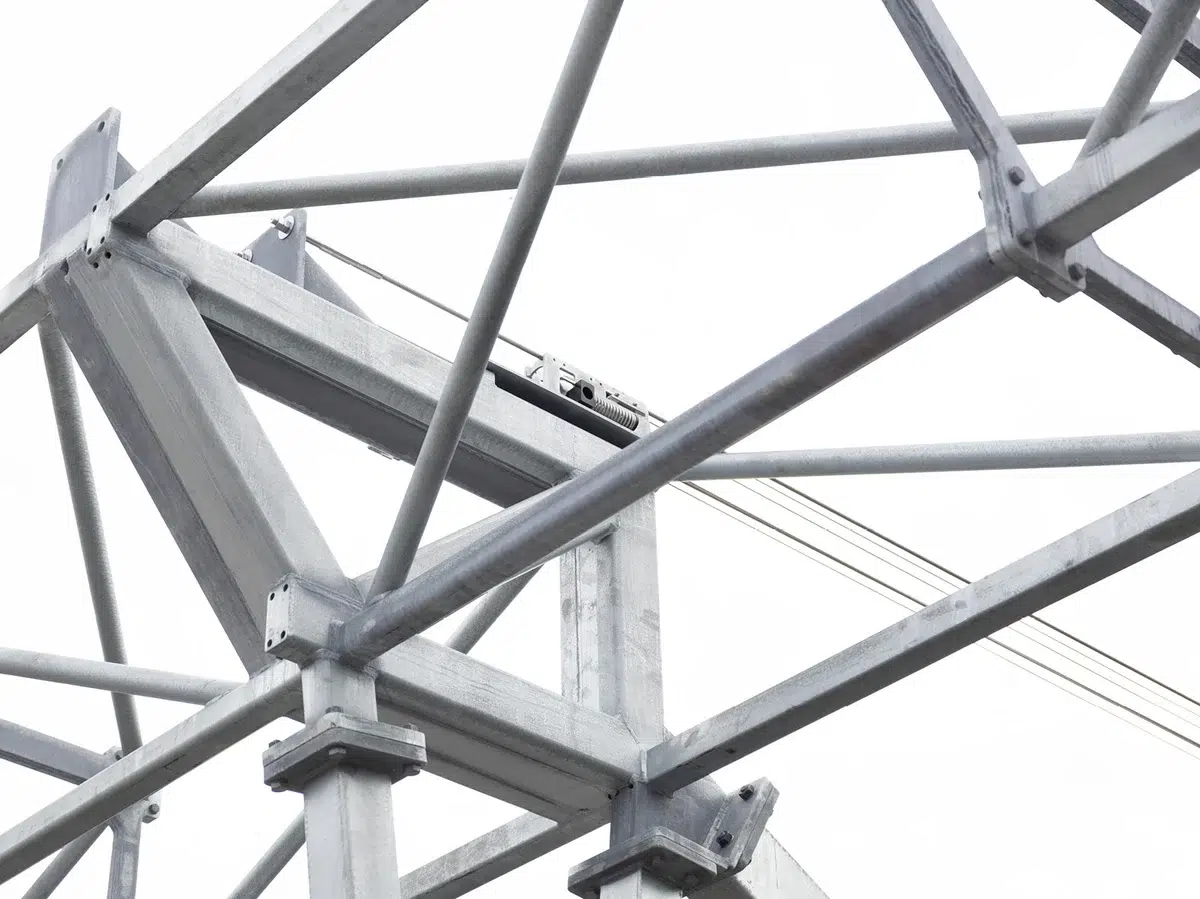
This would allow for the multiplication of urban surface performance without occupying more territory. The construction used high-durability galvanized steel, ideal for a humid and corrosive environment.
Its modularity favors maintenance tasks and potential future expansion. The plant thus becomes a European benchmark for distributed energy over industrial spaces.
A replicable model with international potential
Various water, transport, and logistics operators in Europe have already shown interest in this technology. The reversibility of the system and its low weight facilitate its adaptation to multiple industrial contexts.
Each country can adjust the installation according to its regulations without heavy construction or major interventions. In a scenario of pressure to decarbonize public services, these covers offer a realistic solution.
They allow for energy generation in the same place where it is consumed, reducing costs and dependence on external networks. Additionally, they increase energy resilience against extreme weather events.
The possibility of combining these roofs with storage and smart demand management opens up new opportunities. Cities could develop distributed solar networks embedded in their everyday infrastructure. The result would be a more stable, efficient system prepared for climate change.
Environmental and social benefits of these initiatives
This type of project allows for the expansion of solar energy without occupying new territories or altering ecosystems. By using already impermeable surfaces, it avoids the loss of fertile soil and habitat fragmentation.
Additionally, it reduces social conflict associated with new energy infrastructures. The reduction in material use decreases emissions and resource demand, favoring a more sustainable transition.
The ability to retract prolongs the system’s lifespan, generating less waste throughout the cycle. It also helps to protect sensitive installations from extreme weather phenomena.
At the urban level, these initiatives strengthen local energy security. Municipalities can produce electricity on-site and reduce operating costs. This benefits both public services and communities seeking more accessible renewable alternatives.



