



The Río de la Plata could become a new source of renewable energy for one of the most populated regions of Argentina. Researchers from the Universidad Nacional de La Matanza are advancing in a study aimed at evaluating the wind potential of the estuary and its capacity to supply electricity to the Autonomous City of Buenos Aires and the Buenos Aires Conurbation.
The initiative is driven by specialists from the Department of Engineering and Technological Research of UNLaM, who analyze the behavior of air currents entering from the Atlantic Ocean towards the extensive river system.
Due to its vast extent and its direct connection with the sea, the Río de la Plata presents natural characteristics that could favor the development of wind farms capable of generating large-scale clean energy.
An energy opportunity near major urban centers
Unlike other renewable projects located in remote regions, this proposal has a strategic advantage: proximity to the main electricity consumption centers of the country.
On the coasts of the Río de la Plata, important urban and industrial centers such as the City of Buenos Aires, La Plata, and a large part of the Buenos Aires Metropolitan Area are concentrated, where millions of people demand energy daily.
Furthermore, the proximity between generation and consumption would allow reducing losses during the electricity transport and optimizing the efficiency of the regional energy system.
Scientific research to measure wind resources
The project, called “Study of wind potential in the riverfront of the City of Buenos Aires and Greater Buenos Aires”, is based on an exhaustive analysis of meteorological data.
For this, the researchers collected information from weather stations and processed records obtained over eleven consecutive years by the National Meteorological Service.
Subsequently, using mathematical and statistical tools, they evaluated predominant wind speeds, frequencies, directions, and calm periods to determine the technical feasibility of future energy ventures.

Encouraging results for the development of wind farms
The first results show a favorable scenario. The average speeds recorded in some sectors present values comparable to regions in Spain internationally recognized for their high wind utilization.
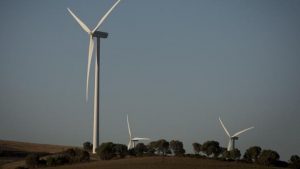
However, despite these favorable conditions, the area still does not have large-scale operational wind farms. One of the exceptions is the La Escondida project, approved in 2024 in the Partido de Punta Indio, which foresees an installed capacity of 158 MW.
Therefore, specialists consider that this initiative could become a starting point for future energy developments on the Buenos Aires shore.
The environmental benefits of wind energy
The expansion of wind energy represents a key tool to reduce the dependence on fossil fuels such as gas, coal, and petroleum derivatives, responsible for significant greenhouse gas emissions.
Moreover, generation through wind turbines does not produce atmospheric pollution during its operation and requires a minimal amount of water compared to other conventional energy technologies.
On the other hand, a 20 MW offshore wind farm could avoid emissions equivalent to those generated by about 18,000 cars with average annual fuel consumption, contributing to improving environmental quality and reducing the impact of climate change.
As Argentina continues to expand the share of renewable energies, which already exceed 19% of national electricity demand, research like that developed in the Río de la Plata opens new opportunities to build a more sustainable energy system, efficient and compatible with the environmental challenges of the future.


