



Maritime transport, responsible for almost 3% of global emissions, is beginning a green transformation. In this scenario, the Pyxis Ocean stands out as the world’s first cargo ship that combines commercial navigation and assisted wind energy. Its arrival at the Port of Tarragona positions it as a symbol of the shift towards more sustainable seas.
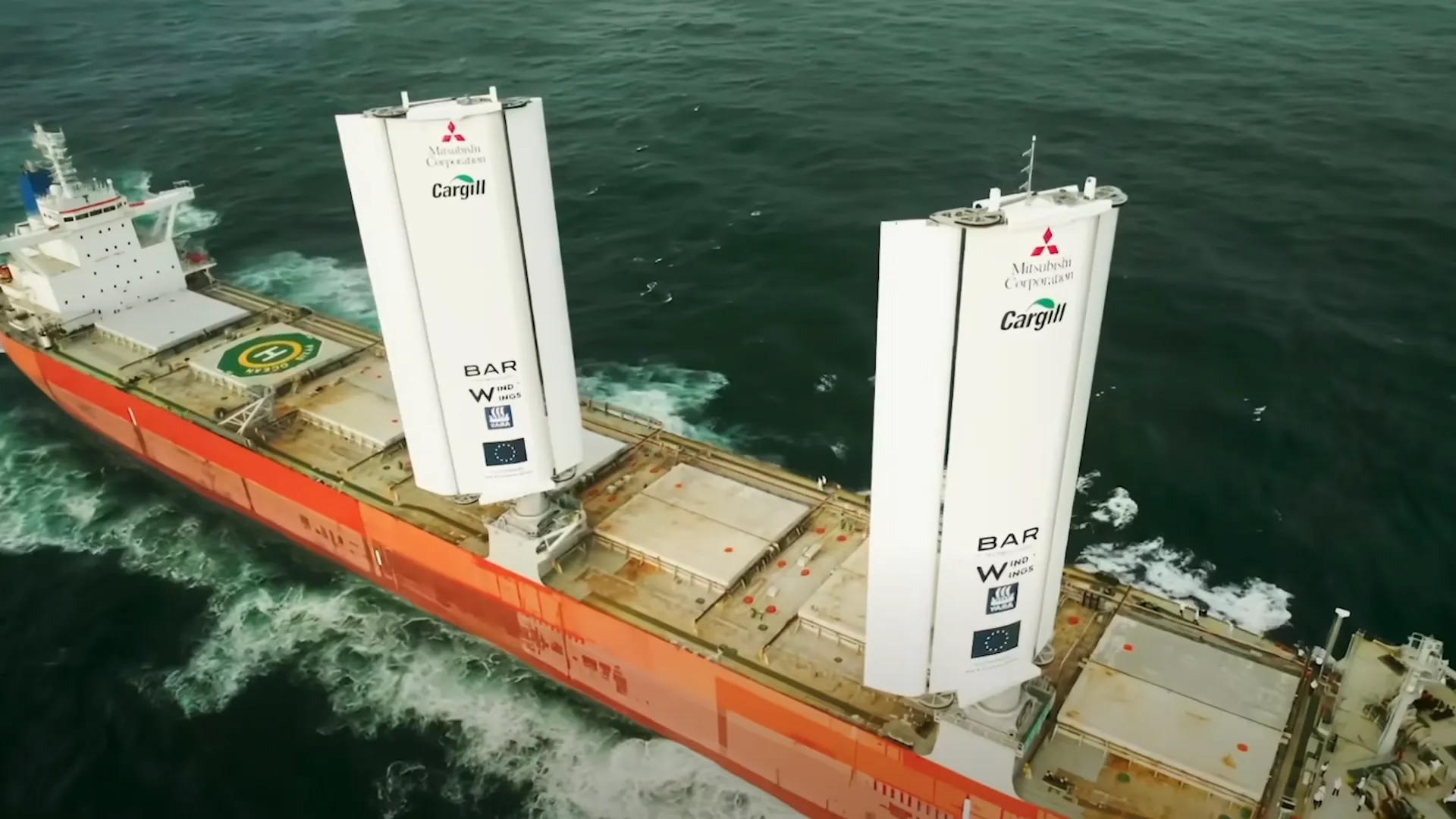
Owned by Cargill Ocean Transportation, the ship traveled from Brazil with 64,000 tons of soybean meal and a pioneering innovation. Its two rigid sails WindWings, 37.5 meters high and 20 meters wide, harness the wind to reduce fuel use and pollutant emissions.
The system operates automatically thanks to sensors that detect wind direction and speed. Thus, the Pyxis Ocean maintains its usual speed with a less demanding engine, achieving a reduction in fossil consumption of up to 14%. In the best scenarios, it saves more than 11 tons of fuel oil per day.
Since March 2024, the ship has been operating on routes between Asia, America, and Europe, consolidating its role in the decarbonization of maritime transport. Its passage through Spain reinforces the connection between innovation, sustainability, and global trade.

The advantages of wind: efficiency and sustainability at sea
The use of assisted wind energy in ships brings notable environmental and economic benefits. By reducing fossil fuel consumption, greenhouse gas emissions and air pollution decrease.
Moreover, by partially relying on wind, a free and clean source, vessels gain energy independence from oil price fluctuations. This improves the operational stability and competitiveness of the shipping sector.
From an ecological perspective, these technologies help to protect marine ecosystems, reducing spills and waste associated with fuel use. In the future, they can be integrated with hybrid or electric engines to accelerate global decarbonization.
The “energy of the past” returns to improve the future
The Pyxis Ocean also aligns with the goals of the International Maritime Organization (IMO), which aims to cut maritime emissions by 20% by 2030 and achieve neutrality by 2050. Each ton of unburned fuel represents a dual advancement: economic and environmental.
However, mass adoption faces technical and financial challenges. Wind conditions vary depending on the routes, and the initial investment in automated sails is high. Still, the ecological potential and operational benefits drive its expansion.
The success of the Pyxis Ocean demonstrates that wind is once again a key ally. This “energy of the past” returns to move global trade towards a cleaner, more efficient, and planet-friendly future.



