



A group of Brazilian tourists was fined for entering a restricted area of the Nahuel Huapi National Park, in the Pampa Linda area, ignoring signage and crossing a safety barrier.
The area, known as Ventisquero Negro, is closed due to the risk of landslides, falling rocks, and damage to a fragile ecosystem.
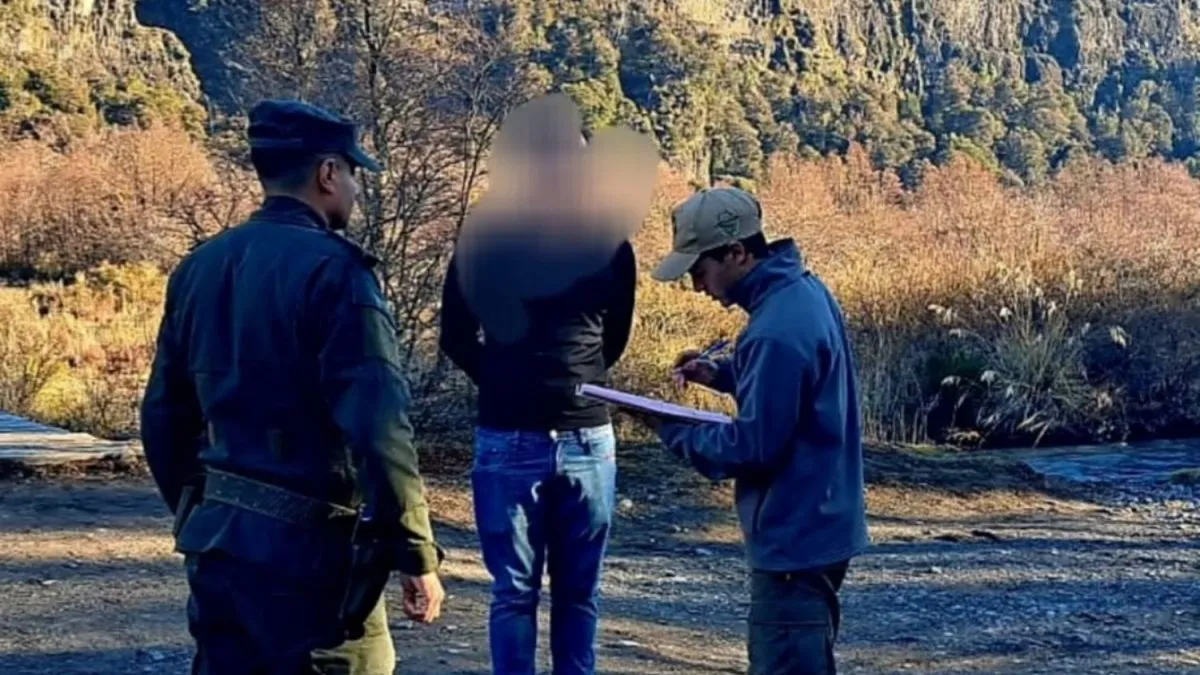
The identification was achieved thanks to a coordinated operation between park rangers, National Gendarmerie, guides, and tour operators, who provided audiovisual material and photographic records.
Reasons for the restriction
The area’s soil is composed of glacial moraines, with loosely consolidated materials, unstable slopes, and loose rocks. The passage of people increases the risk of accidents and generates negative impacts on a particularly sensitive environment.
Permitted access is limited to the authorized viewpoint, designed to safely observe the lagoon and the glacier.
Sanction procedure
The infraction was reported by guides and tour operators, who immediately notified the on-duty park ranger. The procedure concluded with the drafting of reports and notification to the visitors.
The Park Administration emphasized that the visible absence of park rangers at a specific point does not imply a lack of control, as the sections cover large areas and the agents work simultaneously in different sectors.
The agency valued the cooperation between guides, tour operators, Gendarmerie, and park rangers, highlighting that the participation of those working in the territory is essential to protect natural environments and ensure the safety of visitors.
Historical and natural heritage of Nahuel Huapi Park
The Nahuel Huapi National Park is the oldest protected area in Argentina and a benchmark in Latin America:
- Biodiversity conservation: protects three ecoregions (Patagonian Forests, Steppe, and High Andes) and species such as the huemul, pudú, monito del monte, and Andean condor.
- Historical heritage: originated with the donation of land by Francisco Pascasio Moreno in 1903, a precursor to the national parks system.
- Water reserve and scenic beauty: regulates vital water basins and hosts iconic landscapes such as the namesake lake and Tronador Hill.
- Tourism and economic development: is a driver of sustainable tourism, with activities like hiking and trekking.
The incident at Ventisquero Negro reminds us of the importance of respecting signage and authorized areas in national parks.
The conservation of fragile environments and the safety of visitors depend on civic responsibility and collaboration between institutions and the community.


