



Educating about the importance of environmental conservation has an extra value when linked to concrete processes of restoration in the territories. That is what Restoration-Based Education (RBE) is all about, a new area of academic action promoted by researchers from the National University of Comahue.
A recent study, conducted by Daniel Pérez (Faculty of Environmental and Health Sciences) and Julieta Farina (Faculty of Education Sciences), highlights the impact of working under this interdisciplinary approach: combining environmental education with ecological restoration.
Restoration-Based Education
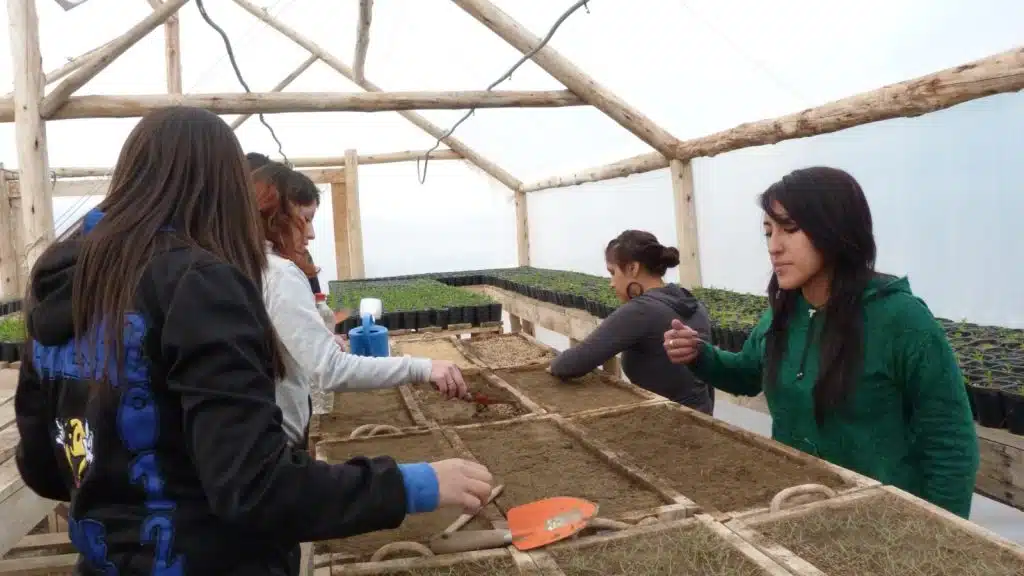
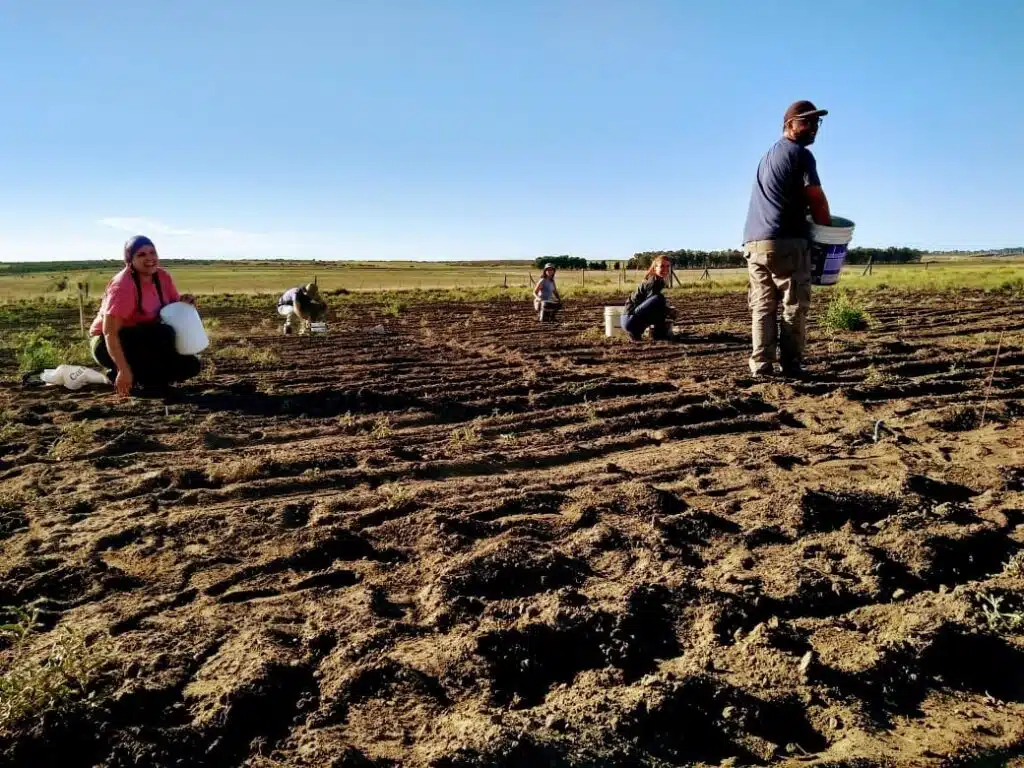
The research, published in the Journal of Neotropical Biology, studied cooperatives that produce native plants with the purpose of recovering degraded lands in Neuquén. Studying this case allows addressing concepts such as socio-constructivism, biodiversity, degradation, ecocentric restoration, and desertification.
Restoration-Based Education differs from other environmental education methodologies by linking theory with concrete experiences of ecological restoration. In this way, it promotes a deeper understanding oriented towards contemporary environmental challenges.
This new perspective highlights the transdisciplinary as a tool to face the challenges of a world in constant transformation. In that sense, this methodological proposal not only enriches academic theory but also generates sustainable solutions to the environmental crisis.
According to the researchers, RBE is based on seeking a different relationship with nature. They question the forms of traditional education, which are hermetic and resistant to establishing more sensitive bonds with the external environment.
“Education was not adequately teaching us about the natural world and how to relate to it,” stated biologist Daniel Pérez in a project presentation.
Deep pedagogical project
In building the link between education and ecological restoration, they incorporate concepts with a Latin American perspective such as environmental knowledge, environmental rationality, sustainability, ideas of good living from indigenous peoples, and Pachamama as a cultural signifier.
This initiative is part of the United Nations Decade on Ecosystem Restoration, which runs from 2021 to 2030. One of the goals of this program is to incorporate ecological restoration into school curricula.
Pérez explained that originally, the restoration movement went beyond the desire to restore a damaged area or forest. “Ecological restoration could not only enhance the quality of degraded ecosystems, but it could also constitute a privileged way to educate people, to have an ethical attitude towards the land.”
The researchers explain that environmental education must go beyond practical training or the acquisition of isolated skills. It should seek a deeper and sustained connection. “Environmental education is intended to connect us with the environment, to expand our understanding of the environmental crisis, to change our society-nature relationship, to change our values. It is more than just a momentary commitment to planting or sowing,” Pérez described in the proposal presentation.


