



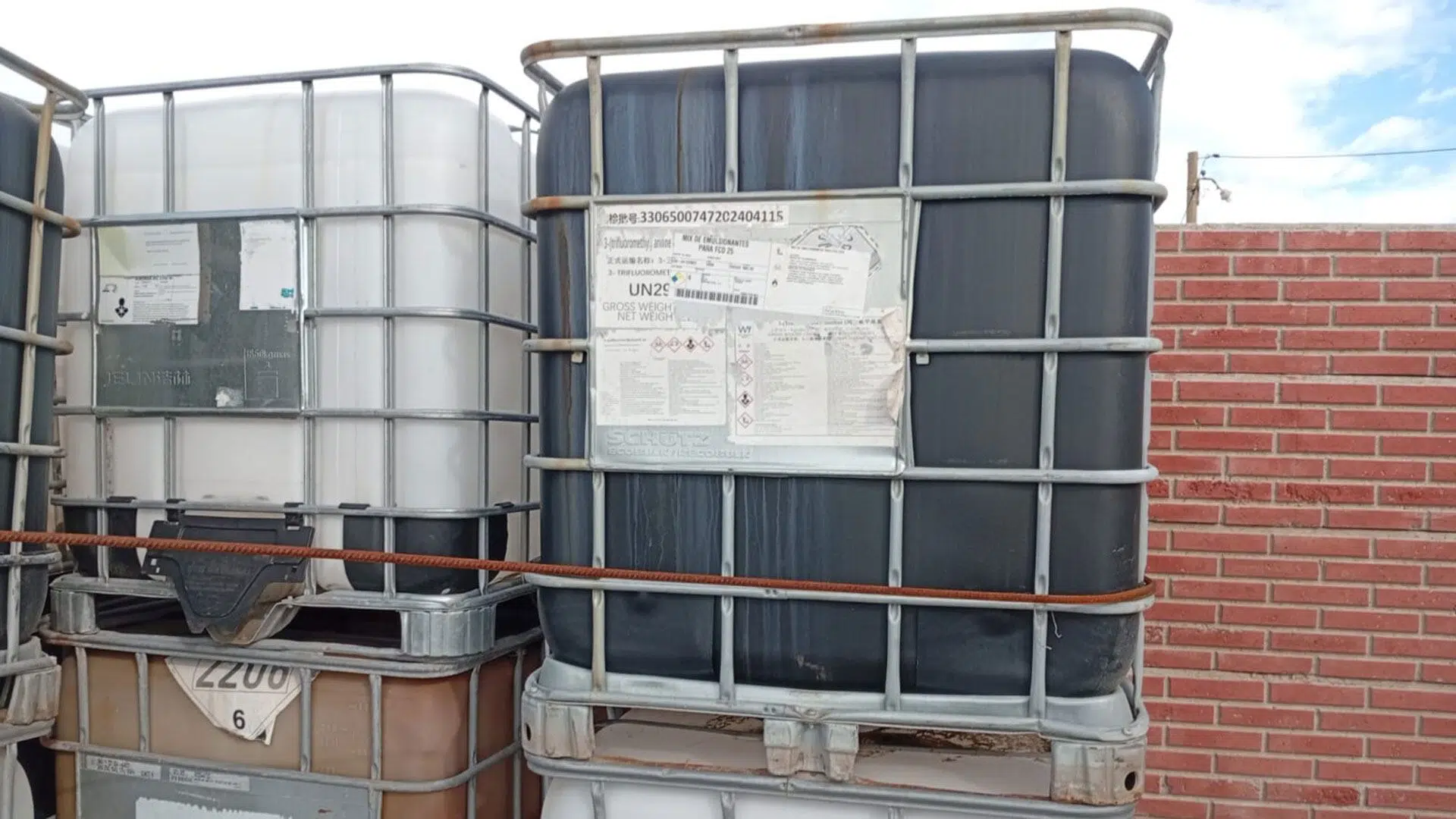
In April 2026, after the summer season ended, residents of Mar del Tuyú reported the appearance of 118 chemical tanks with inscriptions in Chinese in front of a central beach resort. The objects were placed as a “trench” to stop the sea from advancing over the beach, but without cleaning certification or official authorization.
The group Community in Action warned about the environmental and health risk: several residents reported headaches and throat itching, as well as strong odors and oily stains on the sand after rains.
Emergency Operation
The situation prompted an operation by Civil Defense, whose agents removed the tanks wearing safety suits and helmets. The objects were transported to a facility of the agency, away from the urban area, near the airfield and Route 11.
Deputy Secretary Augusto Giachetti clarified that there were no evacuations or hospitalizations, although preventive measures were taken. The UFI 4 of Dolores, specialized in environmental crimes, is investigating the case under the direction of prosecutor Mario Pérez.
Coastal Erosion Context
Mar del Tuyú has been facing an accelerated process of coastal erosion for a decade, worsened by climate change and southeast storms. According to geologist Federico Isla, some areas of the Partido de la Costa lose more than 1.3 meters of beach per year, with homes at risk of collapse and exposed foundations.
The lack of budget prevents the application of the expropriation law for homes that would allow clearing 50 meters of coastal front. Meanwhile, residents denounce improvised solutions that endanger health and the environment.
Detected Substances
The South Coastal Park analyzed the labels on the tanks and found compounds such as:
- MTFA (m-Trifluoromethylaniline): a benzene derivative used in the production of herbicides and pesticides.
- N-Dibutylamine: common in the rubber and textile industry, corrosive and toxic.
- Labels with “acid waters” and “ammoniacal waters with copper,” confirming that the tanks contained hazardous waste.
The report warns that these substances are corrosive, toxic, and highly flammable, and their abandonment constitutes a clandestine dumping of industrial waste.
Social and Tourist Impact
The crisis directly affects the main economic activity of the locality: seasonal tourism. With reduced beaches and damaged structures, the community fears losing its “golden goose.” Residents insist that taking care of the beach is essential to sustain the tourist appeal and local economy.
The case of the 118 chemical tanks in Mar del Tuyú exposes the fragility of the Buenos Aires coasts in the face of climate change and erosion, but also the urgency of implementing rigorous environmental management policies. The judicial investigation will determine responsibilities, while the community demands real solutions that protect both public health and the tourist future of the region.



