



The accelerated melting of sea ice has raised a new alert in Antarctica. The consequences are devastating for the biodiversity of the white continent and are already being perceived.
A new scientific study warns of the collapse of Weddell seal populations, an emblematic species that depends on ice for its survival.
Alert in Antarctica: climate change threatens the survival of seals
According to the research published in the journal Nature Communications, the Weddell seals are disappearing at an alarming rate due to the loss of their natural habitat: sea ice.
 Weddell seals, in danger. (Photo: Wikipedia).
This ecosystem is fundamental for their reproduction, feeding, and protection against predators.
Scientists from the US Polar Research Institute, together with colleagues from New Zealand and the UK, analyzed satellite data and field records collected over more than 30 years.
The conclusions are clear: seal populations could collapse in the coming decades if greenhouse gas emissions are not reduced.
The chain impact on Antarctic fauna
The disappearance of ice not only affects seals. It also harms species like emperor penguins, Antarctic krill (the basis of the marine food chain), and predators such as orcas and leopard seals.
The ecological imbalance could also have global effects on oceans and climate.
“Ice acts as a vital platform for many species. Its loss implies a large-scale ecological crisis,” said Dr. Michelle LaRue, one of the study’s authors.
The researchers warn that, although some damage is already done, it is still possible to mitigate the impact through ambitious environmental policies.
Reducing carbon dioxide emissions, limiting industrial fishing in Antarctic waters, and expanding marine protected areas are key measures to protect the biodiversity of the icy continent.
Furthermore, the study proposes implementing continuous monitoring systems to closely track the evolution of seal populations and other vulnerable species to climate change.
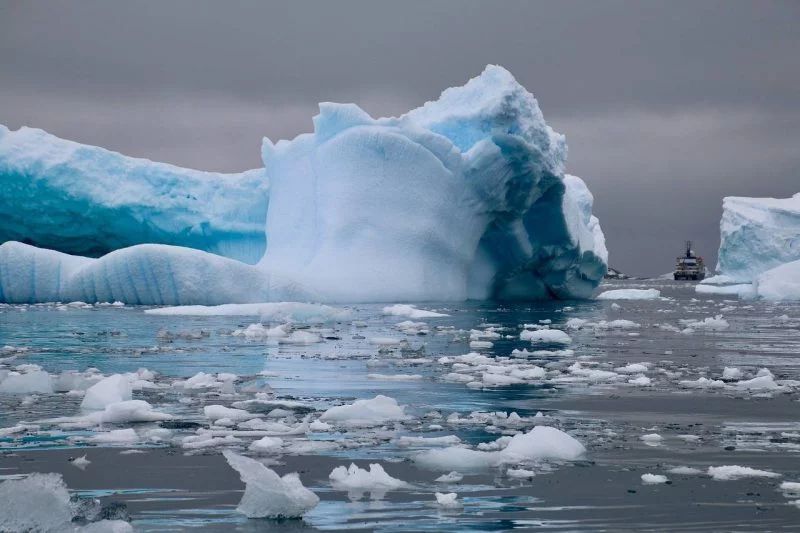 Ice loss in Antarctica.
Antarctica as a barometer of the planet
The collapse of Antarctic ecosystems is a warning signal for the entire planet.
What happens in the poles has repercussions on global climate balance. Therefore, protecting Antarctica is protecting the future of humanity.


