



Japan is on ecological alert due to a botanical phenomenon that occurs every 120 years: the mass flowering of henon bamboo.
Despite the unprecedented nature of the event, last documented in 1908, it also threatens to transform the country’s landscapes.
Moreover, it has the potential to destabilize entire ecosystems, as the plants die after reproducing.
The unpredictable consequences of henon bamboo flowering in Japan
Henon bamboo (Phyllostachys nigra var henonis) belongs to the group of monocarpic plants, species that flower only once in their lifetime and then die.
The flowers began to appear in several Japanese areas after decades without mass records.
Specialists predict that the main flowering will occur around 2028, potentially affecting the 170,000 hectares of bamboo covering Japanese territory.
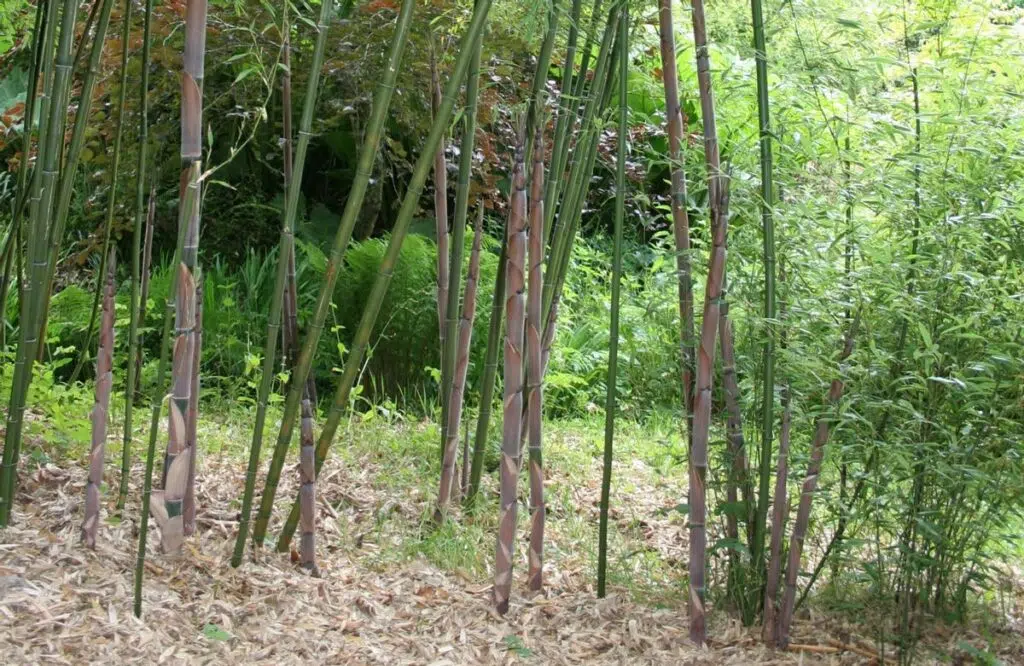
The henon is one of the predominant varieties in these extensions.
Research conducted by teams from the University of Hiroshima after the outbreak observed in 2020 confirmed a serious problem.
More than 80% of the stalks flowered in the analyzed areas, but none produced viable seeds.
Scientists monitored the areas for three years following the last outbreaks without finding cases of successful germination.
This lack of sexual regeneration is likely due to self-incompatibility or low genetic diversity.
Japan: the environmental risks of henon bamboo flowering
This mass death of bamboo in Japan can destabilize the soil and facilitate the conversion of large forests into grasslands.
This change would alter the habitat of numerous species that depend on bamboo as cover or a food source.
The sudden disappearance creates favorable spaces for the arrival of exotic or aggressive species that could modify the composition of the local ecosystem.
Soil erosion represents another critical issue in the affected areas.
Possible conservation strategies in the face of the challenge
Toshihiro Yamada, a specialist from the University of Hiroshima, advises anticipating landscape management strategies before total disappearance.
It is necessary to “protect bare soils, prevent the arrival of invasive weeds and consider replanting bamboos,” the expert notes.
Scientists recommend plans that consider both the natural restoration of bamboo in Japan and artificial interventions.
The ecological and cultural value of these bamboo forests for Japan and their territorial importance is being evaluated.
The biological cycle of henon bamboo shows how natural processes can profoundly affect landscapes and the lives of human and animal communities.
The synchronized organization of the process turns the upcoming flowering into an unavoidable challenge.
According to specialists, this phenomenon drives the development of preventive policies and fosters greater understanding of ecological balances in the long term.
Japan is preparing to face a natural event that could mark a before and after in the management of its plant heritage.
Research continues to evaluate the feasibility of assisted reproduction or genetic strategies to overcome the current restrictions of henon bamboo.


