



Argentina ratified in July 2025 an essential agreement of the World Trade Organization (WTO) that prohibits subsidies to illegal fishing, destructive and unregulated.
Now, this measure already directly impacts the fleets operating in the South Atlantic and represents a historic change after years of international negotiations.
The problem of subsidies in illegal fishing
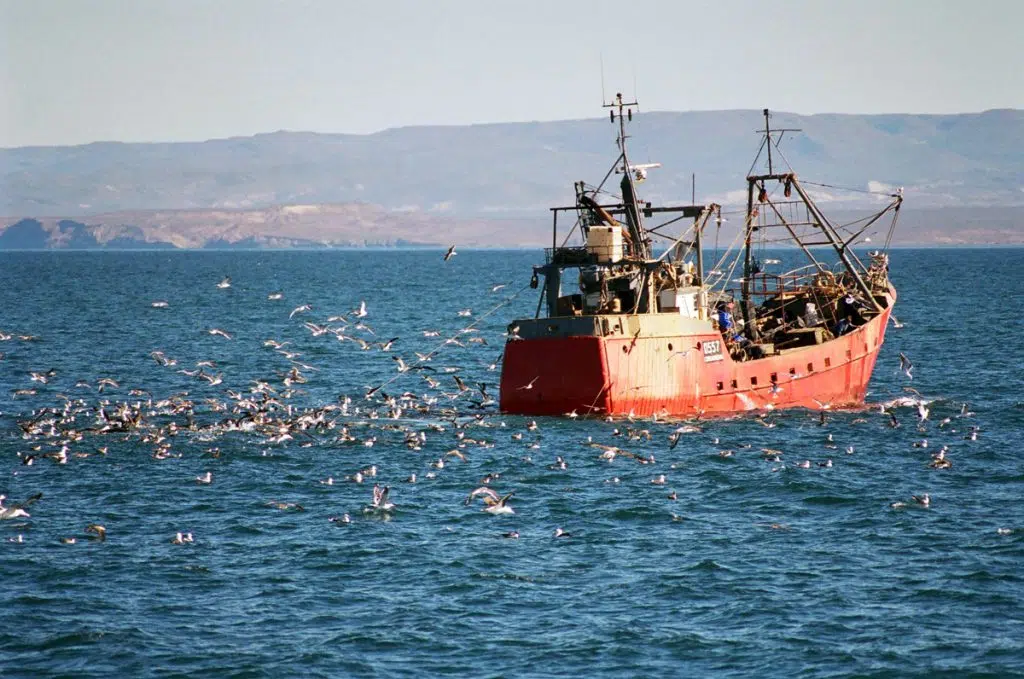
Currently, a large part of the fishing fleet operating in the waters of the South Atlantic receives government subsidies that ensure its profitability.
This is the case even when they violate labor and environmental standards.
“It’s like a business across the street not paying taxes and the State rewarding it with free electricity and services. No system in the world would work like that,” says Milko Schvartzman, an expert in illegal fishing in Latin America.

The fleets affected mainly come from China, South Korea, Taiwan, and Spain, and their business model depends on these subsidies to be profitable.
“Without those subsidies, many vessels will have to operate at a loss, and that will likely reduce the pressure on the ecosystem,” explains Schvartzman.
The impact of illegal fishing on the marine ecosystem
The Illex argentinus squid, the second most captured species in the world, is the main target of these illegal fishing fleets. Its massive extraction affects:
- Hakes
- Sperm whales
- Dolphins
- Seabirds
- Penguins
- Sea lions
“Any reduction of this predatory fleet will have a direct positive impact on the entire ecosystem,” assures the specialist.
Besides the capture of squid, marine mammals, sharks, and birds also suffer incidental or intentional captures, while the ships continue polluting the waters.
Now, the WTO agreement represents a concrete step to reduce predation and protect marine biodiversity.
“This is not just a signal; it will have repercussions in the real world. It’s a huge step for the South Atlantic to start healing,” reinforces Schvartzman.
The expected results include fewer destructive ships, more protected species, and strengthened coastal communities.
The combination of international regulation, technological surveillance, and consumer awareness opens the possibility of a tangible change in ocean protection.
The role of Argentina in the WTO agreement
Argentina is one of the promoters of the agreement since 2017.
“During a WTO meeting in Buenos Aires, Argentina was one of the promoters and tried to get the agreement approved. It has always been pushing it; it practically became state policy,” recalls Schvartzman.
The agreement will thus allow balancing competition with legal fishermen.
“They compete illegitimately with fleets that use slave labor, do not comply with environmental or labor standards, and on top of that receive subsidies,” detailed the expert.
And he concluded: “This agreement will help end that unfair competition.”
The pending challenges to protect the seas
Despite the progress, currently enforcement remains a problem.
This happens because the absence of a regulatory body in the South Atlantic makes control difficult.
“There should be a commission like the CAMLR of Antarctica, where it is monitored what is fished, how it is fished, there are observers and patrols,” warns Schvartzman.
Additionally, fraud in labeling is also a concern.
In Argentina, almost 40% of the fish offered in stores does not correspond to the indicated species.
Thus, knowing the origin of the products and demanding traceability strengthens legal and sustainable fishing.



