



In the framework of the COP15 of the Convention on the Conservation of Migratory Species of Wild Animals, Brazil announced the creation of the first specialized environmental law court in the Pantanal biome. The measure seeks to strengthen biodiversity protection and improve the judicial system’s response to ecological conflicts.
The court will operate in the municipality of Bonito, in the state of Mato Grosso do Sul, a region emblematic for its natural and tourist wealth within the Pantanal, considered the largest continuous wetland in the world.
Environmental Justice in Action
The president of the state Court of Justice, Dorival Renato Pavan, highlighted that the initiative constitutes an important step to improve the judicial system in environmental matters. He emphasized the need for trained and prevention-oriented magistrates in a country that accumulates about 80 million legal processes, many of them linked to the environment.
During COP15, the role of national laws and legal institutions in the implementation of multilateral agreements was debated. The panel included figures such as João Paulo Capobianco (conference president), Herman Benjamin (minister of the Superior Court of Justice), and Amy Fraenkel (executive secretary of the Convention on Migratory Species).
It was emphasized that international treaties, such as the Convention on Migratory Species, are mandatory for signatory countries, which implies concrete measures: strict protection of threatened species, habitat restoration, and removal of migration obstacles.
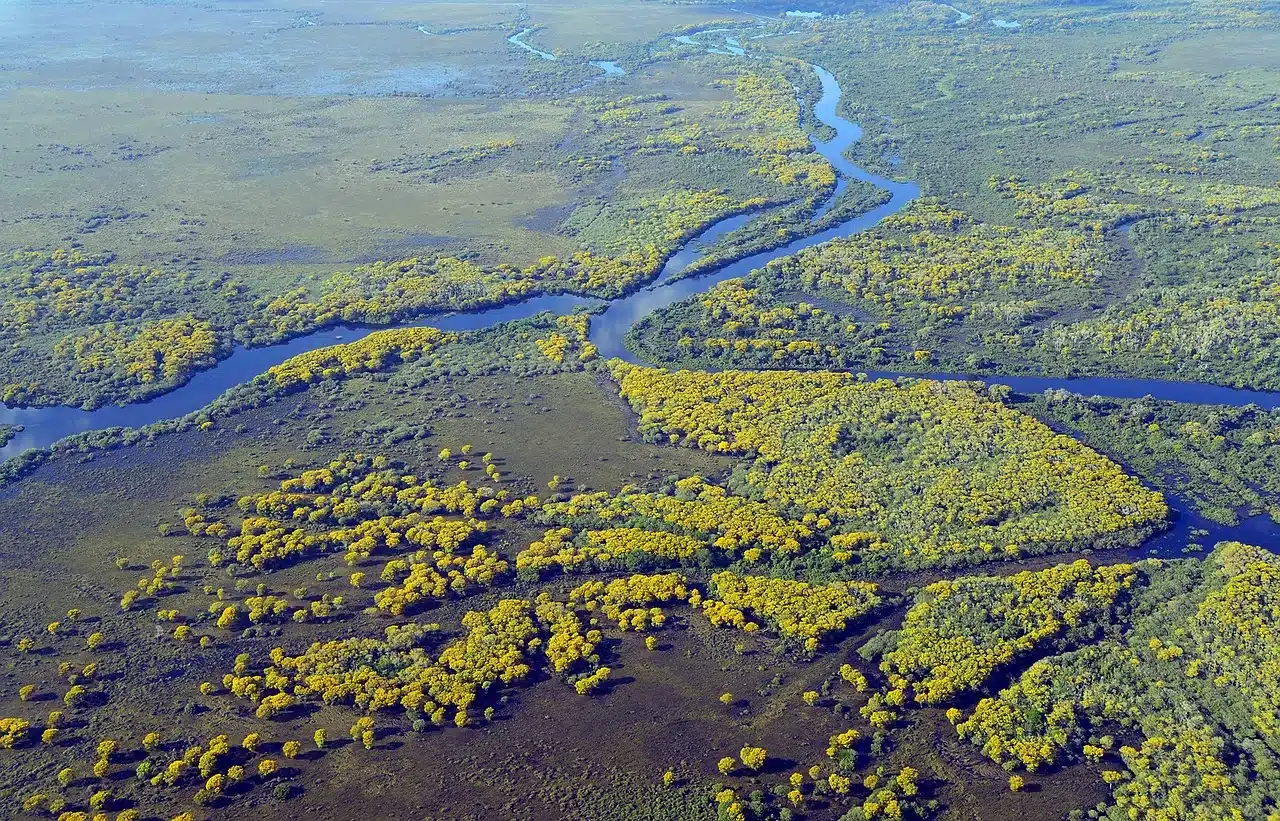
The Pantanal: A Unique and Threatened Biome
The Pantanal is the largest freshwater wetland on the planet, with an area of between 150,000 and 195,000 km² in Brazil, Bolivia, and Paraguay. Its main characteristics include:
- Hydrological cycle: a seasonal “flood pulse,” with rains from October to March and droughts from April to September.
- Biodiversity: hosts thousands of species, including the largest concentration of jaguars, as well as caimans, hyacinth macaws, and the jabiru, the region’s symbol bird.
- Flora and fauna: mixes species from the Amazon, Cerrado, and Chaco, with more than 3,500 plants and 300 fish recorded.
- International recognition: declared a Natural World Heritage Site by UNESCO.
However, it faces growing threats: climate change, deforestation, illegal mining, and dam construction have made the Pantanal the Brazilian biome that has warmed the most in the last four decades.
Economy and Conservation
The Pantanal combines economic activities such as traditional cattle ranching, fishing, and ecotourism, which has become a driver of sustainable development. The creation of the environmental court seeks to balance these activities with the need to protect a vital ecosystem for South America.
The creation of the first environmental court in the Pantanal represents a historic advance in Brazil’s ecological justice. It not only reinforces compliance with international agreements but also marks a concrete commitment to protecting one of the richest and most vulnerable biomes on the planet. The initiative is poised as a model for other countries facing the challenge of harmonizing economic development and environmental conservation.



