



The Second Chamber of the Civil and Commercial Court of Appeals in Resistencia (Chaco) overturned the historic ruling that protected the Parque Caraguatá.
Judges Gladys Zamora and María Sáez declared the substantive issue abstract, nullifying the injunction that halted works and the order to present a comprehensive environmental diagnosis.
With this decision, the site is left without current legal protection, causing concern among residents and environmental organizations.
Case Background
First-instance judge Julián Flores had considered the park as a “subject of law,” comparable to an urban wetland, granting it special prerogatives. However, the Chamber determined that the conflict lost relevance because the questioned works —a sanitation and storage of logs and vehicles— had already been completed before the initial ruling.
The central arguments were:
- Loss of relevance: as the works ceased, the object of the injunction disappeared.
- Rejection of the neighborhood claim: the complaint about a possible resumption of works was considered hypothetical.
Legal and Environmental Debate
The chamber members avoided ruling on institutional grievances but dedicated a section to the controversial classification of Caraguatá as a “subject of law.” They validated international trends of the Inter-American Court of Human Rights on climate emergency, although they opted for the ecocentric and systemic paradigm of the Argentine Supreme Court.
According to this doctrine, collective goods are already protected by the legal system without the need to grant legal personality to a particular ecosystem.
Municipal Commitments
The ruling clarifies that the municipality’s intentions are limited to general guidelines and that there is a commitment not to intervene in the park until an integral environmental management plan is in place.
Furthermore, any future action must comply with the General Environmental Law, the Constitution, and the Escazú Agreement.
Importance of Parque Caraguatá
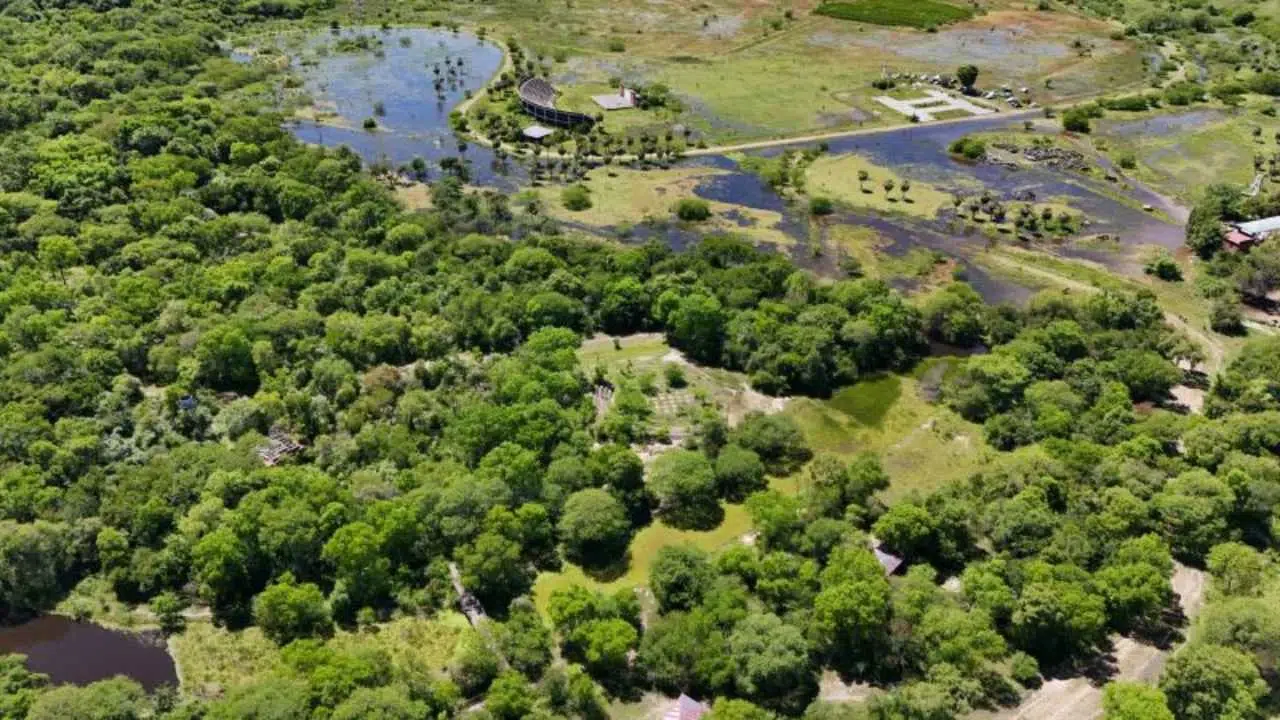
Parque Caraguatá preserves 80 hectares of native forest and wetlands 10 minutes from downtown Resistencia.
It is considered the city’s most important urban green lung.
Reasons to Protect It
- Biodiversity refuge: hosts about 200 species of animals and plants, including endangered species.
- Urban survival: acts as a natural sponge that absorbs rainwater, preventing floods. Its trees reduce temperature and mitigate extreme heat.
- Cultural connection: has spiritual and economic value for indigenous communities like the Qom people, who use its plants for medicines and crafts.
- Education and recreation: a space to learn about ecology and environmental care. Groups are promoting the #CaraguatáReservaYa campaign to achieve its definitive protection.
The overturning of the ruling leaves Parque Caraguatá in an uncertain scenario. Although the municipality promises not to intervene until an environmental plan is in place, the lack of judicial protection opens the door to future risks.
This space is not only vital for Chaco’s biodiversity but also for urban resilience and the cultural identity of Resistencia.


