



30 years after the first promise made for the clean-up of the Riachuelo River, historically one of the most polluted rivers in the country, it continues its recovery process.
In 1993, it was Maria Julia Alsogaray who stated, as head of the Natural Resources Secretariat, that within 1000 days the water from the basin could be “drinkable.” However, there is still much to be done.
With more than a decade of cleaning tasks, reports confirm that 80% of the pollution does not come from industries, but from sewage effluents. This poses a structural challenge for definitive sanitation.
Concrete progress in the Riachuelo clean-up
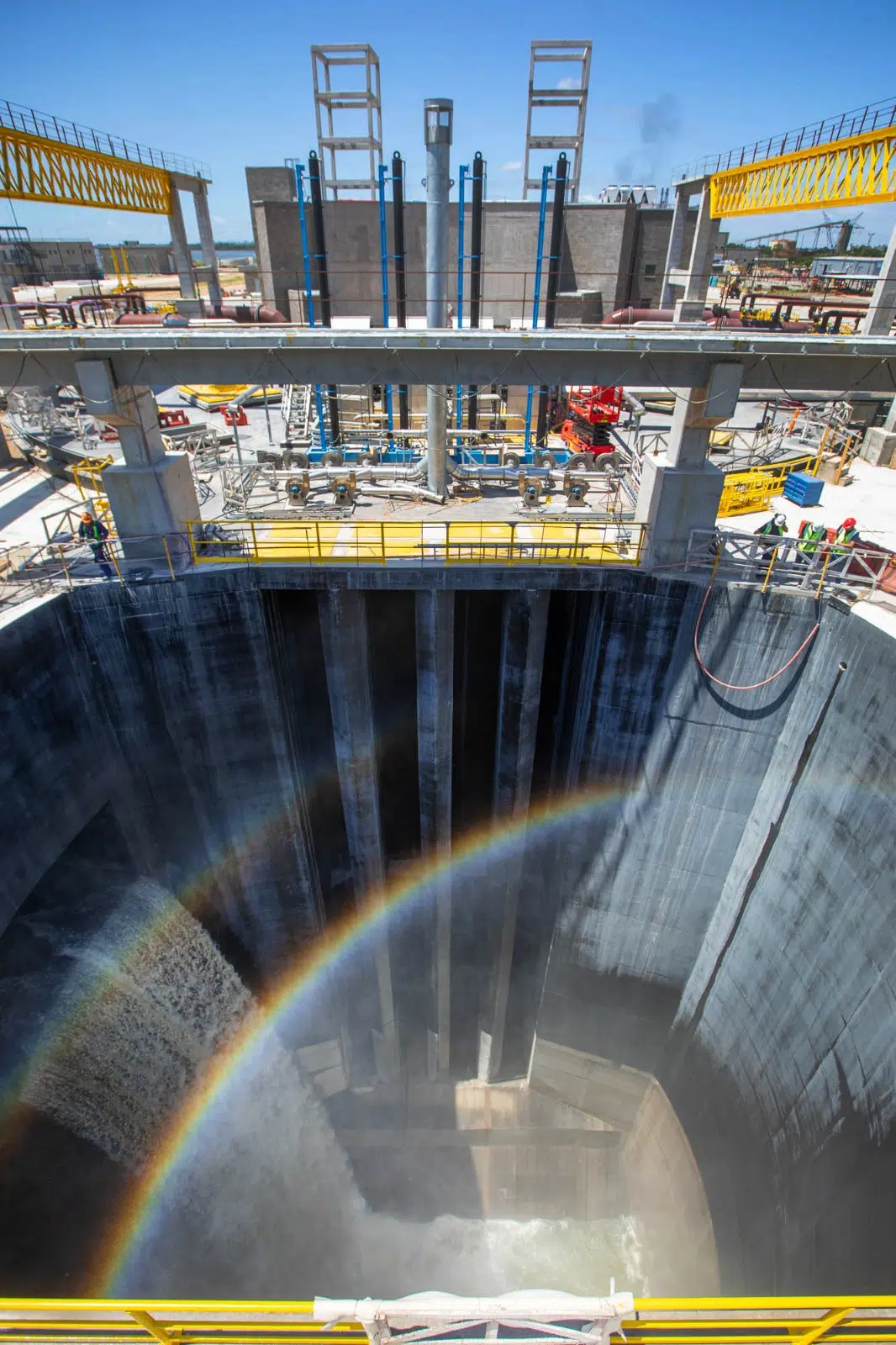 The construction of the Riachuelo System, once implemented, took about 10 years.
Since 2010, under the management of the Matanza Riachuelo Basin Authority (ACUMAR), 5000 tons of garbage have been removed.
In 2008, the Supreme Court had issued a historic ruling for the river’s clean-up, whose monitoring was recently closed. However, cleaning and control tasks continue to be active.
In Buenos Aires City, the outlook is more encouraging: the water no longer gives off a foul odor and part of the navigability has been restored. Today, there are companies connecting Puerto Madero with Caminito, a symbol of environmental change in the area.
The largest project in 70 years and political clashes
The completion of the Riachuelo System was recently announced. It is a megaproject that includes a collector parallel to the river and a treatment plant in the Río de la Plata. The infrastructure will improve service for 4.5 million people and add another 1.5 million to the sewage system.
Despite the good news, the inauguration sparked political clashes, as the National Government attributed its completion, while officials from the previous administration stated that the project was already finished and only details remained to put it into operation.
A significant advancement was the inclusion of a 100% Argentine vessel, which quadruples the collection capacity, reaching 2000 kilos per load.
Every month, between 60 and 120 tons of waste are removed from the Riachuelo, reflecting the magnitude of the ongoing work.
The pending challenge
Despite the progress, the greatest risk is not what is cleaned up, but what keeps coming in. Septic tanks, collapsed sewers, and garbage thrown by residents continue to feed pollution.
Nevertheless, the water body is starting to show recovered flora and fauna, the Riachuelo clean-up remains a shared responsibility between the City and Province, and a key challenge for the country’s environmental management.
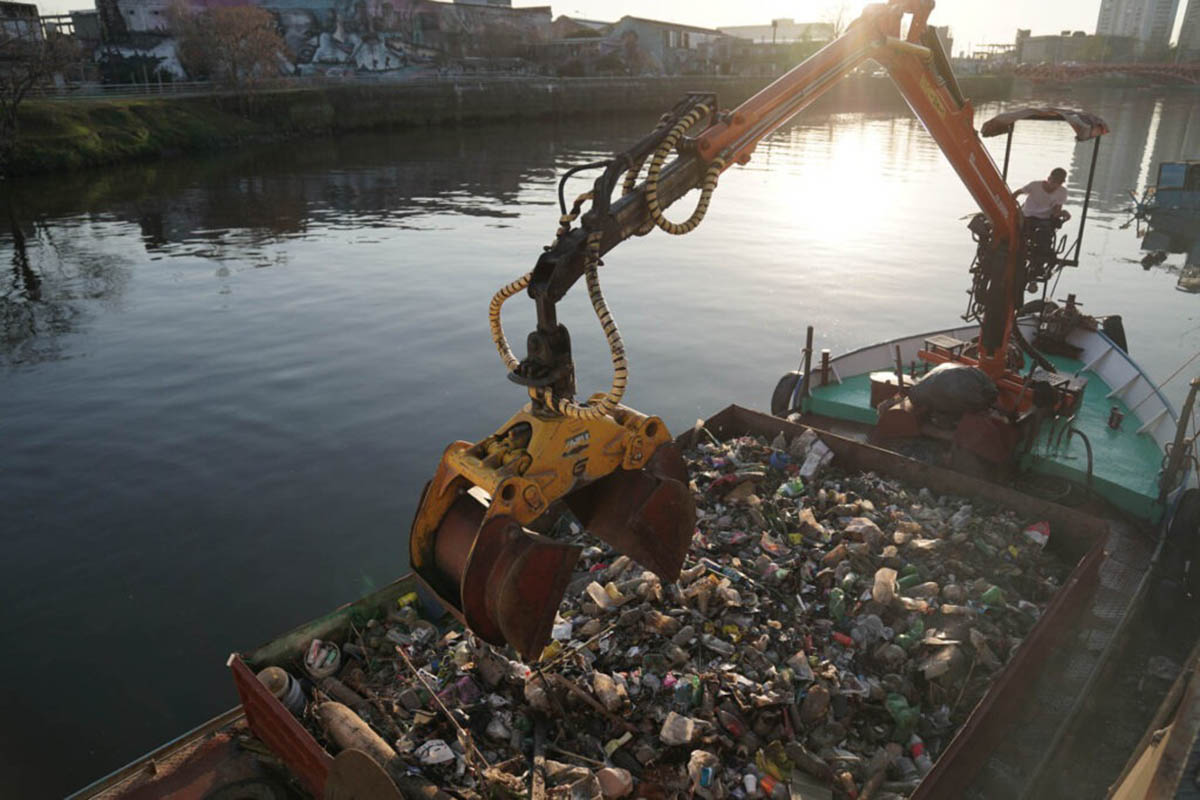 Riachuelo Pollution: the cause and the works.
Supreme Court closes the case
The highest court concluded its intervention in the case initiated in 2004. “The institutional objectives proposed by the sentence of this Court have been fulfilled.” ACUMAR continues with the clean-up tasks due to the Riachuelo pollution.
The Supreme Court of Justice decided on Tuesday to end its intervention in the case of pollution in the Matanza-Riachuelo basin. The highest court ruled in the “Mendoza” case against the National State and for damages derived from pollution. ACUMAR continues with the clean-up tasks, and recently, the river was again considered “navigable.”
The Court understood that its role in this lawsuit ended with the approval of the Comprehensive Environmental Sanitation Plan (PISA) and the creation of the Matanza Riachuelo Basin Authority (ACUMAR).
“The intervention of this Court has fulfilled its purpose of generating the structural reform that was essential to align the State’s activity with the principles and rights enshrined in the Constitution,” the judges stated.


