



Colombia announced a historic shift in its environmental policy by declaring its entire Amazon biome as a zone free of large-scale oil and mining activities. The decision marks a turning point for the region, which faces increasing industrial pressure on its forests and indigenous territories.
The announcement was made during a meeting of ministers from the Amazon Cooperation Treaty Organization, a key platform for coordinating conservation strategies among the countries that share the world’s largest tropical forest. There, the country proposed advancing towards a common vision of ecological protection.
With this measure, Colombia sends a strong message about the urgency of protecting the rainforest, not only as a national heritage but as a vital system that transcends borders and determines planetary climate stability.
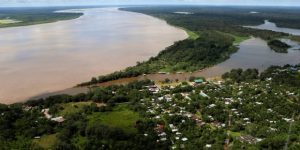
A territory protected against extractive threats
The declaration covers more than 483,000 square kilometers, an area equivalent to 42% of Colombia’s continental territory. This strip contains ecosystems of high biological diversity, freshwater reserves, and vital life corridors for unique species of the continent.
The measure means that no new mining activities or hydrocarbon projects can be developed in any area of the Colombian Amazon biome. With this, the country seeks to halt the expansion of industries that have historically driven deforestation, pollution, and displacement of communities.
The total protection also strengthens the ecological integrity of the forest, preventing its fragmentation and ensuring more stable conditions for the fauna, rivers, and climatic processes that depend on the Amazon balance.
A call for a regional alliance for the Amazon
During the international meeting, Colombia invited other Amazonian countries to establish an Amazon Alliance for Life, aiming to promote a fair and coordinated energy transition. The proposal aims to progressively replace the extractive models that have dominated the region for decades.
The country seeks for the Amazon to be the center of climate action and an emblematic territory of environmental justice and reconciliation with nature. The goal is to move towards a future where the rainforest is preserved as a source of ecological and cultural stability.
This call comes at a time of high vulnerability, with areas of the biome under pressure from illegal mining, agricultural expansion, and projects that threaten the health of ecosystems. A joint effort would allow for more effective protection of the rainforest.

Environmental and social benefits of the ban
The creation of an Amazon free of mining and oil has direct impacts on emission reduction and the conservation of one of the planet’s main carbon sinks. By avoiding new drilling and clearings, the forest’s ability to regulate global temperature is protected.
The ban also prevents the contamination of rivers and soils caused by the extraction of minerals and fossil fuels. This immediately benefits hundreds of indigenous and peasant communities that depend on clean water and the integrity of the territory for their survival.
Furthermore, the decision opens opportunities to promote sustainable economies based on the responsible use of renewable resources, promoting scientific research, ecotourism, and bioeconomy as development alternatives for the region.
Colombia’s decision marks an unprecedented milestone in the protection of the Amazon rainforest. In a global context where the climate crisis demands strong actions, this national commitment becomes an example of environmental leadership and an open invitation to rethink the future of the Amazon through cooperation, justice, and respect for life.



